Rose of Damascus

Rose-of-Damascus-hybrid1
a hybrid Damascus Rose

Rosa damascena – the Rose of Damascus. Surely this has to be one of the most gracious creations of the Earth Goddess – beautiful to behold with a glorious fragrance that has seduced men and the empires of men.

These days it is cultivated and processed on an industrial scale to meet the demand for rose oil and other related products – but it was not always so. Originally a  native of Mesopotamia, Persia and India, the essence distilled from this flower was one of the great treasures of the Mogul and Ottoman Empires. In Kazanlak in Bulgaria, the distillation process was refined and perfected; and with the decline and fall of the Ottoman Empire many of the skilled workers made their way to the area around İsparta in Turkey, bringing their craft and tools with them.

Today, the fields around İsparta are a sight and scent to behold at this time of year as the ‘crop’ comes into flower. The rows of flowers drift through shades of pink to red (to reflect market demand) and tradition has it that the rose heads are collected in the hours before sunrise; but I’ve not been around at that time to say one way or the other if that is the case on these ‘factory’ farms.

Anyway, all that is not the point of this post – those interested enough can follow this link to learn more. What this is about is the wild, undomesticated, non-hybridised Rose of Damascus. Various authorities have it that it no longer survives in the wild in its original form. They may be right, with cross-pollination adulterating the genes. But what about in those isolated places where mass production has never taken place – where hybrids are unknown – might such places shelter and nurture some of the original stock? I’d like to think so!

Two years ago, J and I discovered a small, uprooted bush, still showing a few sad, white flowers in what once had been the garden of a now derelict and long-abandoned house at the foot of our local mountains. The area was in the process of being cleared by slash and burn to make way for crops and so we salvaged a couple of bits of root and brought them home. We whispered sweet nothings, planted them up and hoped they would survive.

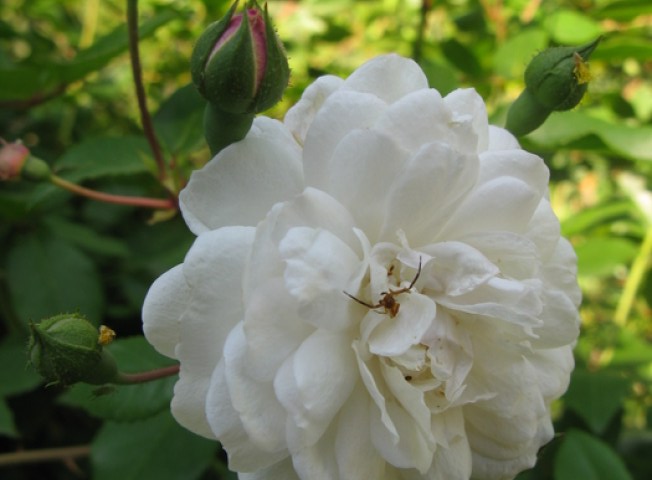
They did and today I took this photo of what I believe to be an original, unadulterated Rosa damascena – the glorious Rose of Damascus.
Rose-of-Damascus
Rose of Damascus (Rosa damascena)

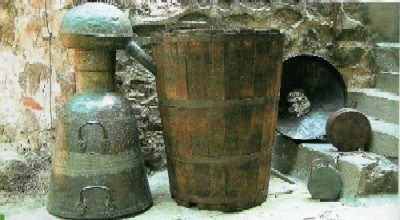
Here are a few interesting, related photos about rose oil.

rose-oil-still
100 year-old rose oil still Bulgaria
rose-oil-still2
beautiful example of a personal still
rose-oil1
preparing the mash
rose_distillery_last_quarter_19C_md-
rose oil still circa 1885 Turkey

Alan in Okçular

More Rabbit than Watership Down

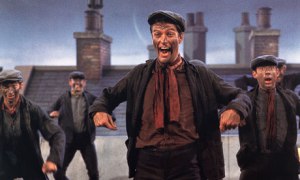
dick-van-dyke-chimney-sweep
Dick Van Dyke as a ‘Plastic Cockney’ these days he’s pushing up the flue brushes RIP

Last week sometime a friend commented on a post about camels. I’d used the words ‘argy-bargy’ which made perfect sense to me but not, it seems, to this delightful lady from the genteel NE coast of the US. Was it, she wondered, Cockney Rhyming Slang?

Before I answer that, there’re a few things you should know; I’m no Cockney,  Sparrah (Sparrow) or otherwise; Cockney Rhyming Slang is a living and constantly changing language and has no connection with Dick Van Dyke whatsoever other than to say ‘(Get) on yer bike!’ It evolved from the need of the criminal underworld (which would have been half the population of East London – the other half being their mothers, wives and sisters) to communicate in a way that excluded the public in general and the police in particular. In truth I learned what little I know from the periods of time I spent in Boom ‘n’ mizzen (prison). As staff, people; as staff!

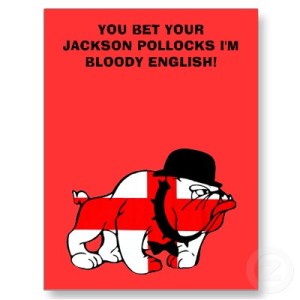
Jackson-Pollacks
Jackson Pollocks to you!

As you can see, rhyming slang is exactly that – a series of syllables or words that roll nicely off the tongue with the end bit rhyming with the substituted word. Here are a couple of examples: Abergavenny = penny. Ferret ‘n’ stoat = frowt (throat). The slang is made more difficult for the uninitiated to understand in some instances by excluding the rhyming bit as in ‘I need to get sumfink fur me ferret, it’s really sore.’ It can also get extremely obtuse and decidedly un-rhyming, as is the case with the currently very topical Germolene = anti-American. As in ‘I ain’t Germolene, but that Obama bloke gives me the ravin’ ‘ump!’ The connection here is that Germolene is an anti-septic . . you can work the rest out.

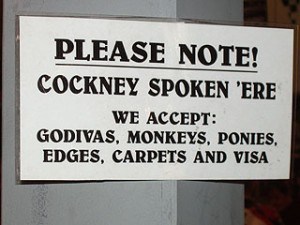
Cockney-sign-300x225
Cockney like wot she is spoke!

If you fancy pretending to be a Cockney I suggest you learn to say the following correctly – ‘Furty fowsan fevvers on a frushes frowt!’ Dick Van Dyke didn’t and he made a lousy Cockney!

So, is ‘argy-bargy’ rhyming slang? Well, it could be in some places, but not within the sound of Bow Bells (bells of the church of St Mary-le-Bow, Cheapside, East London).

Writing this got me to thinking about some of the roll-off-the-tongue words that I like here in Turkey. How about ‘Pırıl Pırıl’, (gleaming; spick and span), or ‘Falan falan!’ (Blah-blah-blah!). I love this one, ‘Şöyle Böyle’ sounds like ‘Shirley Burly’ (So-so). Turks being Turks they never fail to do the polite thing and ask how you are. ‘Bomba gibi!’ (Like a bomb!) is my usual response which brings on plenty of smiles; my absolute favourite, however, when asked how I am, is this: ‘Hiç güve sindin hallice!’ (Hich gooveh sinden halijuh), which translates, locally anyway, to ‘Better than the man who has to live with his in-laws!’ This has them rolling in the aisles, although the ‘Istanbul Turkish’ usually start scratching their heads.

Alan in Okçular

ps for those interested there is a great website for Cockney Rhyming Slang here, and an enjoyable educational video for those with some ‘Arry Lime on their ‘ands.


In The Grand Scheme Of Things . .

orwell
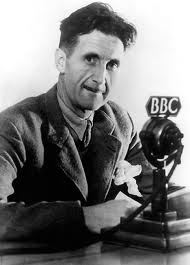
George Orwell

Great men and disproportionately fewer great women are defined and refined for us by those whom we deem to be worthy of lording it over us every four or five years. They stand upon manifestos that promise much but deliver little. What they do deliver, but never talk about beforehand, is war or conflict, reduced public services, cronyism, personal enrichment, self aggrandisement and the ability to write or rewrite history. “He who controls the present controls the past. He who controls the past controls the future!”as Orwell memorably wrote.

So, the history books of our nation states are filled with tales of daring-do by champions of our establishment class; pages are given over to the wisdom and fortitude during times of conflict of our political leaders. Conflict usually brought about by the arrogance, greed, lust for more power or ineptitude of these self-same leaders. Pages are dedicated to politicians and generals who, by and large, seldom or never come within range of an armed enemy. In contrast, “the poor, bloody infantry” get a line or two when mention of casualties is glossed over. Churchill stayed in London during the blitz, a political decision, to boost morale in the civil population but was in a hole so deep under the Admiralty as to warrant honorary membership of the National Union of Miners, a group he had once turned armed troops upon for daring to defy the Establishment. Yet he, along with others like him, are perceived by many to be great.
David-Lloyd-George-006
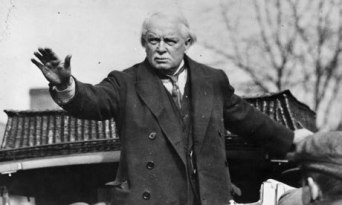
David Lloyd George the ‘Welsh Wizard’

David Lloyd George – the “Welsh Wizard”, so named for his fine oratory and political acumen, but despised by political friend and foe alike for his deceit and cunning. He became Prime Minister in 1916 having schemed the downfall of his then Liberal Party leader and Prime Minister Lord Asquith.

At the conclusion of The Great War, in opposition to former allies the US, France and Italy, he set about the punishment of what he referred to as the “deplorable Turks” by the dismemberment of Turkey and what remained of the former Ottoman Empire whilst at the same time serving Britain’s imperial aims in the region. Part of his strategy was to encourage then Greek Prime Minister Venizelos, whom Lloyd George considered “the greatest statesman Greece had thrown up since Pericles”, to attack mainland Turkey and establish a Greater Hellene Empire. In the event his strategy failed; thousands died needlessly on both sides of the conflict, animosity simmers between Greece and Turkey to this day and with the exchange of populations in 1926 formerly mixed and peaceful communities were torn apart, friends were made into strangers and enemies.
Within days of the signing of the articles of agreement between Turkey and the British, French and Italians for full withdrawal of troops (the French and Italians were long-gone and the Greeks were defeated), Lloyd George resigned, forced out by colleagues who “[could] not afford to keep him anymore. He is too expensive.” The legacy of David Lloyd George is one of death and destruction, of double-dealing and strategic failure. And yet the casual reader of history would see him writ large as a statesman and master politician. There is page after page in the “official” history books and biographies and even a parody of a repetitious song.
(I am indebted to long-term resident of Kaya, John Laughland for much of the following information contained in his moving tribute-cum-obituary).
aysenine
Ayşenine – Granny Ayşe of Kaya
Compare this with the story of Ayse (pron. Aysher) of Kaya village near Fethiye in SW Turkey. She died on 20th March 2009, in Izmir, aged around 104, although records and registrations in those days were not punctiliously kept. As she grew older she became known as Aysenine “Granny Ayse”and she was greatly loved by those who knew her. All of her life was spent in the Kaya valley until about five years ago when infirmity dictated that she move from her tumbledown house to the care of her family in Izmir. When she married she moved from one area of this small valley to another and knew little of the world outside. Hers was the life of a village smallholder, working to provide for her family and herself. Some would say she led an unremarkable life of little note or consequence and yet her face has featured in a book that records “Fethiye Faces and Places” by Turkish photographer Faruk Akbas, poems have been inspired by her words and two renowned authors, Jeremy Seal (in Santa; A Life) and Louis de Bernieres (in Birds Without Wings) have written about her and her life and you might ask why. (de Bernieres is presently working on a screenplay for “Birds Without Wings”)
kayakoyu
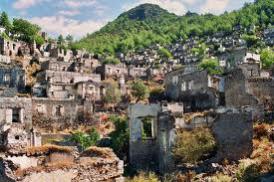
Kaya Village as it is today

Ayse lived through and dealt with the consequences of David Lloyd George’s arrogance and perfidy; she was about seventeen years old when the exchange of populations took place. When asked of her memory of those awful times, when friends and neighbours were torn apart, she responded “The cats were crying.” There were some 500 houses in what is now known as Kaya village, formerly Levissi, which remain empty to this day, and it’s probable that hundreds of cats in need of food were left behind. Ayse kept in trust the wedding chest of her Greek childhood friend Maria in the belief that one day they would be reunited and it could be returned. Her integrity, honesty and trust, her faith in her fellow human beings are in direct contrast to the murderous contempt for the lives of others that is the legacy of Lloyd George.

Those who knew Granny Ayse remember her golden personality and sparkling wit that made her a pleasure to be around. Popular history through photos, poems, books and films will record her real greatness as a starring member of the human race; someone who contributed to the well of human kindness and left the world a better place for having lived. David Lloyd George on the other hand is remembered as a cunning bombast with the blood of thousands on his hands, a failure who contributed nothing of value. He may feature in the “official” histories bathing in perceived greatness but Ayse lives on in the hearts and memories of so many because she contributed so much and represented the true nature of humanity.
Seldom do “histories” reflect reality; in the US there lives a species known as Political Historian whose job it is to address the problems that actual recorded facts cause to the established ruling elite. No doubt they thrive in most other nation states in one guise or another drip-feeding us and our kids via schools and the media with their perceived version of reality. NEWSPEAK is alive and well all over the world. As memories of recent events fade the Political Historians will wave their wands and Bush, Blair and now Obama et al will transmogrify into great leaders who saved civilisation yet again from the barbarians. Records go missing, new facts are created and repeated over and over in the spirit of Dr Goebels and the Ministry of Truth. History, as we know it is a lie, digging out and speaking the truth is the foundation for the future.
(this article was first published a number of years ago in the Socialist Standard and posted on Archers of Okcular 18.3.2012)
Alan in Okçular Köyü

Maşallah! & Allah Korusun!

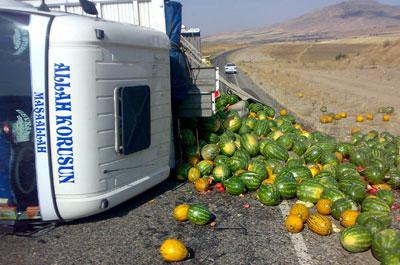
Allah-Korusun1
‘Maşallah’ and ‘Allah Korusun’

Way back in the mists of time and memory, when J and I used to visit Turkey for work as well as pleasure, I was drawn to the number of buses and trucks (and even the occasional car) that sported either ‘Maşallah’ or ‘Allah Korusun’. Wherever we travelled in this vast country there they’d be – plastered across the cabs or tailboards of trucks; above the back windows of coaches and dolmuş (shared mini-bus). It might have said ‘Kamıl Koç’ or ‘Pamukkale’ or ‘Maersk Shipping’ along the sides of these vehicles, but there was obviously a common denominator binding them into a couple of huge, national conglomerates. And why not? After all, back then, with much of the economy nationalised and centralised, there wasn’t the variety of big companies you see today. Tekel supplied booze and tobacco and Petrol Ofisi supplied fuel – that was it!

Allah-Korusun2
Allah Korusun in Kastamonu
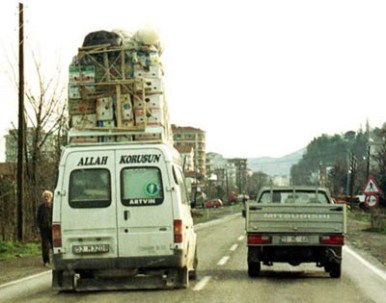
allahkorusun1
Allah Korusun in Artvin (minibus is doing the overtaking)

It was years before I realised that ‘Maşallah’ and ‘Allah Korusun’ were not a couple of huge, nationalised logistics companies but rather a philosophical observation on the insanity of venturing out onto Turkey’s murderous roads in the company of penilely challenged, existentially oblivious male drivers.

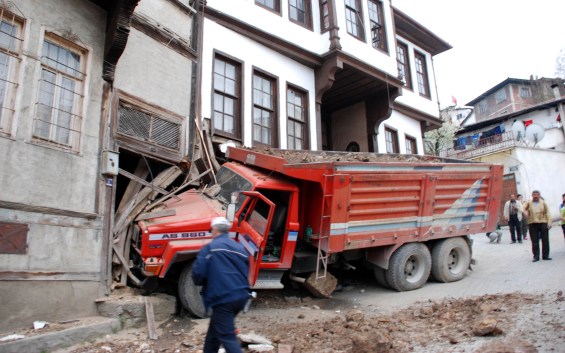
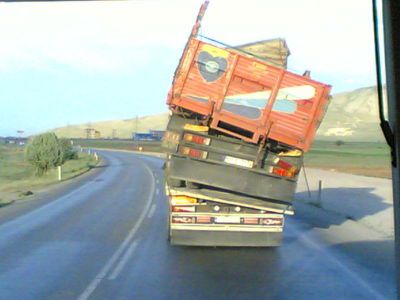
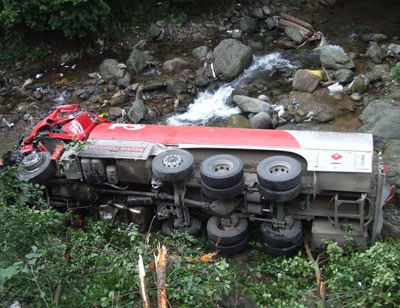
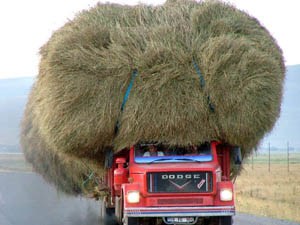
Here are a few examples where the gods did not ‘korusun’; and some fine examples where ‘Maşallah!’ is the only appropriate response.

‘Maşallah’ (variously interpreted as ‘My God!’, ‘Wonderful!’, or ‘I can’t believe what I’m seeing/hearing!’ etc) and ‘Allah Korusun’ (God Protects – or not).

Allah-Korusun91

petrolofisi
Petrol Ofisi Allah korusun
Kars-Allah-Korusun2
Allah Korusun in Kars – why make 3 trips .
bus-full-Masallah2
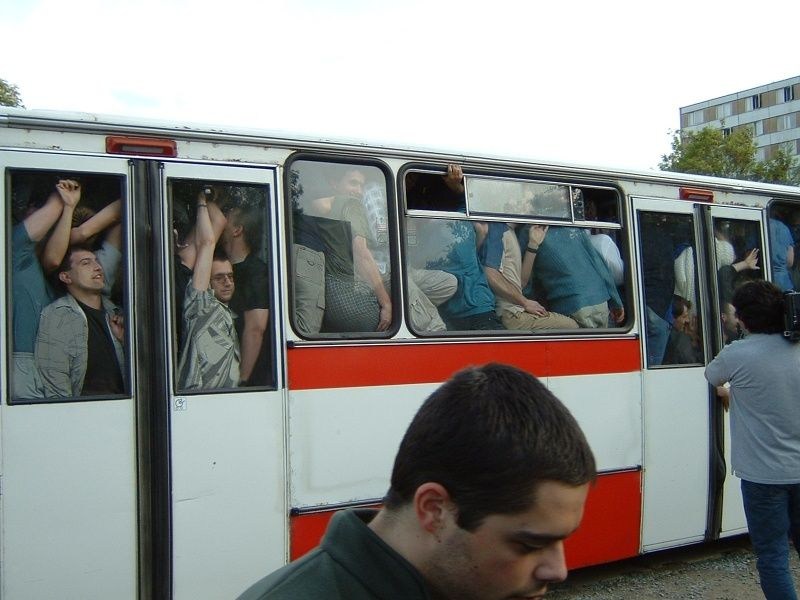
Dolmuş – stuffed bus Maşallah!

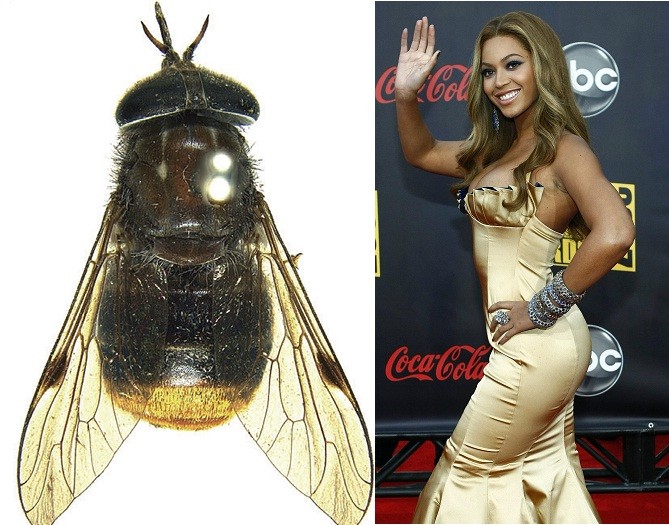
. . and finally, because when I used this picture in a post about the newly named ‘Bayonce Fly’ from Australia, it generated a staggering number of ‘Maşallah, Maşallahs!’ from Turkish fans who did not appear to share my interest in entomology (I have no records for English or Strine speakers).

beyonce fly
Scaptia beyonceae is a species of horse fly with a golden butt-end found in the Atherton Tablelands in north-east Queensland, Australia and Bayonce a species of singer with a golden . .

Alan in Okçular

Intriguing!

J and I ramble about quite a lot – we ramble up and down mountains – we ramble up and down backways and trackways – sometimes we ramble in circles whilst rambling up and down. Rambling is fun! It is also intriguing!

(first posted on Archers of Okçular 12.2.2012)

Let me explain; in 15 years of wandering around this beautiful country of Turkey we have come across countless examples of that which intrigues us. We have found what intrigues us near habitation and we have found examples to intrigue us miles from any habitation. We’ve found them near rivers and ruins; near pathways and fields; we’ve even found them on the tops of snowy mountains! In fact, hand on heart, I can’t think of a single ramble where we have not found at least one of them and we really are intrigued by this phenomenon.

Now, behind the impatient tutting I’m hearing from you, and the ‘Oh! For gawd’s sake will you get to the point!’ mutterings under your breath – you have to admit that you’re intrigued, too. So I’ll reveal this intriguing mystery in the hopes that someone out there can give me the answer or reason ‘why?’

Shoes!

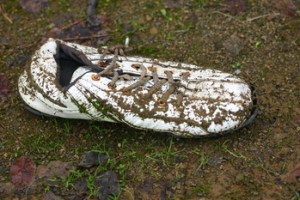
shoes1Not shoes as in pairs of shoes – there are never pairs of shoes – just shoes! Wherever we go we find single shoes lying abandoned; often in the most unlikely places. Has anyone else seen this strange manifestation? I mean, it can’t be just us, can it?
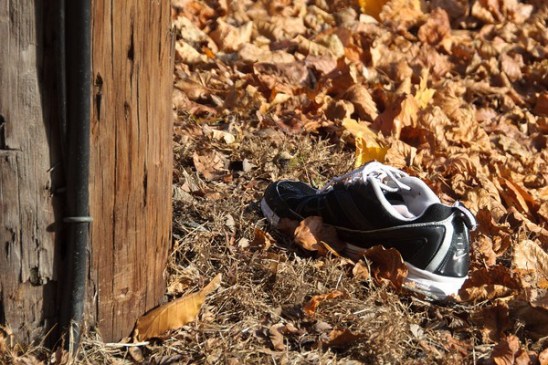

Actually, there is a double intrigue here; first the abandoned shoes all over the place; and then there’s the question that I keep asking myself, I even wake up at night asking myself this question – ‘Didn’t they notice?’ I mean, there they are, half way up or down a rocky, thorny mountainside and the fact that a shoe has gone missing from their foot has completely passed them by! If a horse loses a shoe it pretty soon lets you know; if I lose a shoe I’m hopping about on one foot right away! Yet there are thousands of Turks out there who get back home from doing whatever it is they were doing, go to kick off their shoes and . . . ‘Allah hallah! İnanılmaz!’ (‘My God!’ they say, ‘Unbelievable!’) And I’m intrigued!

shoes2
some of them are in quite decent condition

shoe3

Alan in Okçular

Down In The Jungle . .

‘Down in the jungle living in a tent, Better than a pre-fab – NO RENT!’

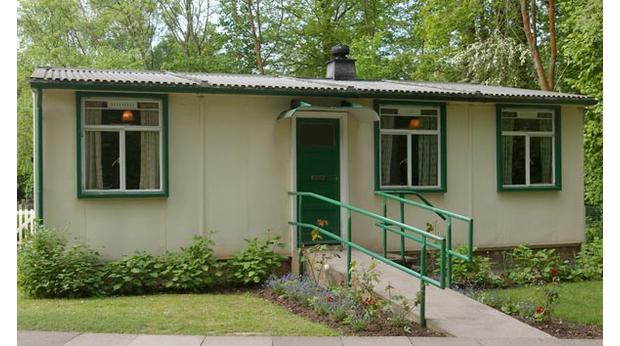
prefab21So went the ditty when I was a kid growing up in the late 40s, early 50s. Bombs had wreaked havoc on the property market in the UK and ‘prefabs’ abounded – designed as a temporary solution to the housing crisis, they were still around in a few places when I last visited my childhood haunts a couple of years ago. You may well ask why and the answer is simple – people loved them – and still do!

I only ever experienced them as a visitor, so I have no first-hand anecdotes to pass on. My earliest recollection of home was a converted blockhouse with a flat, concrete roof three feet thick! Windows had been knocked through but the door was still a huge steel affair that clanged like something from a ‘Hammer House of Horror’ movie. Because my parents were near the top of the re-housing list we soon moved into one of the first ‘council houses’ to be built. These days such places are called ‘social housing’ and have a decided stigma attached. Back then they were modern, clean, available for a modest rent, and people were grateful for a decent roof over their heads.

prefab2‘Prefabs’ were council owned as well, until Maggie Thatcher sold off social housing in a very successful ploy to convince the working class that they were now ‘home-owners’ and should therefore vote Tory! This is the only reason these little gems survived – those who loved them, now owned them and could not easily be pushed aside for some flash, new shopping mall. Twenty one in original condition on the Excaliber Estate, Catford,South London have been granted Grade 2 Listed Building status. If ‘prefabs’ were people they’d have a huge following on Twitter and Facebook.

Anyway, enough of all that. Time to get to the point.

These days, our local town of Ortaca is a thrusting, bustling and decidedly prosperous looking place; posh, modern apartments and villas abound. So, the story of Mehmet Orhan and his ‘prefab’ needs to be told before ‘the council’ moves in and ‘condemns’ him.


prefab3As global warming kicks in and average temperatures rise, the prosperous citizens of Ortaca have set about adding their carbon footprint to the whole by purchasing the odd klima (air conditioning) or three. Out in Karaburun Mahallesi Mehmet Bey has ever been one to move with the times. He already has satellite tv and a fine güneş enerji sistem (solar energy hot water), so adding to his creature comforts with a klima was not given a second thought; ‘Every house should have a klima’ he said.
His latest life-style choice has certainly raised his profile in the community with locals and tourists stopping by to photograph the installation. Mehmet Bey obviously loves his home which offers many fiscal advantages over more conventional accommodation. And that brings this story very nicely full circle . .

‘Down in the jungle living in a tent, Better than a pre-fab, NO RENT!

I thought this was a hoot when I first posted it 8.2.2012 – I still do!

Alan in Okçular

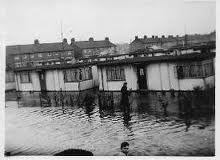
ps This was the situation on the Scrapsgate Road, between Halfway and Minster on the Isle of Sheppey just half a mile from where I lived after the East Coast Floods of 1953.

53 floods

A Bit Of A Carp

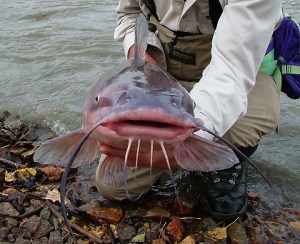
carp1Having a bit of a carp can feel like a very satisfying thing to do – unless one happens to be on the receiving end when trying desperately to maintain a reasonably positive mental attitude, that is. J and I had a bit of a carp recently whilst we were visiting İznik. Actually, it wasn’t a carp, it was a catfish and a big bugger at that – 65kg! But I digress –
Where was I? Oh, yes! Carping! When we hail from a different culture or country or county we seem to find it easy to have a grumble about ‘them’ when things are going off at a tangent to the direction that we know they are supposed to go. You know what I mean; you’re in a hurry and the road is closed, the diversion sets you off in the opposite direction and then the signs run out! The man said he was definitely coming tomorrow (İnşallah!), you waited in and he never showed! That expensive DVD player went wrong the day after the guarantee expired and the bloke shrugged his shoulders and pointed at the latest model! ‘Never like this back home!’ you grumble, ‘we had rights!’ ‘Everything was much more organised back home in . .!’ you carp.

Been there – done that – got the bloody tee-shirt that dissolved the first time it was washed in that BEKO (made in China like all the rest) washing machine! So here I offer you an uplifting little true story about the stupid way they do things in this arse-about-face adopted country of ours – are you sitting comfortably? Then I’ll begin;

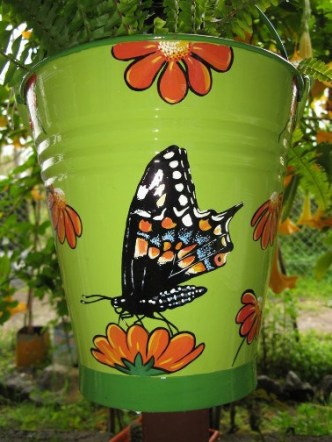
I have a very dear and courageous friend from my village by the name of Gülay. Gülay is engeli – disabled/differently-abled, or, according to the sign that used to be on the toilet block at Ephesus – ‘Defective’! I’m deadly serious, that’s what it said. Anyway, after the accident 11 years ago that left her paralysed from the chest down, Gülay taught herself to paint and these days she is pretty, bloody good at it! She loves to do portraits and the like and would dearly love to earn her living from doing these some day – meanwhile she creates beautiful and original gifts using stones, tins, buckets, jars etc. Gülay is anything but ‘Defective’!


bucket1Earlier this year she contacted a company in İzmir which produces really nice enamelled buckets in various sizes. She explained her situation and what she did with them – next thing she knew a huge box full of various sizes and colours of buckets arrived at her house together with a note from the proprietor wishing her well and offering the assorted items as a gift. Gülay was stunned and did a bit of crying. She painted up a few buckets and sent them back as a thank you  to the ‘stranger’ in İzmir who had ‘not walked by on the other side’. A fellow human being who thanked his own lucky stars and decided to share a little of his own good fortune.

Today, she rang J and me and she was in tears again – we had just been to visit her with another friend to make arrangements with her to exhibit at the Çaliş Christmas Fair next month. After we left a cargo truck arrived with another great box full of buckets together with a note from her ‘Good Samaritan’ in İzmir saying that he often thinks about her and wanted to support her efforts to be productive and independent.

Makes you think, doesn’t it? Next time I’m tempted to carp about crap (interesting that the same letters make two negative words that have the same meaning) service/system/bureaucratic balls/etc I’ll reflect that our Turkish hosts have a lot more to teach us than we have to teach them; including the fact that when it comes to carping, the very best carp kebaps can be found in İznik!

first published on Archers 4.11.2011

Alan Fenn, Okçular Köyü

I’ve Got A Slug!

your average family run business

Shopping in Turkey is a different experience from shopping in, say, the UK. Here, the preponderance of family run businesses pretty much ensures you will be treated with consideration, kindness and plied with tea for as long as you care to remain. There are the odd exceptions, of course, where the soft porn pages of the newspaper or the imagined rough end of a finger nail are deemed in need of greater attention and interest, but they are rare.

Returning a newly bought but faulty electrical item is a different matter. At first there is great concern and amazement that such a thing could happen. There will be much discussion and detailed examination of the object. Numerous attempts will be made to find even the faintest glimmer of life. When these fail they will offer to return it under guarantee.

Now, guarantees in Turkey are interesting things; they are seldom stamped and dated as they should be which can be a good thing or a bad thing. It’s a good thing when your guarantee has just run out and you are dealing with a shop owner who knows you and values your continued custom. He will take your unstamped guarantee, stamp it and write in an appropriate date. Then, because it is required, he will need to attach the original till receipt which none of us ever remembers to keep. This is not a problem because in the drawer under the counter are loads of old receipts that he’s collected and he will find one for the approximate value which he will now staple to the guarantee. He’ll smile and say ‘Problem yok!’ and point you towards the accredited repair man down the street who will have it all fixed up in no time at all.

That assumes that it is not too complicated a piece of electronics or the supplier has a ‘return to base’ service policy. Here you run into a bit of a brick wall – ‘OK!’ you say, ‘How long will it take?’ Much sucking of teeth. Mostly he won’t know (he’s been in this business for 30 years but this is all a bit new to him). ‘Not good enough’ you say, ‘it’s brand spanking new. It doesn’t work and I want it replaced right now.’ Now he’s looking at you as if you are from an alien planet (which you are!). You expect him to take back a broken thingy and give you a new one. Are you mental? By now you probably are! ‘All right’ you say ‘give me my money back!’ Ha! Now you really have proved you’re a bug-eyed monster from another planet.

In the end you will see it his way and it will be sent away under guarantee and your chances of ever laying eyes on it again will be slim. You’ll call in each week in the forlorn hope that it has come back or a replacement has arrived only for your shoulders to sag as you slump to the stool the owner has thoughtfully provided. You hardly notice when a glass of tea appears, miraculously in your hand. The shop owner will be deeply distressed at your distress, he will empathise totally with you about the awful state of customer service and care in Turkey – suddenly his face will brighten, he’ll pull down a gleaming chromium marvel from the shelf, and cry triumphantly, ‘I’ve got a slug!’

Sound familiar? Below is an extract from the famous Monty Python ‘Dead Parrot Sketch’.

Mr. Praline: “VOOM”?!? Mate, this bird wouldn’t “voom” if you put four million volts through it! ‘E’s bleedin’ demised!

Owner: No, no! ‘E’s pining!

Mr. Praline: ‘E’s not pinin’! ‘E’s passed on! This parrot is no more! He has ceased to be! ‘E’s expired and gone to meet ‘is maker! ‘E’s a stiff! Bereft of life, ‘e rests in peace! If you hadn’t nailed ‘im to the perch ‘e’d be pushing up the daisies! ‘Is metabolic processes are now ‘istory! ‘E’s off the twig! ‘E’s kicked the bucket, ‘e’s shuffled off ‘is mortal coil, run down the curtain and joined the bleedin’ choir invisibule!! (sic) THIS IS AN EX-PARROT!!

(pause)

Owner: Well, I’d better replace it, then. (he takes a quick peek behind the counter) Sorry squire, I’ve had a look ’round the back of the shop, and uh, we’re right out of parrots.

Mr. Praline: I see. I see. I get the picture.

Owner: I got a slug.

Alan Fenn, Okçular Köyü

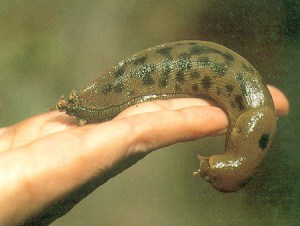
ps for those desperately disappointed not to have a picture of a slug – see below:

slug

An Opinion On Yorkshire Men (and Women) And The Origins Of Pedantry

Some of the best or most interesting posts from Archers of Okçular over the years

first posted: 7.8.2011

There is a saying outside of Yorkshire along the lines of; ‘Tha can aluz tell a Yorkshire man (or woman) – but tha cannot tell ‘im (or ‘er) much!’ Folk from the rest of the UK mostly take a dim view of Yorkshireites – they are perceived as loud, assertive, overly friendly, obsessive about the superiority of Yorkshire cricket, and pedantic to the point of insanity!

Geoffrey-Boycott1
Geoffrey Boycott – a rare example of a non-pedantic Yorkshire man
dickie
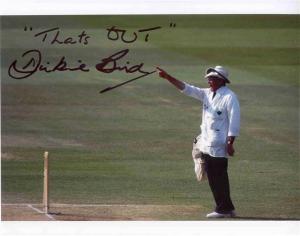
Dickie Bird – another rare example of a Yorkshire man without a single pedantic bone in his body

They also speak a totally alien language from the rest of the UK – apart from those from Newcastle where, not only is the language alien, it couldn’t be deciphered even if you had the Rosetta Stone!

Coming, as I did, from the South, all Yorkshireites consider my accent ‘plummy’ and I am therefore labelled a SNOB in big letters! Yorkshire people have an opinion about everything because they know everything there is to know and they don’t mind letting everyone within earshot know that they know. Pendantry was conceived and birthed in Yorkshire.

J is a Yorkshireman (or woman)!

It therefore follows that she can be somewhat pedantic ( I know – I’m soft-peddling, but J will read this at some stage and Yorkies are feared and fearless terriers), although having been around me for many a year, she has mellowed a tadge.

As evidence of Yorkshire pedantry, I offer the following from the letters pages of the renowned UK publication ‘Private Eye’.


Eye 1289 Pseudo Names:

. . . I’ve just come back from ‘t field and a dog’s been at the sheep – it’s a blood bath.

Farmer Geddon (geddit?)


Eye 1290 Pedantry Corner:

. . . Farmer Geddon should at least try to follow the basic rules of grammar when he next attempts to take the piss out of North Country patois. He should understand that the purpose of an apostrophe is to fill the place of missing letters, so his phrase: “I’ve just got back from ‘t field” is nonsense. It should, of course, read: “I’ve just got back from t’ field”.

Peter Sharples


Eye 1291 Pedantry Corner:

Farmer Geddon is arguably more correct than Peter Sharples in placing the apostrophe before the “t” in north country dialect “t” for “the”, this being derived from the neuter form of “the” in Anglo-Saxon (theet). Compare Dutch “het” (masculine “de”).

(The form ‘t is Yorkshire dialect, whereas Lancashire is generally th’).

Charles Warwick


Eye 1293 Pedantry Corner:

To Farmer Geddon, Peter Sharples and Charles Warwick I am obliged to say “Nay lad!”.

Being South Yorkshire born and bred, (although now away many decades), in our area the ‘the’ was never a ‘t’ at all. The ‘the’ was and is an almost imperceptible hiatus between  two words. The nearest I can come to writing it is “trouble at ‘ mill” – the ‘ in place of the three missing letters of ‘the’. Or, a longer example, “Down ‘ Wicker weer ‘ watter runs ovver ‘ weir” (three missing thes).
The important thing to remember is that to really represent the accent accurately you must definitely sound these examples out loud wherever you are.
I especially fondly recall ” ‘t i’n’t in ‘ tin” (only one the here).
Yours for ‘ Society o’ ‘ Preservation o’ Regional Accents,

Janet Surman.  (for it is, indeed, she)

Alan Fenn, Okçular Köyü

ps I wish to emphasize that the above are not typos – they actually speak like that up there!

Rising From The Ashes of Archers

Thanks for joining me!

Here I’ll try and recover some of the best and most interesting posts from Archers of Okçular. I hope you enjoy re-reading them without having to wade through the dross and drivel of much that I wrote. Most of the posts of the last two years, 51 in total are permanently lost. Good company in a journey makes the way seem shorter. — Izaak Walton

post