‘Wow!’ – Ed’s View Whilst Wandering Wild Places

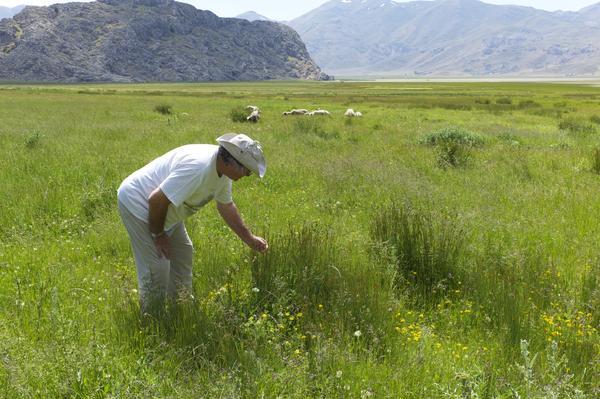
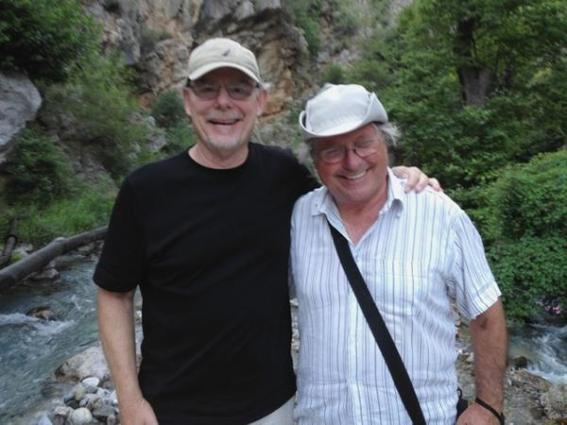
Ed is a new friend who has a deep affinity with our part of Turkey. He is drawn to mountains and wide, open vistas which I understand. Ed is from the US – California to be exact and he says ‘Wow!’ a lot. Then he says it backwards ‘!woW’ which may have more to do with his age and California Dreamin’ than the view!
Ed1

(Ed is not so much a ‘new friend’ these days as this was originally posted on Archers of Okçular June 2013)

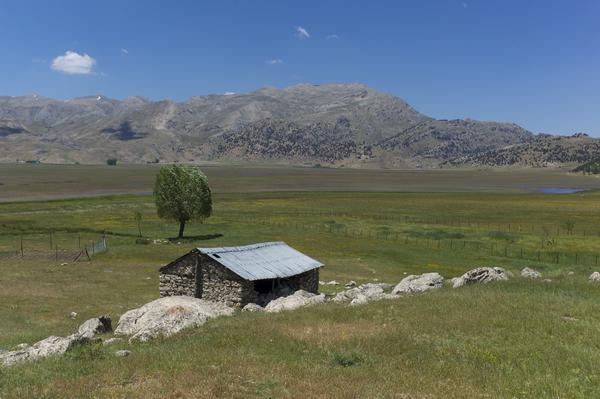
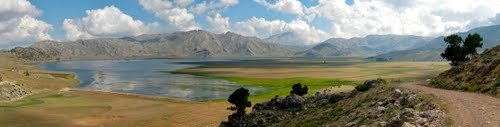
So it was that J and I offered to take him to one of our favorite ‘!woW’ places where, once upon a time, seldom did the shoes of outsiders tread – Girdev Lake which, at 1800 mts, is a long way up and over Ak Dağ mountain near the small town of Seki, not too far from the Fethiye-Antalya road in SW Turkey. As so often happens with wild, unspoilt places that take a bit of effort to get to, tourism catches on and has the effect of altering or, in some cases, totally messing up what Toprakana-Mother Nature seemed to think was really pretty good in the first place.
ed2
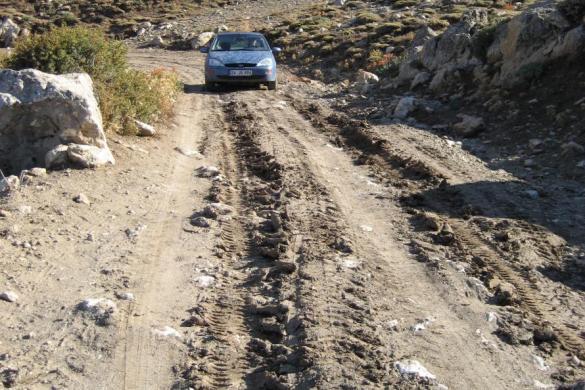
getting to Girdev – how it used to be

Access gets ‘improved’ and before long ways are being found to commodify and exploit the place by upgrading the environment.
girdev-panoramio

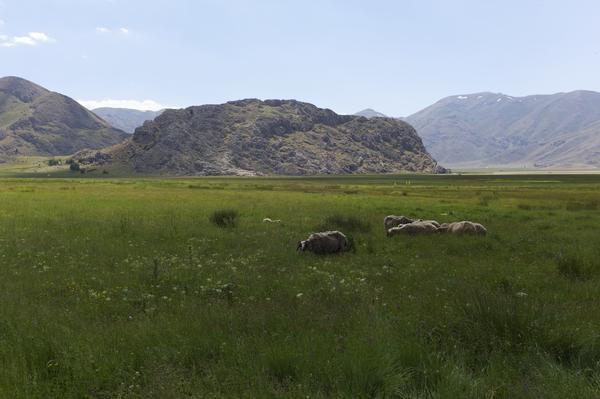
So it is with Girdev which is a sort of crater lake in that it is totally surrounded by mountains. Rain and especially snow-melt feeds the seasonal waters. No rivers flow from the lake and it drains through a sink-hole near the north end before emerging as the Kazanpınar Spring some 18 kms away near Elmalı in Antalya province. Nature’s balance meant that as the lake dried great swathes of wild flowers emerged, particularly Orchis palastris – the Marsh Orchid. Girdev is also home to many different species of birds and insects as well as the great flocks of sheep brought up there each season by the traditional nomadic herders.

That was then, this is now – tourism has come! A permanent ‘camp’ has been built to house those who want to visit this unique place for longer than a day-trip. Nothing wrong with that I say.
Girdev-dam-facebook
Girdev dam (land of lights)

What is sad is that, pandering to money from those who know no better, a shallow dam has been raised restricting the flow to the sink-hole and creating a permanent lake where one never existed before and this has been stocked with carp. Nature will adapt and species will change – my question is ‘Why does money always have to trump nature?’ There will always be consequences – nomadic herders have lost much of their traditional grazing grounds; to make ends meet will they have to resort to opening restaurants and gözleme (pancake) stalls around the lake? And what about the water quality at Elmalı as tourism expands? That said, Girdev is still yet a lonely and wildly beautiful place – as long as you miss the Jeep safari crowds!
ed3
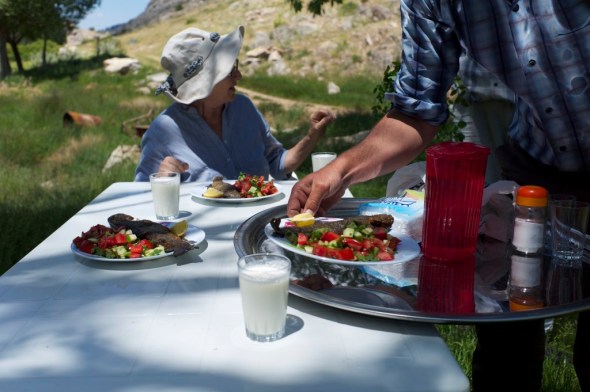
al fresco lunch – trout a la çoban

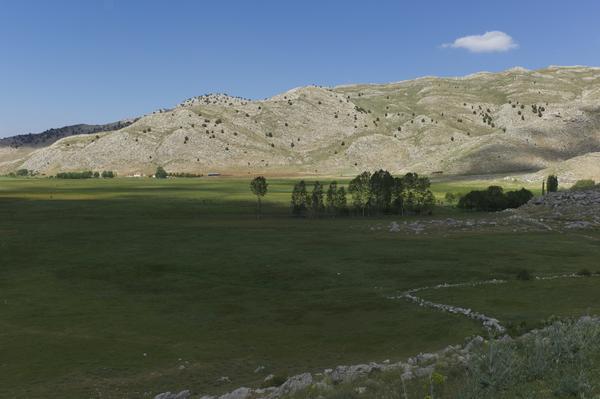
Anyway, enough of that, back to Ed and the ‘!woW’ factor. As I said, he loves to photograph vistas which means that getting anywhere can take a while longer than with most people. That said, seeing the familiar through Ed’s fresh eyes was truly refreshing and reinforced the reasons that J and I love this country so much.

So, Ed, we owe you – although I do think that that lunch with a family of herders was ample compensation!
ed4
‘Wow!’
ed5
‘!woW’
ed6
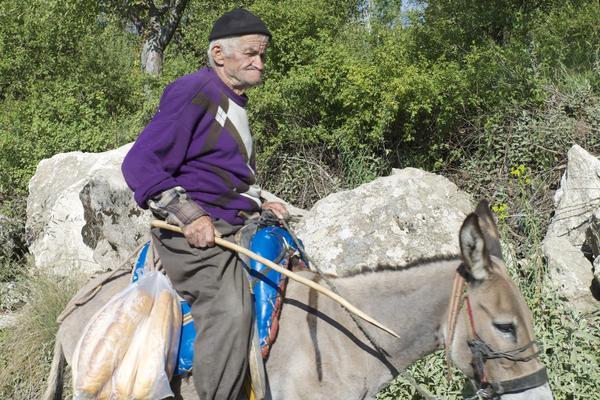
local heading home – no ‘Wow!’ being polite
ed7
Reflections
ed8
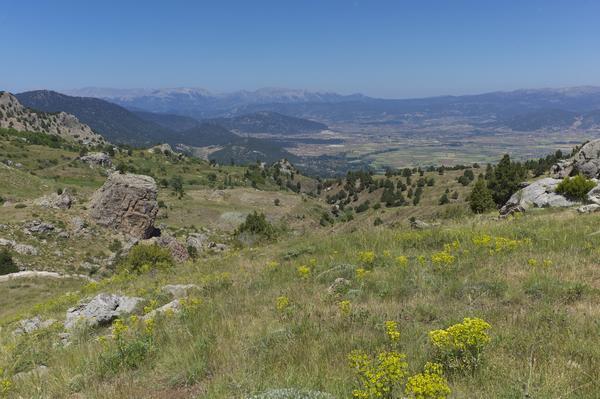
half way to the top looking down to the Antalya road – ‘Amazing! !woW’
ed9
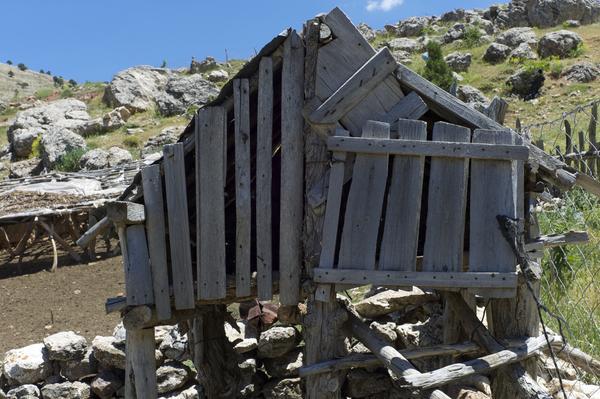
chicken coop – ‘Wow! Will you look at that thing!’
ed10
‘Oh, !woW’
ed11
Boffer bugging off
ed12
‘!woW Ed’s Rock’ – and no sign of ‘Mr Ayers’ or Alice come to that – ‘!WOW!’

So, there you have it, a mere drop in a veritable cascade of Ed’s views of this trip to the ‘wild, blue yonder’ of Girdev.

Alan in Okçular

Absolutely Fabulous!

hobbit-menu‘Hobbits!’ I thought as J and I tucked into our second breakfast of the morning – Hobbits, you see, have second everything and breakfast at our hotel was now being followed a couple of hours later by a veritable feast. We were being hosted by a couple of ranking bureaucrats (no names to protect the guilty) who were taking the opportunity to bunk off on the pretext of a public relations junket with ‘important’ visitors from Okçular.
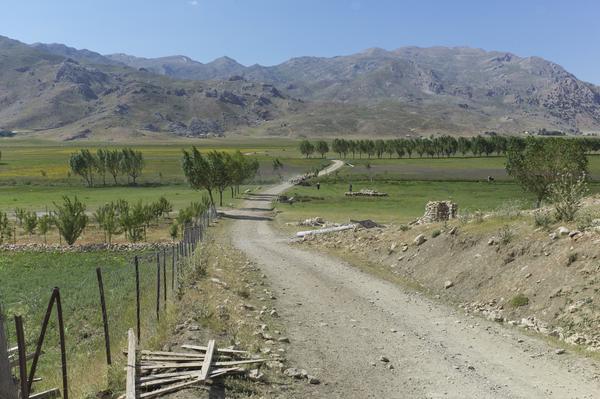
The object of the exercise had been for J and I to spend the day exploring and wandering about in parts of the fabulous Yenice National Park up here in Karabük. I say ‘had been’ because, as sometimes happens here, ‘mission creep’ blunders on to the scene and takes over. As it happens this creeping mission turned into the most wonderful of experiences.

orman1
Orman 1 leads off

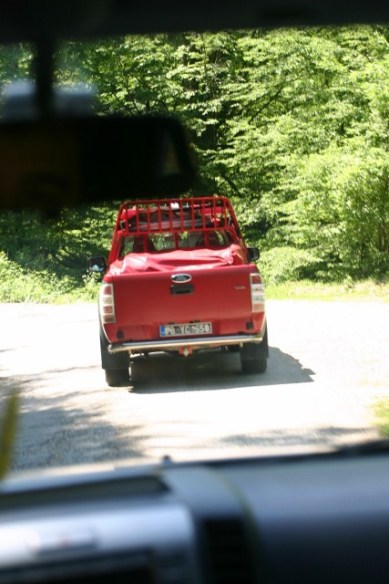
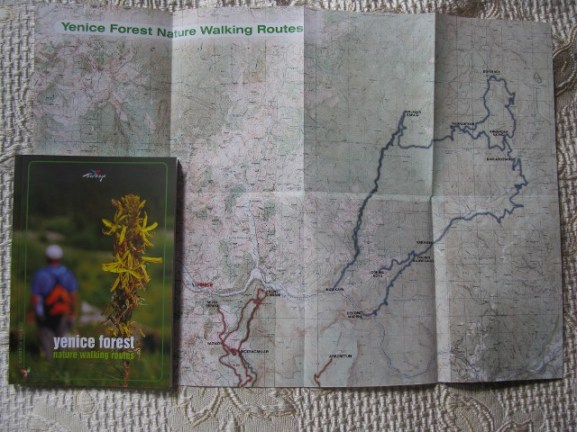
Our pair of hookey-playing bureaucrats had brought with them a couple of Orman (Forest Ministry) 4x4s and the renowned chief forester of this world-class chunk of mountainous forest who would be our guide! J and I were each presented with a copy of the excellent official guide book and maps, which we reciprocated with the Okçular book, and then off we set.

Yenice-Book-and-Map

Yenice is a vast, mixed forest set in a land of towering mountains and precipitous canyons. There are rivers and plateaux, scattered villages and upland meadows, ponds and meres. Access roads to the lower villages are reasonable but once above these you are in the land of the 4×4, ‘Shanks’ Pony’, real ponies or even buffalo!

Rhododendrons drip down the mountainsides at this time of year adding bright splashes of colour to the forty-shades-of-green of the trees.

Yenice-Forest2
Ahmet Elbir – Chief Forester and passionate defender of Yenice

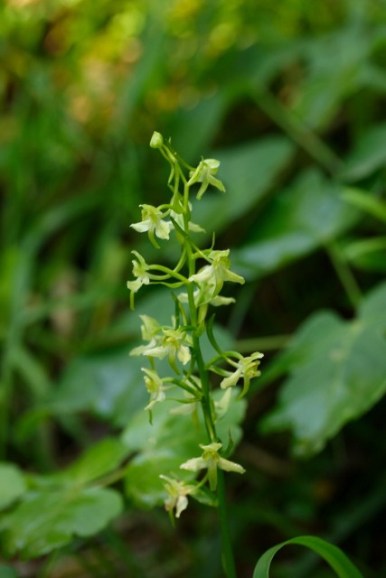
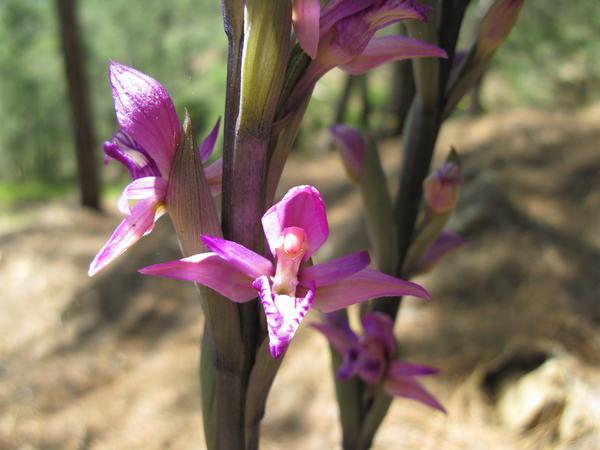
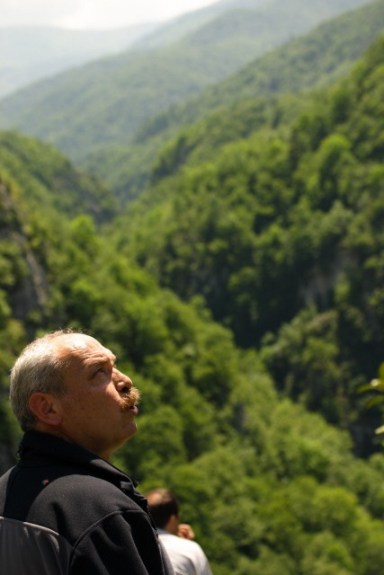
Ahmet Elbir, our passionate chief forester and guide, stopped at various places along the road and led us through trackless forest to places that looked out over stunning views and dizzying drops. It didn’t take me long to find my first orchid of the trip.

unknown-orchid-1
as yet unknown orchid

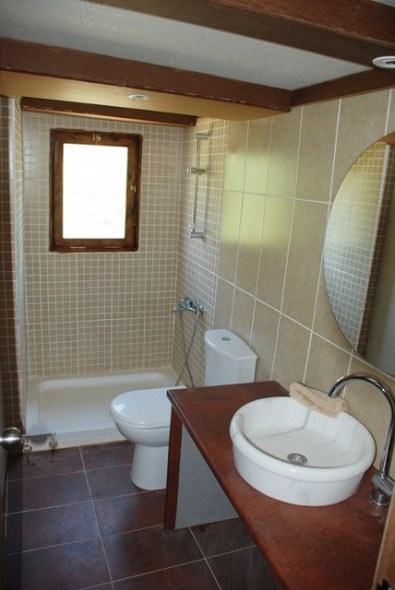
We stopped for a coffee at a newly refurbished traditional wooden house that is being converted to a lodge for walkers and cyclists. Albergo Butik Otel will be open for guests in about a month and I can tell you that J and I will be back sometime soon – they don’t have a website up yet but you can get info at Yenice kaymakam’s site.

guest-house-bathroom
always a good idea to check the bathroom!

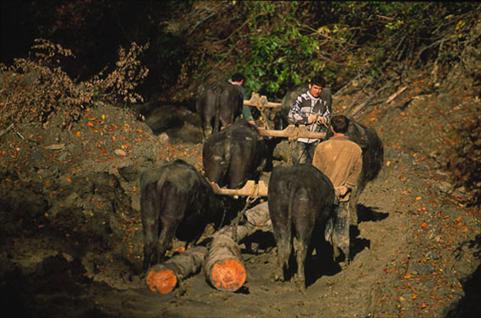
Back on the track the 4x4s were soon demonstrating why they are essential tools for the guardians of this forest. There is so much water flowing that many parts of the route are a mud bath – in fact, such is the terrain that much of the logging that is done relies on teams of buffalo to get the timber out.

buffalo-logging2

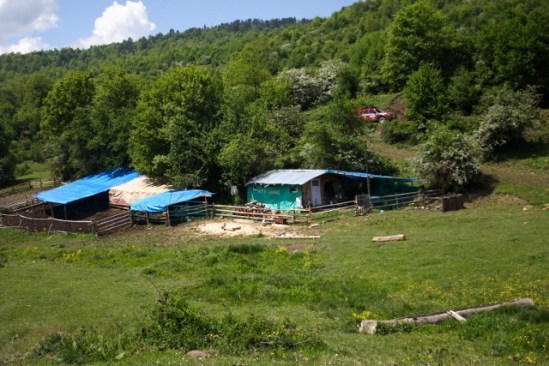
We slithered, bounced and ground our way upwards until, around a bend in the track, a great, area of upland meadow opened up to us. Cows and sheep grazed and kangal dogs kept watch against bears (which some of the party had spotted lower down), lynx, wolves and human intruders. We debussed and wandered a short distance to the temporary homestead of a herding family who, forewarned, were to be our hosts.

shepherds-house

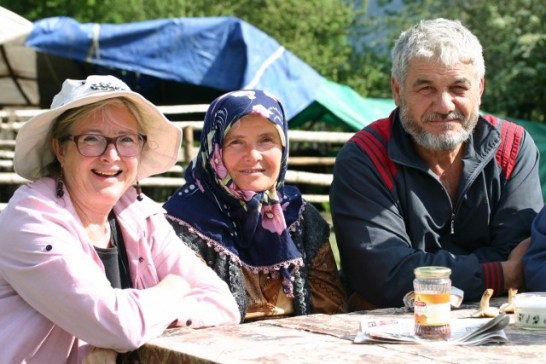
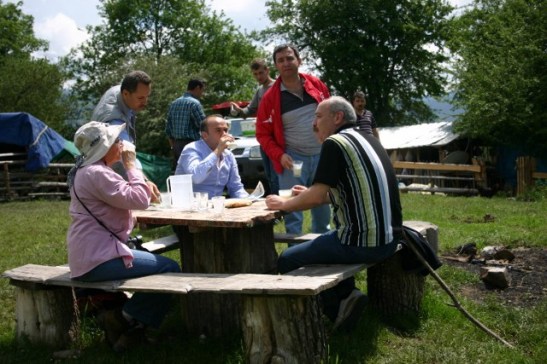
Greeted like long-lost cousins we were soon tucking into warm, fresh-baked bread, home-made cheese, salad, ayran, chilled spring water and lashings of tea.

our-hosts
J with our generous hosts
plenty
lashings of ginger beer!

A great platter of fresh woodland fungi was produced with the promise that this would be cooked up and served with more fresh bread after we returned from our hiking/wandering.

fungi-feast
WOW man! – then say it backwards WOW!

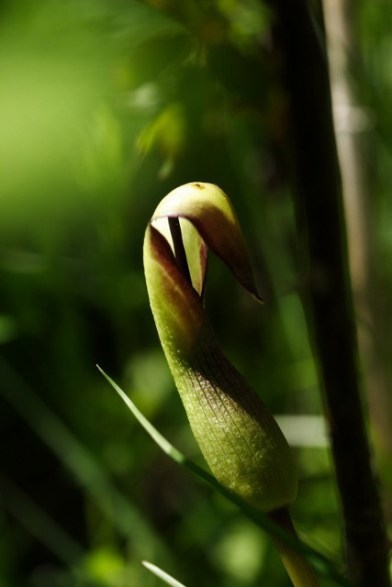
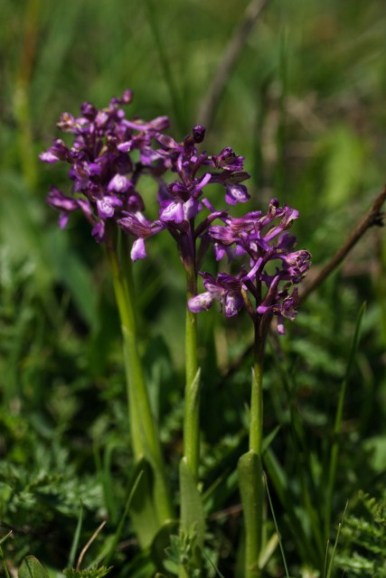
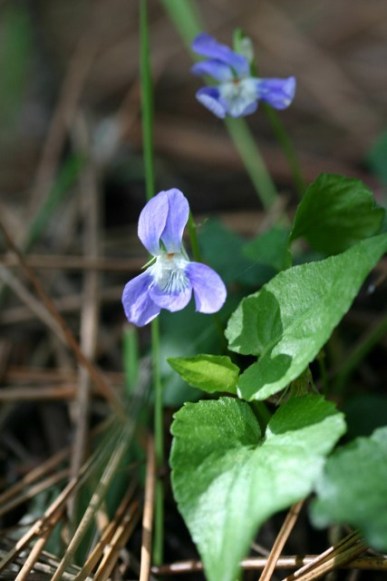
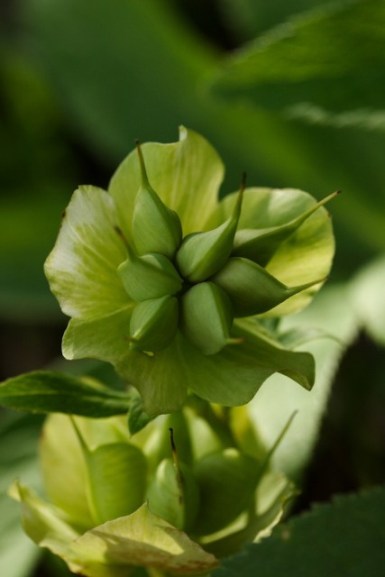
Hiking up the gentle slope I was soon distracted and side-tracked by swathes of orchids and violets, a species of arum and a number of other plants that will have to wait until I get home to my reference books for identification. Such is the geography of this vast forest that  micro-climates and various eco-systems abound – the diversity is mind-boggling!

Arum
unknown Arum – not vulgaris
unknown-orchid-21
another unknown orchid (as yet)
violet
pale blue violets
strange-flower
the seed pods of the hellibore
muscari
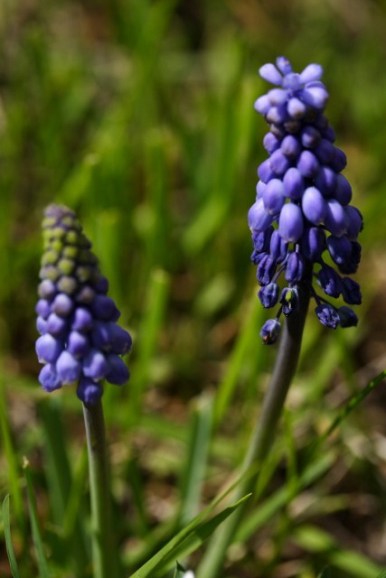
Muscari – and there was so much more

Back at our host’s encampment we were soon tucking into a mound of succulent fungi, fresh bread and tea. We were joined by the matriarch of the family and a splendid time was  spent with much chat, laughter and hugging that is such an endearing quality of Turkish country folk.

our-sponsors
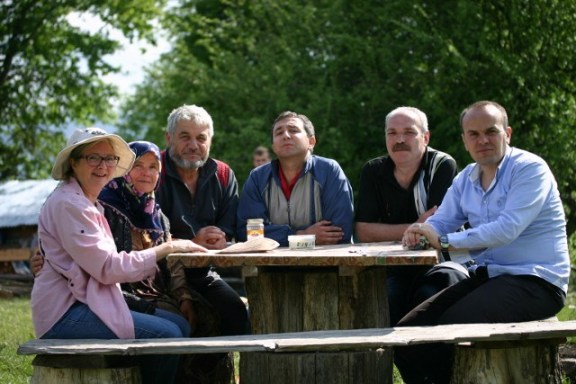
truants, forester, shepherd hosts and a tourist (serious faces aside we had a great time)

Later, as we slid and bounced our way back down to the less civilised civilised world, J and I were left with the warm glow of gentle kindness, our cameras full of reminders of sights and things.

wild-ride
it was a wild ride back down – this was the view through my eyes as well!

It has been one of the most absolutely fabulous days ever and we have our two truant bureaucrats, our celebrated chief forester, their drivers and a generous family of mountain shepherds to thank for the experience – Oh! and Toprakana – Mother Earth, of course!

Alan in Okçular

ps since this post from Archers of Okcular was posted May 2013 this amazingly beautiful place has been under threat of a hydro-electric dam project. I guess over the retired body of Chief Forester Ahmet Albir!

A Rose By Any Other Name

r1Last week I was rambling on about wandering over the mountains and getting overly excited about a huge stick of ‘asparagus‘ that I’d discovered. In my sweaty, fevered state I’d convinced myself that it must be the biggest tongue orchid anyone had ever seen and vowed to return this week to check it out once it had flowered.

Two things came to mind this morning; well, three actually: 1 – I should check my reference stuff more thoroughly; 2 – I should keep my mouth shut until I know what I’m talking about (a point J makes often); 3 – J can be a hard taskmaster in an ‘Onwards and Upwards’ sort of way.

We’d determined to revisit the site on the very steep mountainside by approaching from a different direction. We knew there were no tracks and that footing would be precarious in places – the best we could hope for was a lot of sweat and a goat track to guide us. It proved to be a heart-pounding climb – even J suggested a couple of rests.

On the way we were looking out for other interesting stuff and here are a few photos to break the monotony!

r2
Orabanche aegyptiaca – Egyptian Broomrape (totally parasitic has no chlorophyll)
r3
Gladiolus italicus – Field Gladiolus
r4
Phlomis fruticosa – Jerusalem Sage

Arriving at the site of the ‘asparagus’ I knew right away that keeping ‘schtum’ and checking references (engaging brain before opening mouth) is a good mantra for there were indeed a few that were open including the one in the photo below.

r5

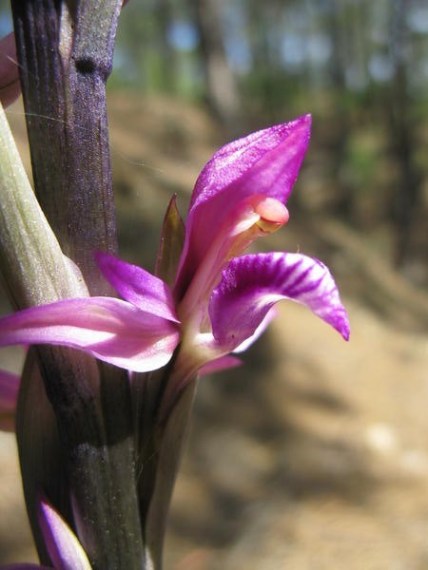
What we have here ladies and gentlemen is Limodorum arbortivum – the Violet Limodore or the Violet Bird’s Nest Orchid (for some obscure reason). This orchid is interesting in that it has no leaves, lives off decaying matter and is totally dependant upon, but not parasitic of, fungi of the Russulaceae family. It produces the largest seeds of any of the European orchids and the seedlings are very slow to develop staying below ground for 8-10 years before flowering! It is also fairly common and very widespread.

So, an interesting but disappointing find, especially considering the physical effort needed to get to it? Not at all, because there is a twist in the tail (or tale) – as you can clearly see from the photo it is anything but ‘violet’. We have violet near the house and in other places around the area – these specimens are pink. That means that what we have here is a variation or sub-species named Limodorum arbotivum var. rubrum which was only confirmed in 1997 and is spread very thinly on the ground only recorded at 20 other sites in Turkey.

r6

Now ask me if it was worth the blood, sweat and creaking joints . .

Alan in Okçular

Sagalassos Rising

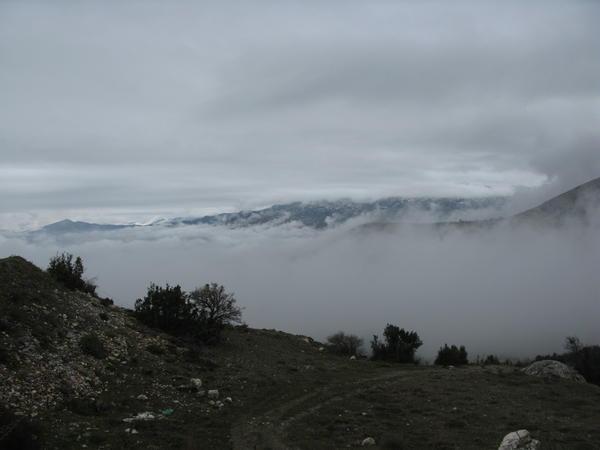
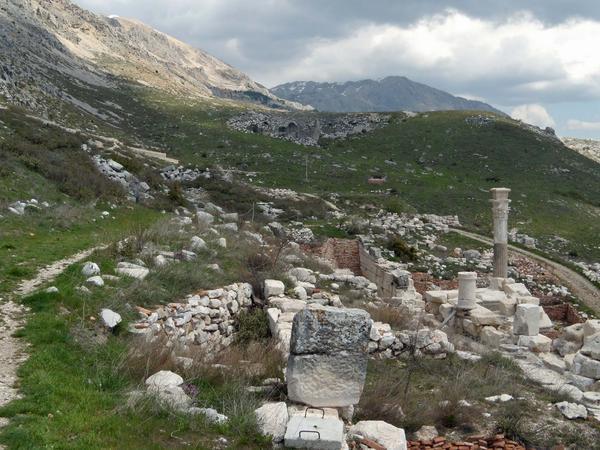
It’s at least twelve years since J and I were last in Sagalassos – I remember it well, I was cold and wet and miserable! 1600 metres above sea level up Akdağ in the Toros range it is a city of the clouds. (this salvaged story originally posted on Archers of Okcular in March 2013)

sag1

At least it was until bubonic plague, a couple of earthquakes, problems with water supplies and economic decline led to its demise. It was finally abandoned in the mid 7thcentury CE. When you consider that the place must have baked in summer and drowned in winter its a wonder it lasted as long as it did. Mind you, when its not cloudy, the views are fantastic!

Sagalassos was built by Pisidians who were, to put it mildly, anti-social war mongers and all round bad neighbours. (as I read this five years on with John Bolton now sitting at the right hand of ‘god’ I’m thinking that nothing much changes) It was the second city of Pisidia after Antioch ad Pisidia which lies near the north end of Lake Eğidir in the town of Yalvaç. Known as the ‘People of the Sea’, Pisidians were about as unruly a bunch as could be imagined – troublesome and rebellious. Many came and many tried to incorporate them into this or that empire or kingdom, however they generally left feeling deflated and defeated. Alexander had a bit more luck than most when he captured Sagalassos but Termessos never lowered its ensign and he had to wander off and conquer the rest of the known world by way of a sop to his ego! Eventually they did incorporate into the Roman Empire.

Anyway, again I digress from my storyline – where was I? Yes, twelve years ago we arrived at the site on a miserable, rainy day – the place was awash and deserted apart from the ever-present guardian who collected our entrance fees.

sag2
I have no photo from that time here’s one a couple of years later from  MyTravels2.blogspot.com

In 1990 a Belgian led inter-disciplinary team had taken on the task of excavating the site – there didn’t seem to be very much to show for a decade’s worth of summer holidays spent with trowel and paint brush kneeling in a pool of sweat! In truth, the onset of the sequel to Noah’s flood may have washed away our enthusiasm for much wandering about.

Twelve years on the transformation at this on-going project is amazing!

sag3
Roman baths from processional way – you can clearly see what was above ground

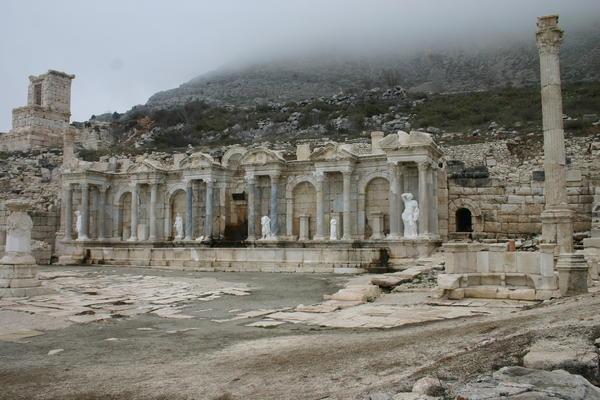
Where once all we saw were a couple of grey old blocks of weathered stone now stands exposed the Roman bath house, uncovered from centuries of debris washed down from the mountains. The Nymphaeum is a triumph of excavation and restoration – even the fountain has been returned to working order!

sag4
superb restoration of Nymphaeum – Antonin’s Fountain

Working on the principle that if at least 80% of the original structure can be pieced together from the bits lying around then a restoration, using some of the most advanced techniques known to science and engineering, will be undertaken, this team is working a minor miracle.

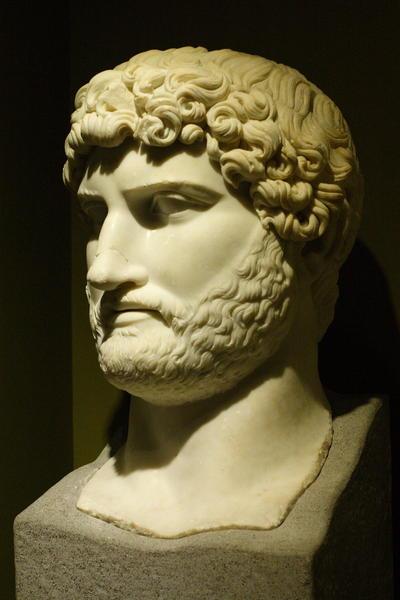
sag5
Emperor Hadrian
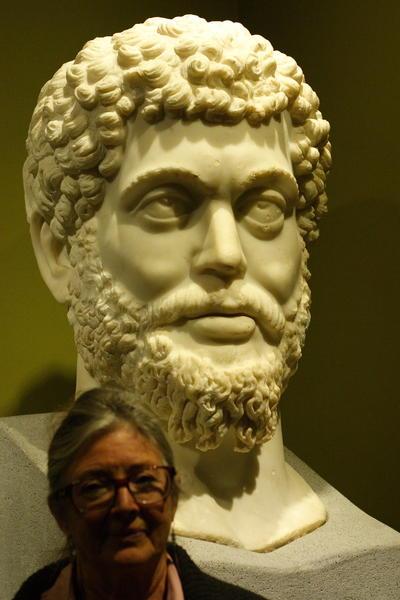
sag6
and J with Emperor Marcus for scale

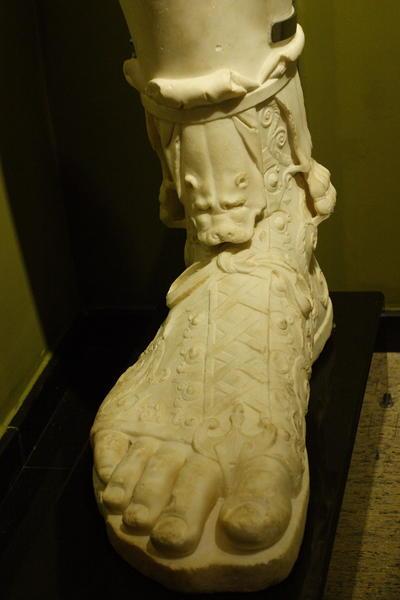
Original sculptures of figures and panels are on display at the award-winning museum in Burdur. Here you will see colossal statues, heads and even sandaled feet of such fine workmanship it will take your breath away.

sag7

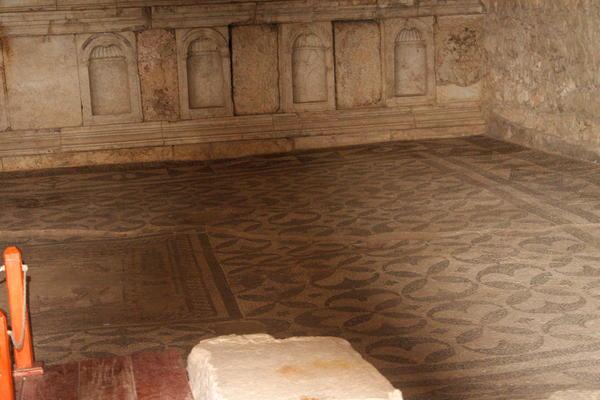
The detail is staggering! Where appropriate, exact copies using laser-guided techniques are carved from solid blocks of fibreglass and placed in their original positions at the site. It might seem intrusive, but it works! The mosaics at the Neon Library were closed to us solitary visitors and the amphitheatre remains as is, a pile of blocks waiting for its day.

sag8
Neon Library (best I could do through the grill and no discount on the ticket price!)

Because of its location, Sagalassos was never plundered for building materials – most of the pieces of the jig-saw are still there, scattered by earthquakes and buried by landslip, waiting to be given back their place as the city comes back to life. It represents, perhaps, the finest chance ever for scholars as well as we plebs and peons to gain a real insight into how a Roman era city looked and functioned. I’m really looking forward to 2025 when we make our next visit! Sagalassos – rising indeed!

sag9
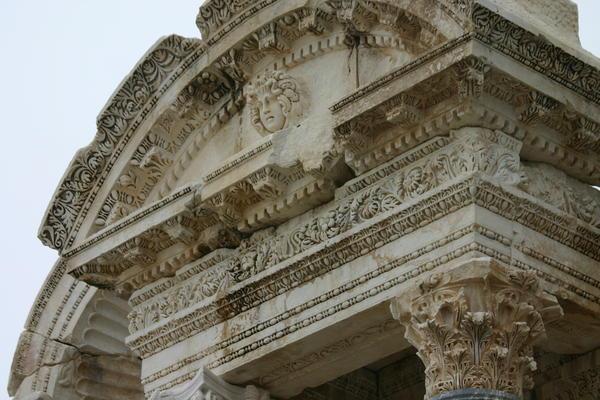
detail from Nymphaeum
sag10
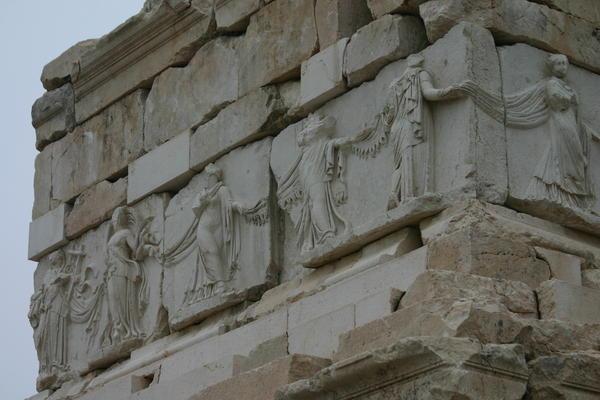
‘Dancing Maidens’ Letoon
sag11
digital reconstruction of the city in its prime

Alan in Okçular

ps J and I have been back here often since this was originally posted. Reconstruction continues, safe walkways have been laid down and detailed information boards put in place. There is ever something new to be delighted at.

The Magical Mystical Tour – Finale

So, here we have it – the finale to this wonderful, enlightening trip. Salvaged from Archers of Okcular and originally posted February 2013.

Our last port of call on this ‘mystical’ tour is to the Çarşı or Marketplace Mosque in the village of Yazır Köyü some 14 kms SE of Acıpayam just a few kilometres off the D585 Denizli-Antalya road. There are family links through marriage between Acıpayam and my own village of Okçular. The town lies more than 150kms over the mountains at the far end of the track used for centuries by nomadic herders to move their animals from Denizli to winter pastures around here.

mm1
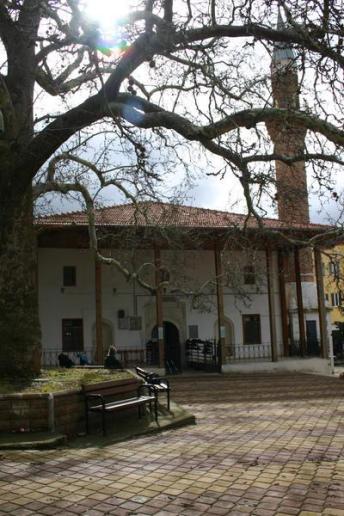
portico and magnificent plane tree

J and I arrived at the mosque shortly before midday prayers and there was time to sit under the magnificent plane tree and admire the proportions of this substantial, stone-built mosque. In fairly short order J was ‘discovered’ by one of the village ladies and whisked off to the quilting course being run nearby, which left me to drink tea and mumble and nod with the locals at the kahvehane.

Çarşı Camii is a fully functioning and very well attended mosque. With namaz over we were introduced to the imam who, as with every other place we visited, was delighted by our interest and very pleased to show us around and explain some of the history.

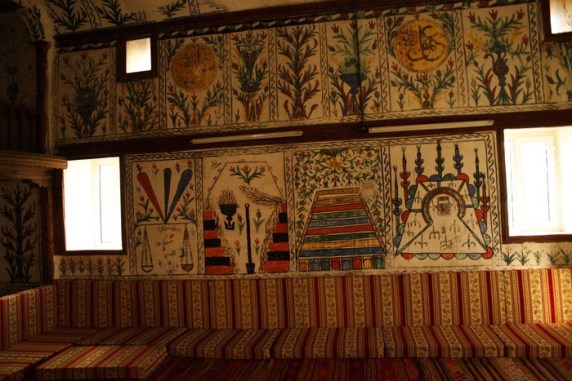
yazir1

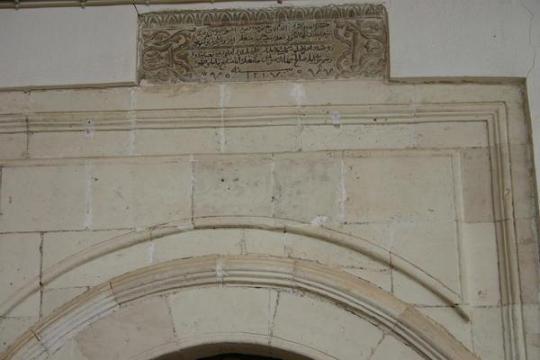
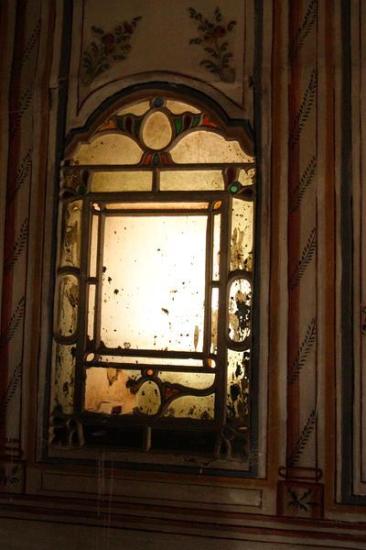
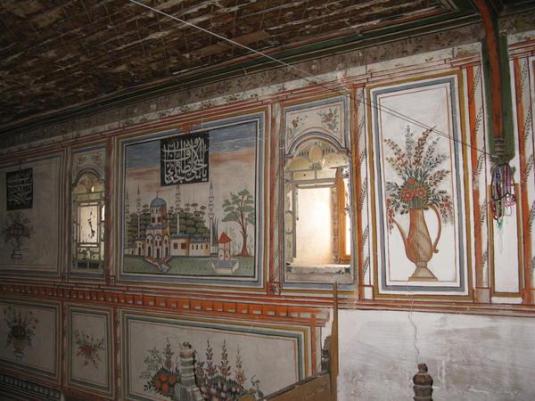
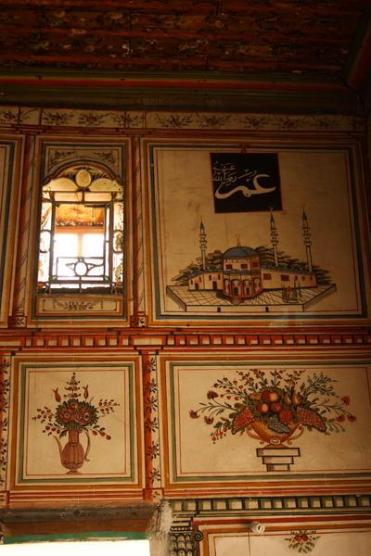
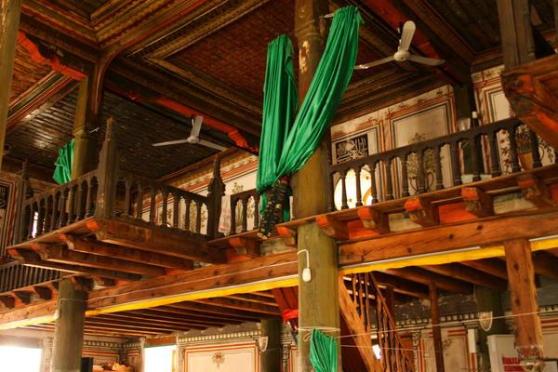
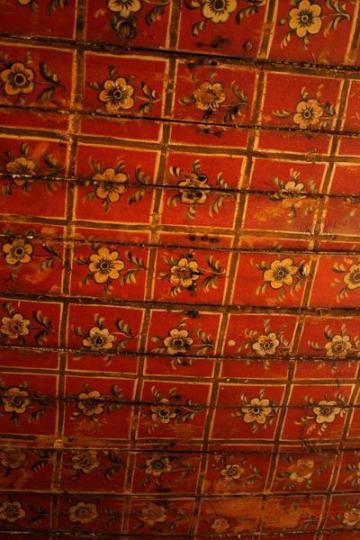
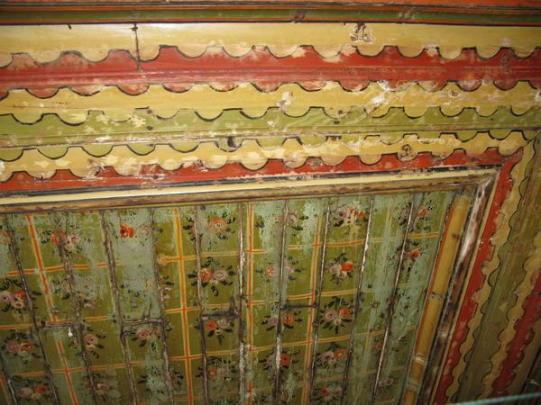
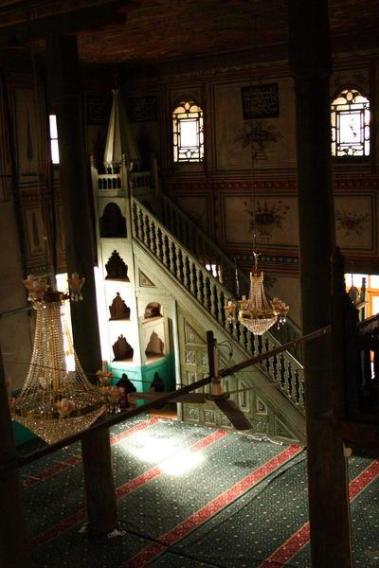
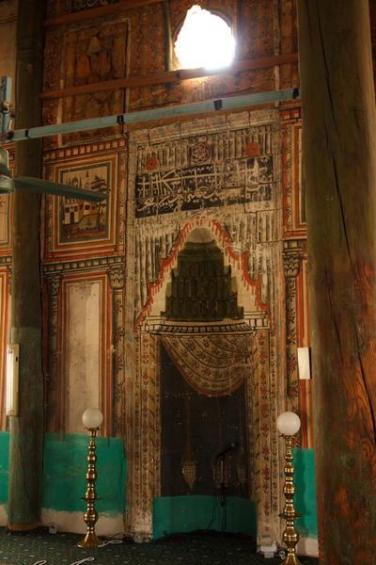
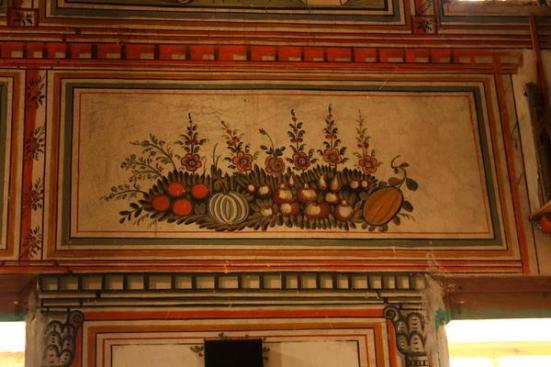
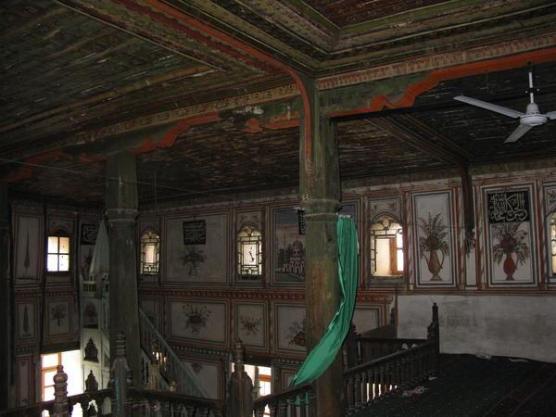
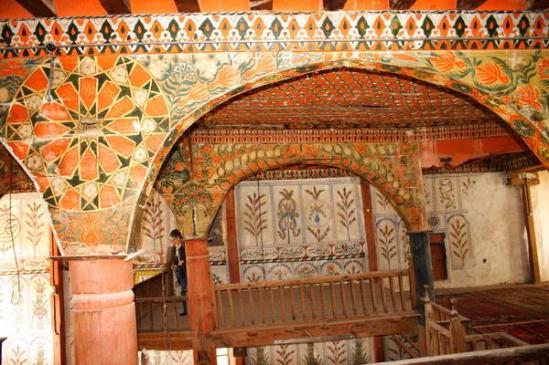
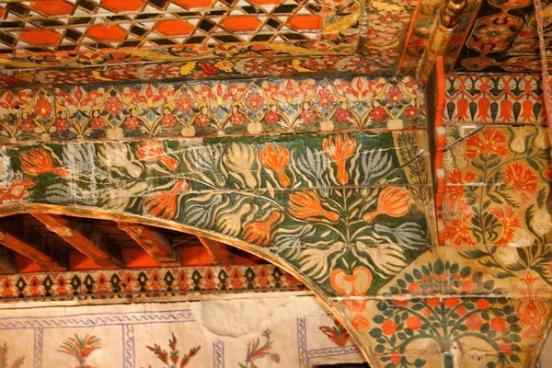
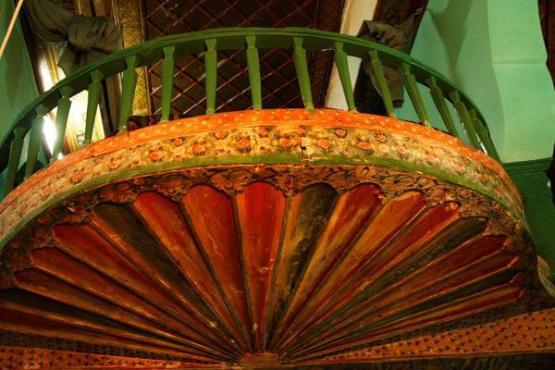
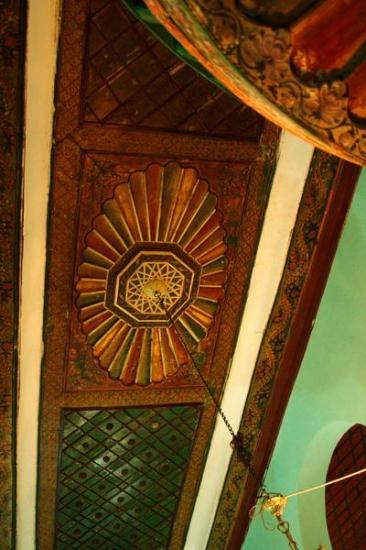
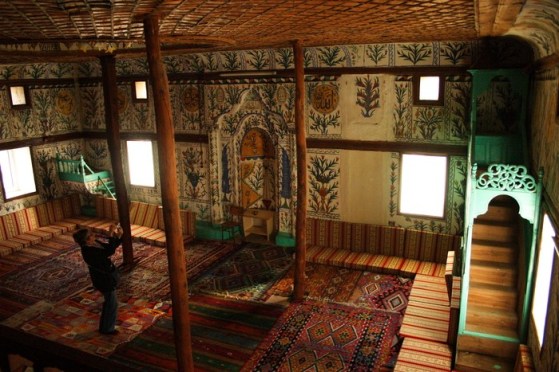
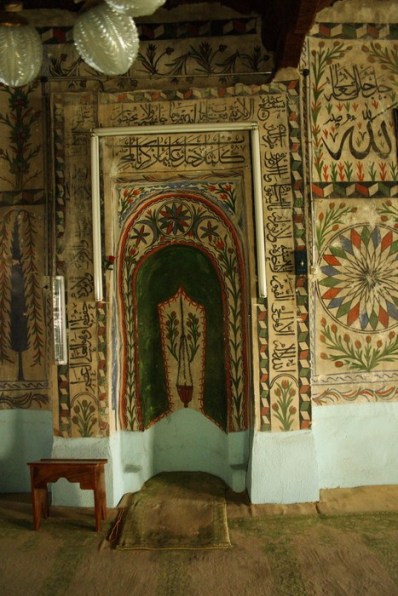
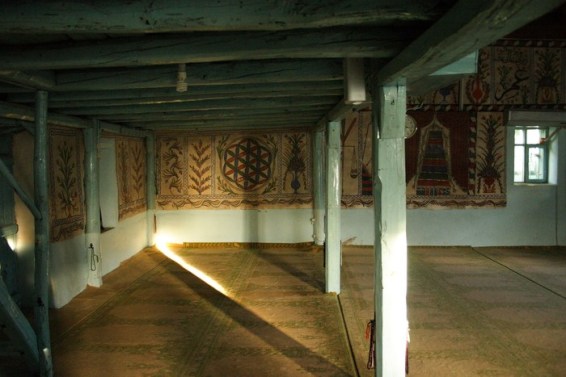
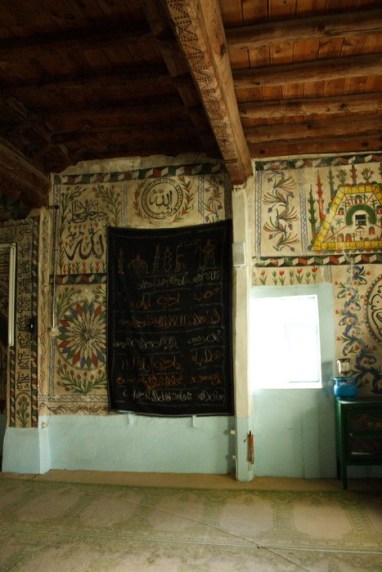
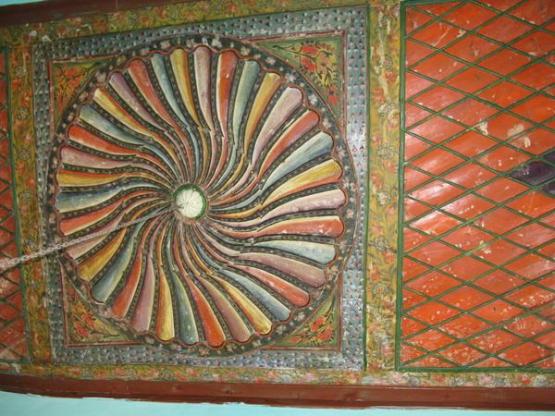
There is an inscription over the door that dates the mosque to 1802 and the endowment to Hacı Ömer Ağa. The front has an elegant portico and the door is flanked by two mihrabs. Inside, we were both astounded by the quality of the unknown artist’s workmanship. This was not the naïve brushwork that we had found in any of our previous visits and was more akin to that found in the painted konak in Birgi with splendid panels depicting various different flowers in vases and others of buildings. One feature stood out for me and that was the amazing alabaster plaster work window frames. Many had some or a lot of damage but enough were intact to convey an image of how the interior would have looked.

Yazirkoy2
this beautiful alabaster window frame has suffered some damage

There is a mystical, other-worldliness to these places that has to be experienced – for me, a lover of fantasy fiction, it is like standing in a real live setting from Lord of the Rings or similar. I have no difficulty transporting myself back to a time when flickering candles provided light and adherents of Sufism practiced the Dhikr or Sema, moving rhythmically in a circle and chanting or singing their devotions.

I’ll leave you to your own imaginings as you browse through a few photos; I do hope you’ve enjoyed the tour.

Yazirkoy3
more sophisticated artistry
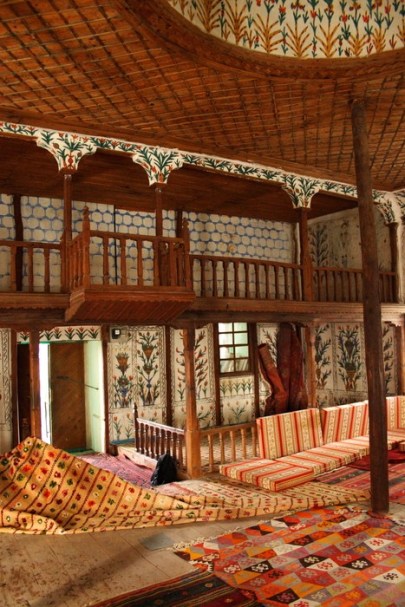
Yazirkoy4
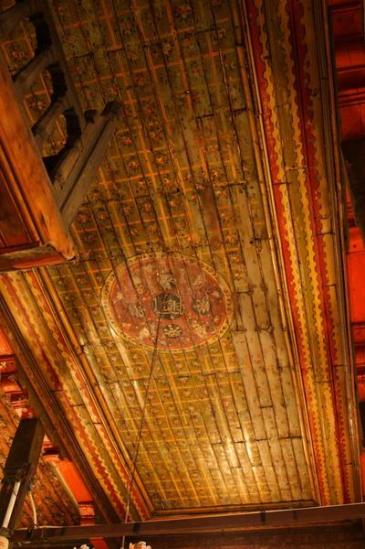
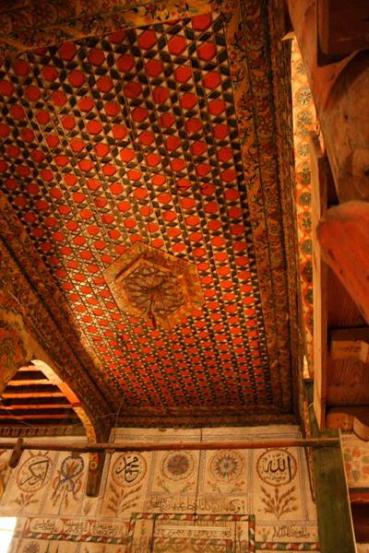
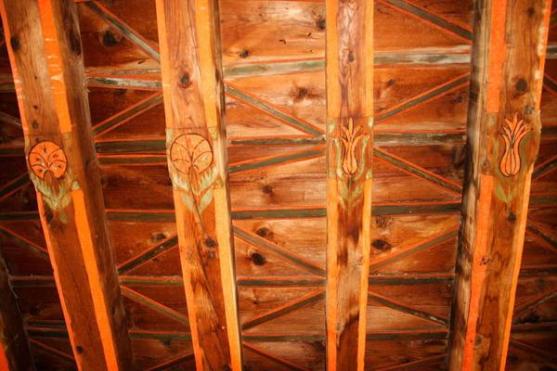
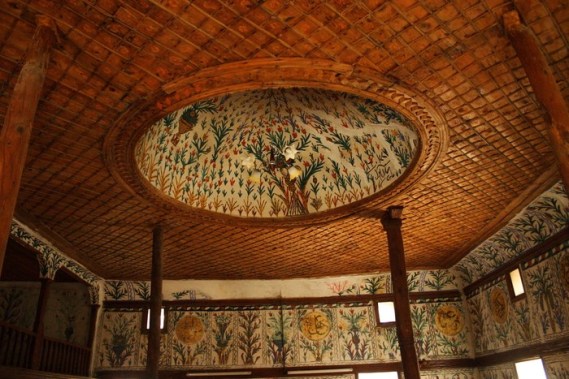
the beautiful and elaborate ceiling
Yazirkoy5
as you look at these decorations remember that this mosque was built in an isolated, rural corner of this vast country more than 200 years ago
Yazirkoy6
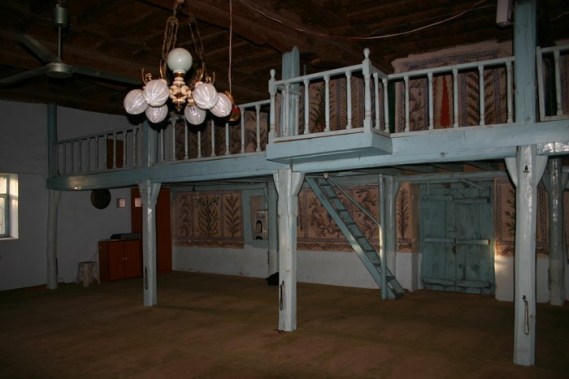
the women’s gallery
Yazirkoy7
ceiling detail
Yazirkoy8
and another
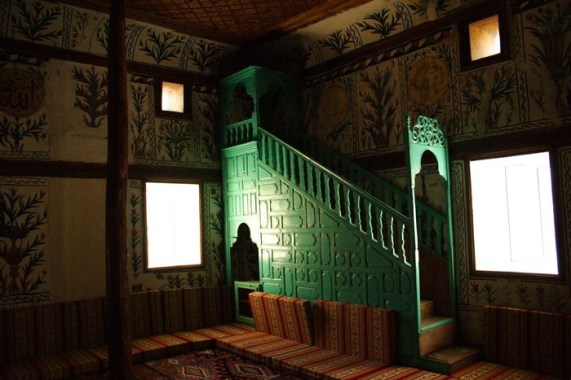
Yazirkoy9
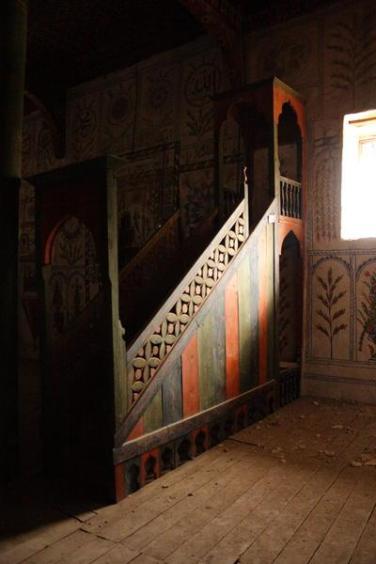
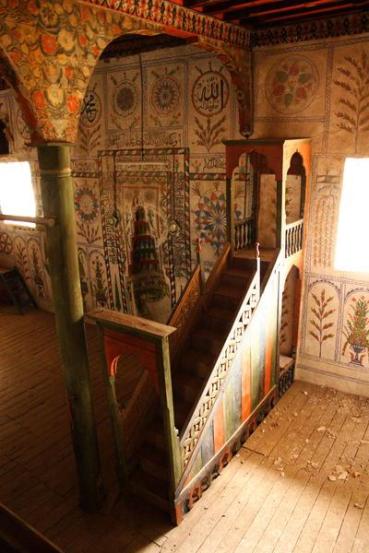
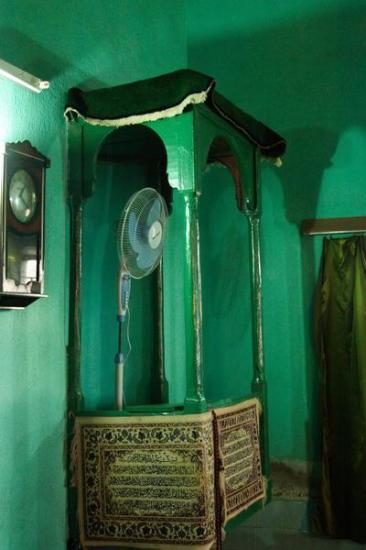
the minbar
Yazirkoy10
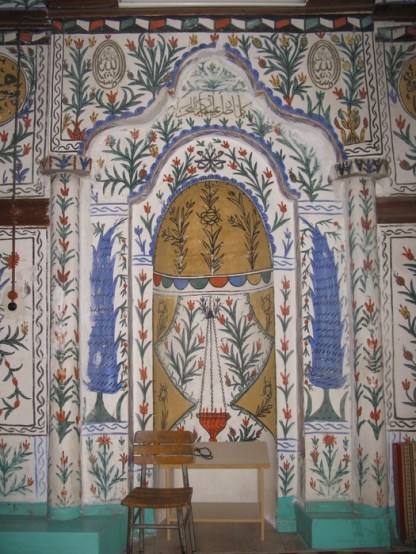
richly decorated mihrab with Koranic verses
Yazirkoy11
panel detail
Yazirkoy12
from the women’s gallery

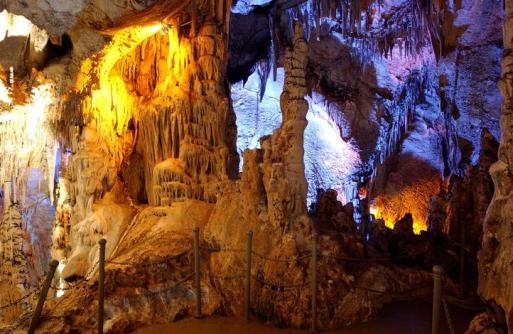
Postscript: as J and I prepared to leave we were told that there was a wonderful cavern by the name of Keloğlan Mağarası on the way back to to the main road, so we took ourselves off to see it. At some point it looks as though there were considerable public funds expended on a road, a restaurant and an office or two. It was also evident that visitors were few and far between.

Yazirkoy13
view from the cavern entrance back to Yazır Köyü

The guardian was ensconced behind his steamed-up window; there was a hand-written notice asking for three lira per person; J grabbed the tickets and stuck her cold hands back into her pockets. The guardian eyed my cameras with suspicion and pointed at the notice (no flash).  He obviously didn’t trust me because he insisted on following us inside the caves which, as it turned out, was not a bad thing.

Now, you know what these places are like – dripping wet with concrete and steel walkways and stairs. We had wandered about a hundred metres or so, ‘Ooohing!’ and ‘Ahhhing!’ when it happened – power cut, all the lights went out and nobody had considered any emergency back-up! We froze where we were on the steps surrounded by a Stygian blackness, listening to our breathing and the dripping of water – we could see nothing. Then a voice from the darkness asked ‘Sizde bir çakmak var mı?’ ‘Have you got a lighter?’ Bloody hell! Truth to tell we don’t smoke and it hadn’t occurred to us to bring one, so we held on to each other as the sound of shuffling footsteps faded away replaced by the eerie, high-pitched squeaking of bats. It took a while but the fellow eventually returned with a torch with about two minutes of life left in the battery and led us out.

Yazirkoy14
here’s a picture of what we didn’t get to see (Acıpayam tourism office)

So, we never did see the cave, we didn’t get our money back either and later J noticed that the ticket price was TL2 – the sod had ripped us off! Burası Türkiye!’

Alan Fenn, Okçular

ps as this beautiful mosque is fairly close to our mountain cabin hidey-hole we regularly take friends to see it. Since this post was written there has been some very careful, well-crafted restoration work carried out including the beautiful alabaster stained glass windows. The building is now good for another two hundred years.

The Magical Mystical Tour 3

Our mystical tour moves on . . salvaged from Archers of Okcular first posted February 2013

Boğaziçi and Kocaköy

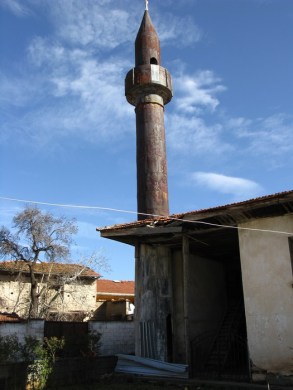
mm1Finding the village of Boğaziçi from our base in Pamukkale meant a drive of about a hundred kms – first south to Denizli and then east to the junction of the D595 Uşak Yolu. I find this a rather sad stretch of road having covered it several times; rather like driving through an industrial wasteland with only the view of the beautiful snow-capped mountains to redeem it. Follow the Uşak road and just after the village of Denizler fork right for Baklan. Then take the second turning on the right (approx 3kms) signposted to Boğaziçi and look out for the minaret.
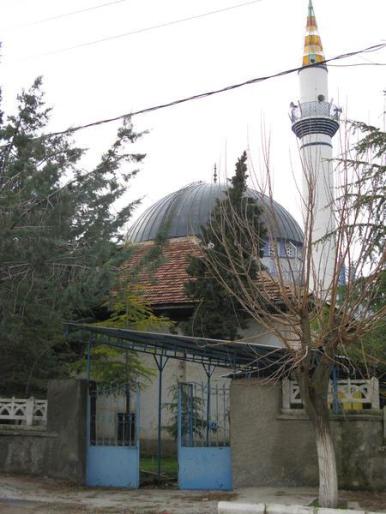
Boğaziçi is a very small town and having found the old mosque (tucked in behind the new one) locked and shuttered we made enquiries at the nearby belediye offices. Here, yet again, we came face to face with that most wonderful of Turkish traits – a willingness to drop everything, talk, drink tea and help a guest/stranger. We were taken to the tea house, phone calls were made and the keyholder of the mosque was located – miles up in the mountains cutting wood!

mm2
now we are really trucked!

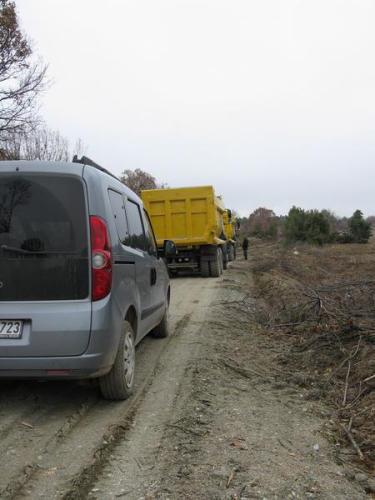
‘Problem yok!’ (No problem!) We had a car and a willing guide was found and off we set, twisting and turning along dirt roads that were a mixture of dust, puddles, ruts and quicksands! At one stage we were forced over to the edge to let a huge grading machine through before finally coming  to a forced stop by two trucks, one of which was suffering a serious health problem! Undaunted and without a word our guide got out and set off along the track – we had no idea if or when we might see him again. Twenty minutes later he returned triumphant with the key and we were on our way back to Boğaziçi.

mm3
nondescript, unused and jammed in behind the new mosque

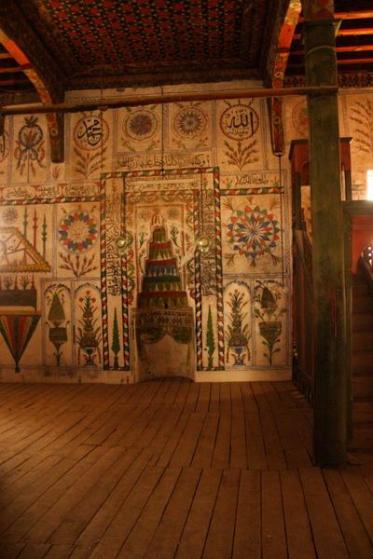
Boğaziçi mosque was built around 1774; well, there is an inscription that dates the kalemişi (painting) to that date, and it was repaired and repainted in 1876. There are similarities of style with the mosque at Belenardıç so the same artist may have carried out the work. With floral and geometric artwork inspired by Sufi beliefs and geometric and cross-banding decoration to the ceiling and beams that are reminiscent of some of the earliest medieval mosques of Anatolia, what awaited us inside was magnificent. The warmth of the colours is incredible, I’ll let the photos speak . . .

Bogazici1
the mihrab
Bogazici2
part of the fabulous ceiling
Bogazici3
 mimbar and fallen plaster, early signs of neglect
Bogazici4
beautiful geometric and floral designs on the women’s gallery
Bogazici5
stunning in close-up

Bogazici6

Bogazici7

The village has registered a foundation to try and save this beautiful piece of Turkey’s heritage, there is hope that it might have a future.

mm4Kocaköy and its Şalvan Mosque, so-called because that was once the village name, lies about 28kms north west of Boğaziçi as the crow flies (a lot further by country roads), through attractive landscape and tiny villages. It is a poor little place with a beautiful outlook over a sweeping valley. We parked at the mosque and set out to find the kahvehane (tea house) where we were immediately engaged by some young men who sent a boy off to find the imam. Meanwhile we were joined by Yaşar, groomed, dressed in a suit and looking every inch a ranking bureaucrat  With the arrival of the imam the four of us set off back to the mosque and so began one of the most enjoyable interludes that J and I have ever experienced on this type of visit.
Kocakoy1

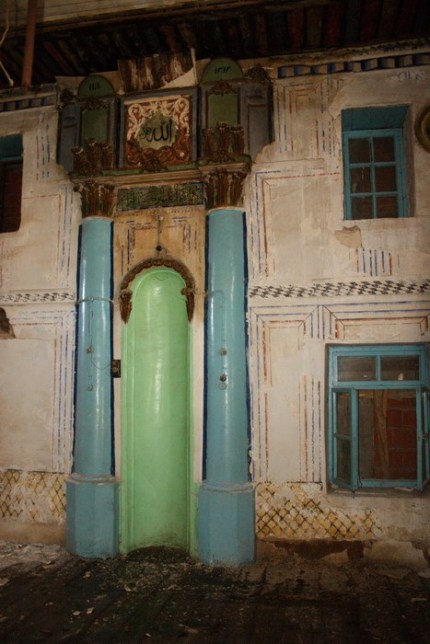
Yaşar was an astounding fount of knowledge about the mosque, history, old cultures and customs – in many instances the imam deferred to him and listened as intently as we did. The Şalvan Mosque was built around 1800 and the exterior is far more elaborate and well cared for than any other of the village mosques we have seen so far. There is an inscription above the door saying that it was ordered by Hatip Mehmed Ağa, son of Hacı Musa, in that year.

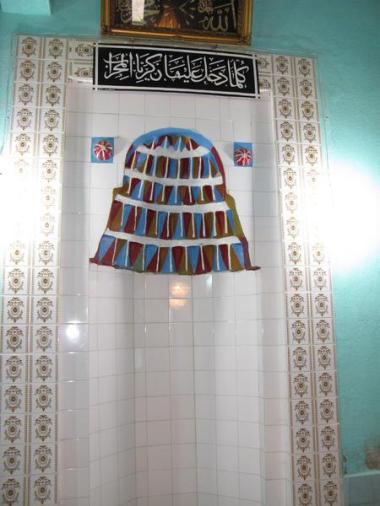
Inside my reactions were mixed – the walls were painted an almost luminous green and there was an ugly, white tiled mihrab with just a small part of the original exposed.

Kocakoy2
enough said!
Kocakoy3
the amazing ceiling
Kocakoy4
richly decorated women’s gallery
Kocakoy5
another section of ceiling
Kocakoy6
a rather novel hoca!
Kocakoy7
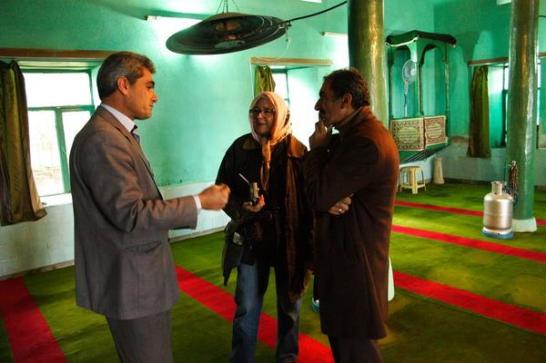
Yaşar, J and Imam deep in discussion

Yaşar explained that much renovation had been carried out because of the poor state of the plaster-work and in the process everything, including the wooden pillars were covered in a sort of roughcast and then painted. What might have once been unique depictions, ‘Heaven’ on one wall ‘Hell’ on the opposite, were forever lost. All was not totally lost however, our eyes were drawn up to the ceiling that, although in need of some repair and restoration, remains intact and it is stunning!

Our time in this mosque followed by a visit to the restored village çeşme (spring) and then back to the teahouse for more tea and talk is an enduring memory. Can you imagine sitting in a steamy kahvehane in rural Turkey, discussing politics, religion, French philosophers, archaeology, the state of the environment and much else with a farmer dressed in an immaculate business suit and an imam who is also an animal farmer and who could give Omar Sharif a run for his money. I’ll tell you this, we have an invitation to go back for more exploration and chat and I do believe we’ll take them up on it! Yaşar wants to take us to the Menderes valley just below the village where ancient underground grain stores of stashes of wheat and barley were discovered by the villagers with amphora so large that two men could get inside.

Our plan was to make a great loop back to Pamukkale via the town of Güney. There was an ulterior motive to this as the Pamukkale wine company have their facility here and it is possible to buy mixed cases of their excellent products at wholesale prices – so we did! We had also eaten nothing since breakfast so coffee and cakes at the pastane (pastry shop) were called for. This led to another enjoyable and time-consuming interlude with several young teachers over shared coffee, cakes and then more tea! By the time we left it was dark with the long and winding road across country back to our hotel ahead of us – but what a day!

. . stay tuned for the final episode of magic and mystical . .

Alan in Okçular

The Magical Mystical Tour 2

Continuing our tour of discovery of enchanting old mosques.


Akköy and Belenardıç

Dhikr_Rifa-iyyaThis is supposed to be a ‘mystical’ tour, seeking out village mosques that have their foundations firmly rooted in the tenets and traditions of Sufism. Sufism has had a chequered history of misunderstanding and persecution but its influences on music, poetry, painting, calligraphy and much else have been profound. In making this tour I find that being able to take a moment to conjure up mental images of bygone times have added greatly to the experience. Times when candles flickered and worshippers swayed and circled rhythmically chanting, perhaps to the soft and beautiful whisper of the ney.
Our dismay at the poor condition of the Hanönü camii at Kızılcabölük meant that we approached the mosque at Akköy, a few minutes drive from Pamukkale, with some misgivings. It, like Hanönü, was crowded by a very new (2008) mosque.

mm1
not a lot of promise

Outside it looked a trifle sad with broken windows and bags of coal stacked in the entrance. As it was nearly prayer time we sat and waited for the imam and congregation to arrive. When they did the key was produced and we were invited to carry on whilst they got on with their devotions in the new building.
What greeted us as we stepped over the threshold took my breath away for here was everything that we might have hoped for.

mm2
the stunningly beautiful interior

Built around 1877 and redecorated in 1909, this is a gem that shines and sparkles. Although no longer used for prayers it is used for study and instruction and is so obviously cared for and loved.

mm3
the ceiling and cupola

Look at the stunning cupola and wooden ceiling, the vivid blue cypress trees intertwined with flowers – in Islamic visual art a representation of the beloved’s figure and the reunion of lovers. The names of the artisans and artist who created this treasure are lost in time, so here are some photos by way of tribute to them and to whet your enthusiasm for your own visit.

mm4
the elaborate and metaphoric mihrab
mm5
the Day of Judgement, Hell, Heaven and Ka’ba
mm6
mimbar
mm7
the women’s gallery

The imam and his congregation were very welcoming and delighted that interest was being shown. The new mosque has been very nicely decorated with tiles and painted decorations and is worth a visit when you are here – these people were proud of both.

Belenardıç lies up in the mountains 20 kms north of Pamukkale; the road is narrow and winding but good for driving. It is a small and poor village of less than 400, most of the buildings are in sad condition with many in a state of collapse.

mm8
so much looked like this
mm9
once again an unpromising exterior

The mosque lies at one end of the village square and the kahvehane, our first port of call, at the other. Coffee and tea houses are a great source of help and hospitality – as a visitor you will not be allowed to buy your own tea. Having struck up a conversation with the men who were sitting outside smoking and joining them for tea, it wasn’t long before someone went off to speak with the muhtar and gain permission for us to enter the mosque.

mm10
the beautiful and elaborate mihrab framed by Koranic verse
mm11
evening sun illuminates this working mosque

Built in 1884 by ‘Mehmed, son of Ali of the Denizli Hafız Ağazade’ and painted the following year. The paints used in these mosques are referred to by locals as ‘made from roots’, ie they are made from natural dyes. The mihrab is highly symbolic and depicts a lamp behind parted curtains and refers to the 24th Sura of the Koran (Al-Nur, The Light). It is surrounded by Koranic verses.

mm12
the simple and rustic women’s gallery

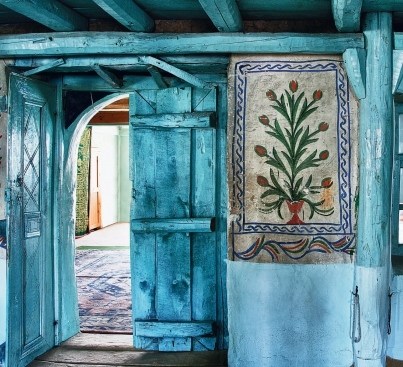
The walls are painted with flowers, moons and stars, and apocalyptic images of heaven and hell. High up you will see the names of four caliphs and the grandsons of the Prophet (PBUH). There is much simple carving and incising of the ceiling beams.

mm13
incised beams and caliphs’ names

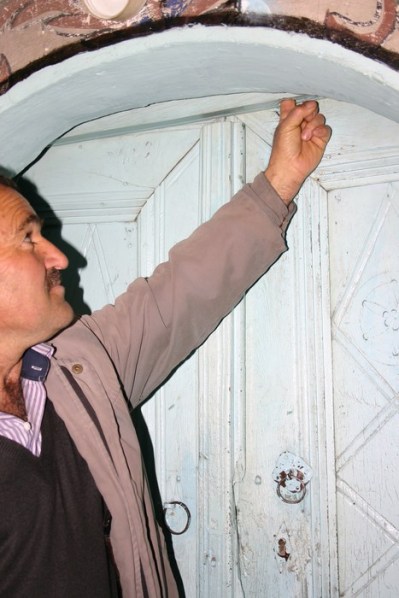
Gaining entrance to this beautiful and much loved mosque was to experience old technology; a finger is pushed up through a small hole in the door jamb which lifts a locking latch and allows the door to open. As it opens a further latch lifts and holds the door in place – a simple and very effective system. Once again, photographs will save a thousand words.

mm14
the ‘secret’ locking system
mm15
the locking/latching mechanism

Having satiated ourselves we retired to the kahvehane for more talk and tea. Evening was drawing on and it was getting cold so we stepped inside and were hit by a wall of heat from the soba and steam from the customers! We were also greeted by a wall of curiosity written large across many faces – J has a set piece address for these situations so we were soon joined by a few of the extra curious as the rest got back to their games of ‘Okay’. After the joy of discovering this gem of a mosque for ourselves we were able to wind down with an hour of tea and good company – a perfect end to the day.

I hope these posts will encourage you to explore off the beaten track, what you will discover will likely be (as ‘Bones’ used to say in Star Trek) ‘. . life Jim, but not as we know it!’

Alan in Okçular

The Magical Mystical Tour

Begun in January 2013 this series of posts in Archers of Okçular that epitomises what living in and exploring Turkey and Turkish life is all about. It has given me considerable pleasure to save and resurrect them – I hope you enjoy them again too.

Part 1 – Kızılcabölük

Magical? Absolutely! Mystical? Sort of, depending on your ‘inner self’. It was also to prove to be so much more with people adding a delightful and surprising element to the whole trip. Our aim was to visit some of the old, painted village mosques around Denizli that have their foundations firmly rooted into the traditions of Sufism. Our hope was that there would be someone available and willing to let us in and, if possible, to make a photo record that we could share with you. Our expectations were mixed – were they met? You’ll have to read on to find out.

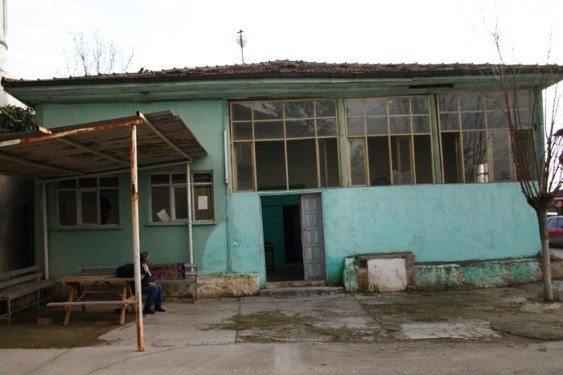
mm1The small farming town of Kızılcabölük near Tavaş is a place of many mosques and few visitors. It is home to the Hanönü Camii (in front of the Han) which has an unusual history because it was built by Ümmi the daughter of Köse Mehmet Ağa sometime around 1697. There is a date above the mihrab that indicates redecoration in 1895. With a modern, concrete mosque jammed in alongside, the state of the exterior did not bode well for what we might find inside. Broken metal sheets were nailed across the entrance, sections of the roof were falling away and there was a general air of filth and dilapidation. Pulling aside a corrugated sheet of metal we ‘broke in’!
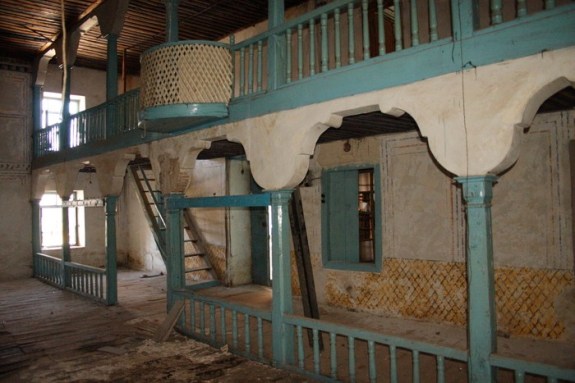
Standing at the door and looking inside left me with a mixture of wonder and profound sadness. This had once been a place vibrant with colour and life and it wasn’t difficult to picture how it might have looked when adherents of this inner, mystical form of Islam gathered together for worship.

mm2
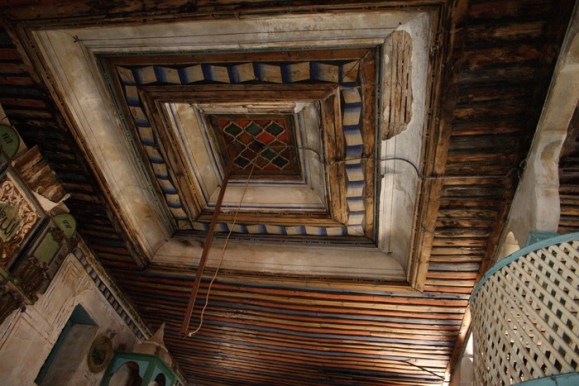
Glory in Decay – ceiling Hanönü Camii
mm3
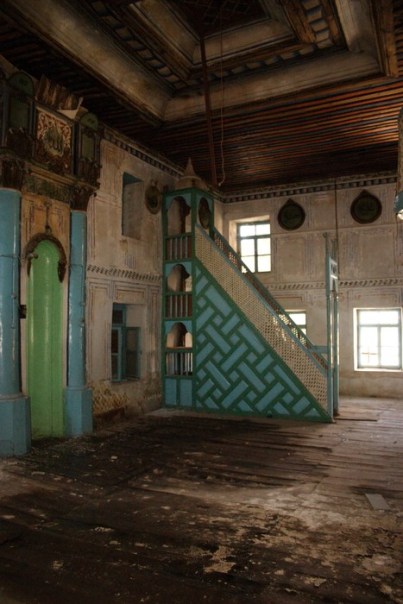
mihrab, mimbar and rotting floorboards
mm4
colonnade and women’s gallery
mm5
the ornate mihrab
mm6
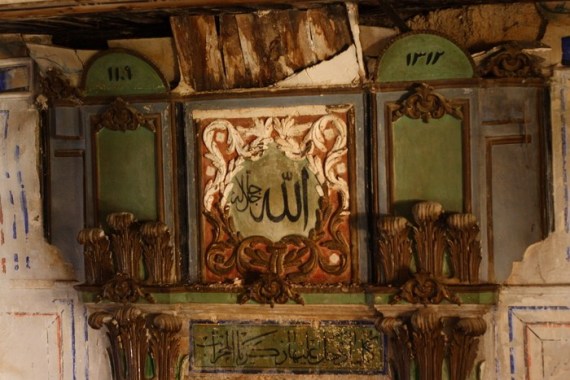
the name of God left to rot

Now, water dripping through the ceiling was rotting plaster, floorboards and the faded but still beautiful ceiling panels. That no one cares was obvious – why, was not.

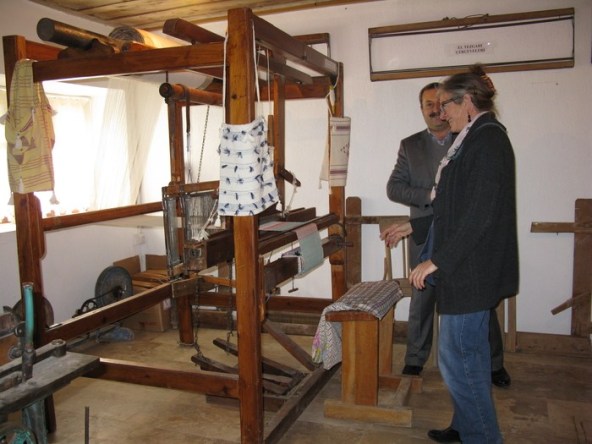
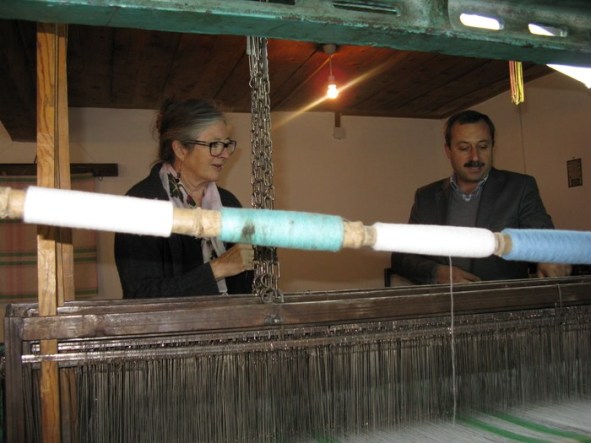
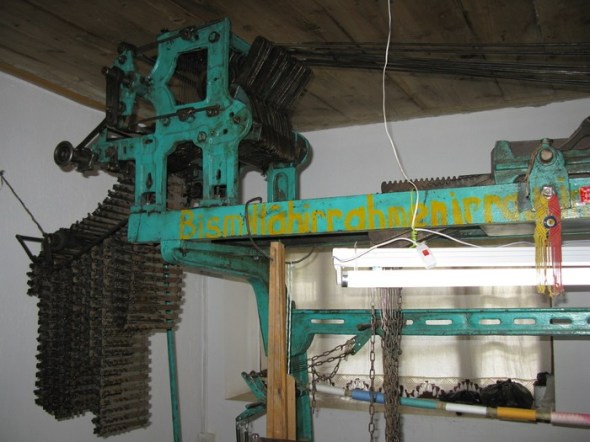
Back at the kahvehane (coffee house) for a morale reviving çay (tea) and a chat with the locals we were directed next door to the Textile Museum. This turned out to be a super little place with a delightful curator (the people bit) who took us on a conducted tour (as I said, there are not many visitors). He knows his stuff and had some of the machinery up and working for us. The mechanical ‘computer’ on the still functioning and in use loom was a source of considerable joy to this old boffer.

mm7
our curator and guide at the textile museum
mm8
the man knows his stuff
mm9
the amazing mechanical ‘computer’ on this still working loom

Is it worth a special trip? No! But if you are anywhere near Tavaş then it surely is. To find such a place in such a town was a surprise and a treat and deserves some support. Just head for the centre of Kızılcabölük and ask at any of the coffee houses; the mosque and museum are right there – at least one will still be standing this time next year!

to be continued . .

Alan in Okçular

Slobber Chops!

J and I have an inbuilt, genetic fascination with camel wrestling events here in Turkey. I know some of you out there will shudder and/or point an accusatory digit and even start sticking pins in voodoo dolls because you hate any and all forms of animal exploitation (but hope the pins will cause bits of my person to experience great pain or even fall off!). I understand your objections but remain unrepentant.

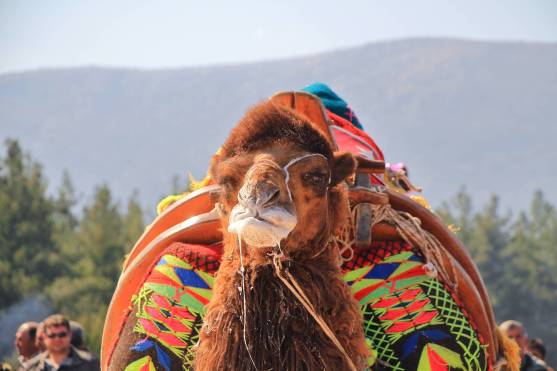
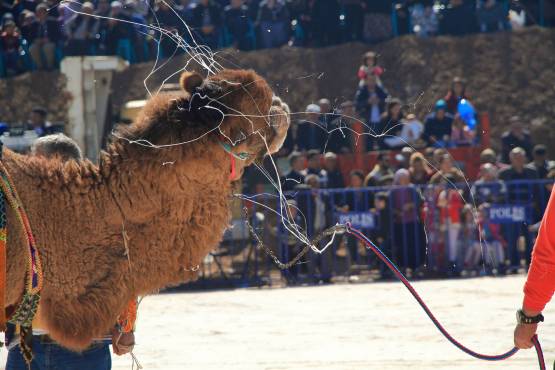
camelsIMG_6688_copy_copy
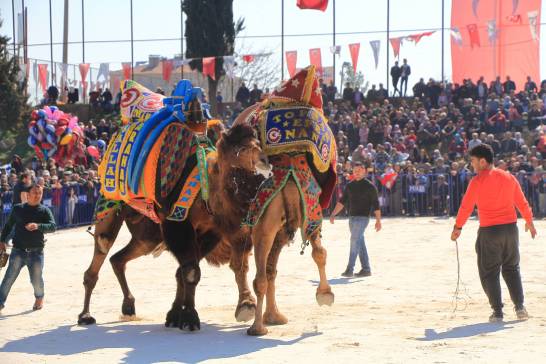
a magnificent beast decked out in all his finery

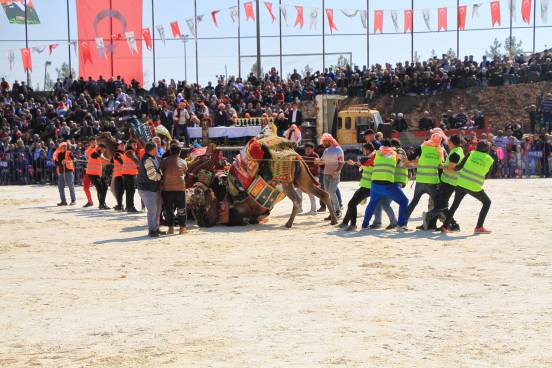
These events have their roots in the nomadic culture of Asia that goes back, quite possibly, for thousands of years. During the rutting season, which lasts just a few months, nomads would gather at long-established traditional sites for the prime purpose of breeding their she-camels with the strongest bulls. These bulls would go through a natural selection process amongst themselves by ‘wrestling’ for the right to pass on their genes.

camelsIMG_6714_copy_copy

camelsIMG_6720_copy_copy
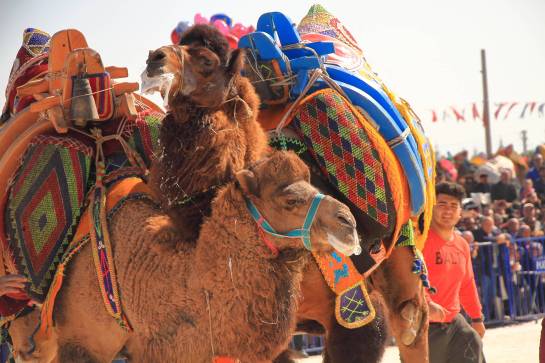
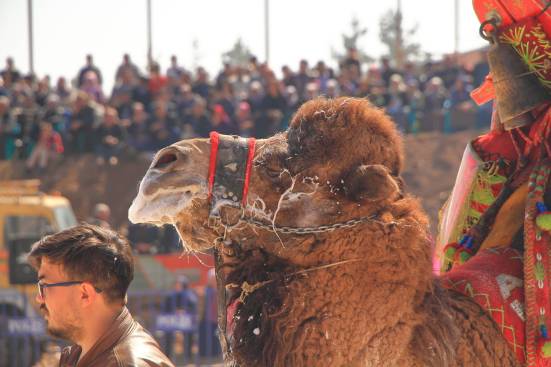
there is much pushing and shoving and frothing at the mouth
camelsIMG_6735_copy_copy
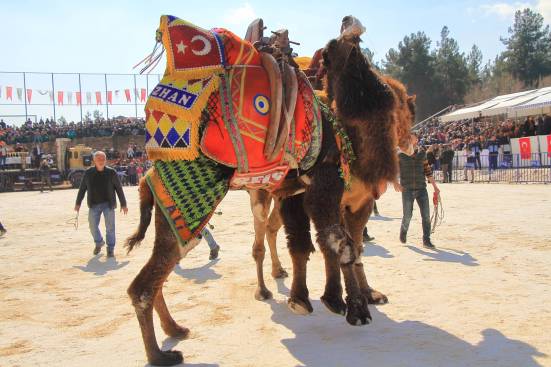
much lifting of one’s opponent off the ground

In many respects it’s a bit like watching Mick McManus and Giant Haystacks without the gouging or forearm smashes. The animals can’t bite as they would naturally do because of a special binding on their jaws. I’ve never once seen a drop of blood or an injured camel apart from the occasional bruised ego!

camelsIMG_6782_copy_copy
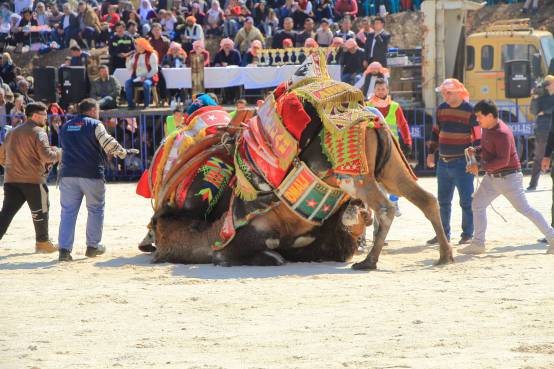
until eventually one or other gets pinned for a count of three
camelsIMG_6784_copy_copy
once the referee makes his call teams rush in and haul the protagonists apart
camelsIMG_6764_copy_copy
and the victor gets to put on his most arrogant face and strut his stuff

J and I prefer to frequent the venues where the spectators are usually all local Turks – small towns and even villages away from the areas with expat communities. This is not a snobby thing but a seeking after the authentic experience because there is more than just watching these magnificent animals do their thing.

Towns like Buldan and Çal in Denizli Province are magnets to us and so worth the extra miles of driving to get to them. Often the only barrier between a couple of tons of tunnel-visioned contesting-for-the-damsel’s-favours camels and the picnicking spectators with their barbies, bottles of rakı and mixed grill is a chicken wire fence. When hormonal gladiators run amuk or even amok there is no funnier site than a bunch of shouting, gesticulating, well lubricated men trying to save their very hot barbie, rakı glass in one hand and waving plastic chairs at two single-minded, blind-to-all-else furry gladiators with rumpy-pumpy on the brain!

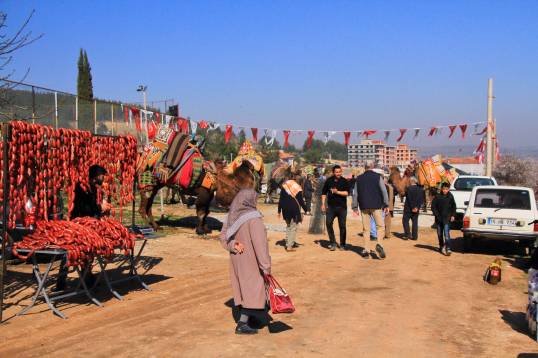
camelsIMG_6685_copy_copy
stalls selling everything from camel sausages
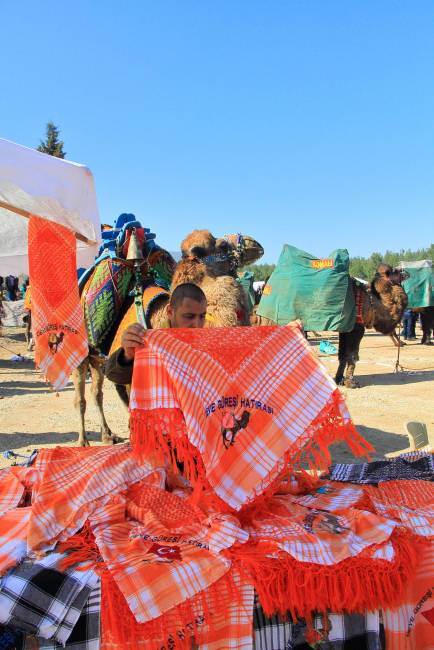
camelsIMG_6698_copy_copy
to scarves, to tea, to Sunday lunch

Finally, a couple of examples of why it is not a good idea to wear your Sunday-best or a hoody come to that . .

camelsIMG_6702_copy_copy

camelsIMG_6753_copy_copy

Let me finish off back where I started about animal exploitation: I accept that these days camel wrestling has become more of a spectacle for townies than a folk gathering of nomadic herders. I oppose commercial whaling in all its forms but support the rights of Inuit peoples to hunt at sea for food whether they use traditional tools or a powerful rifle. In the same way that Morris Dancers no longer believe the fertility angle in their entertainment I support the rights of Turks to enjoy a link to their nomadic ancestry – camel wrestling is not a blood sport, long may it continue!

Alan back up the cabin.

Trains And Boats And Planes . .

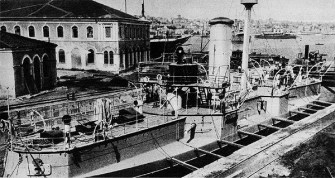
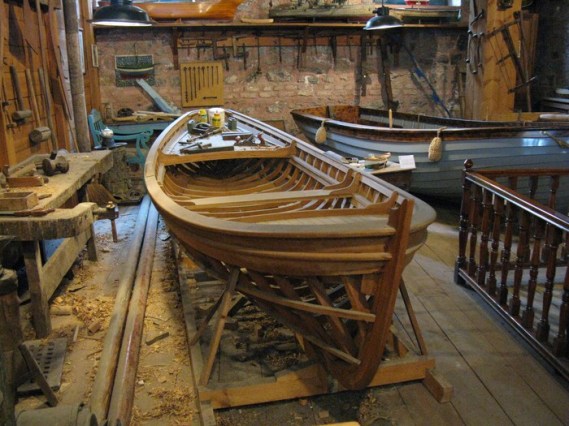
koc1. . they mean a trip to Paris or Rome tra-la-la . . or, in this case, Istanbul – to the  historic dockyard, founded in 1861 by the former Ottoman Maritime Company. It lies on the north shore of the Golden Horn in the district of Hasköy. The site, together with the Lengerhane building (which was initially used for casting anchors and chains for the Ottoman navy, during the rule of Ahmet III (1703–1730)) across the road, houses the Rahmi M Koç Museum. This is, in my opinion, one of the finest industrial museums you will ever visit – a world-class establishment!
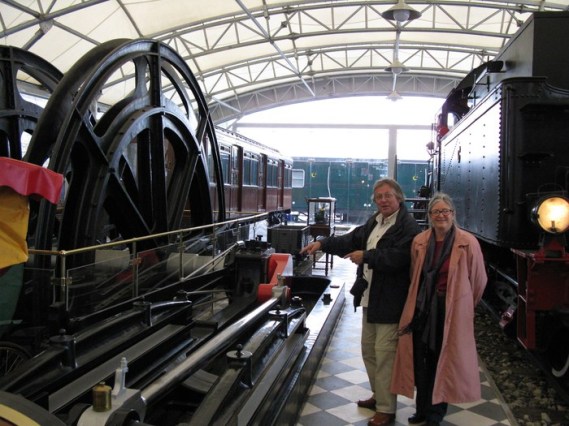
koc2
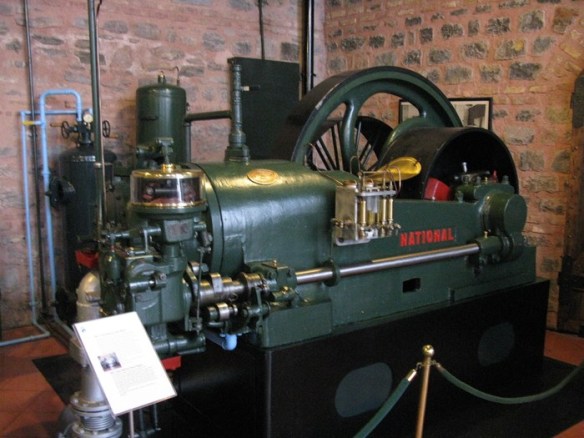
a reciprocating huff’n’puff

If you love things that go rumble, huff and puff, whirr and whizz, reciprocate, go in and out or up and down, have classic lines, need steam or petrol or oil or oars or sails or . . . whatever, to bring them to life, have knobs and buttons to fiddle with and burnished metal and coachwork to stroke – then I promise you’ll want to take this place home and introduce it to your mother! It is gorgeous!

koc3

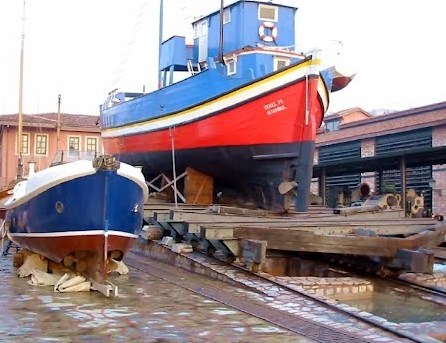
There are workshops and slipways where real work is carried out to rebuild and refurbish the constantly growing collection. There are toys and models and the real things – you can start and stop a ship’s mighty steam engines and imagine yourself, somewhere, out there, pounding through the world’s oceans to exotic lands and ports, in the days when there were still places waiting to be discovered.

koc4
 work on the slipway

J and I have been twice now, and we’ll no doubt go again – there is never enough time and there is always more to see – try it for yourself (except on Mondays, of course). Meanwhile enjoy a few photos of the place.

koc5
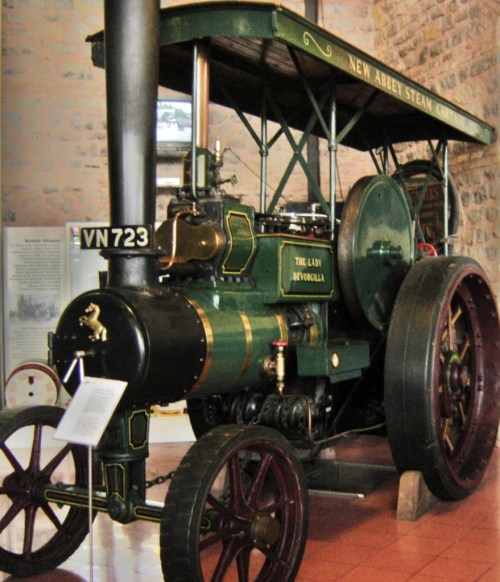
old ‘Invicta’ traction engine built near to where I was born
boat1
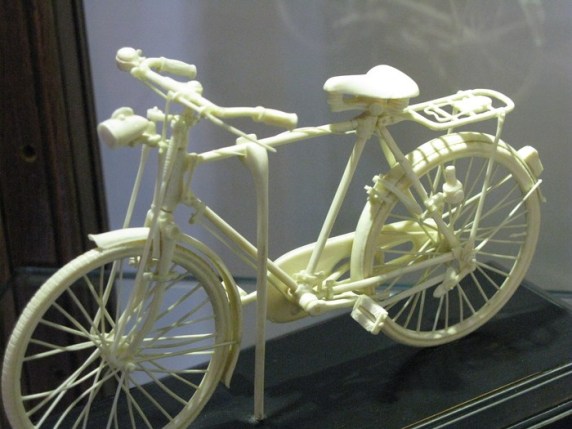
amazing carved ivory bicycle (bad business but still amazing)
car1
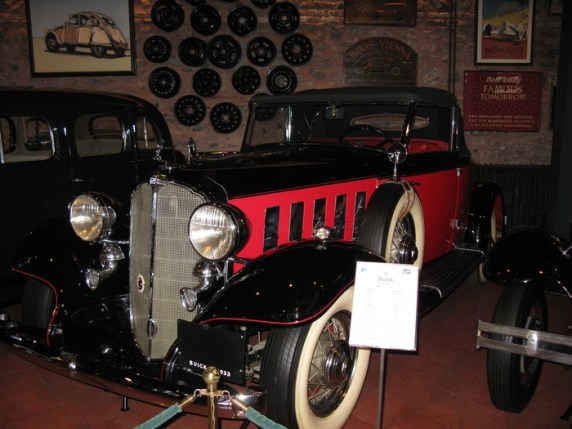
beautiful old 1933 Buick
car2
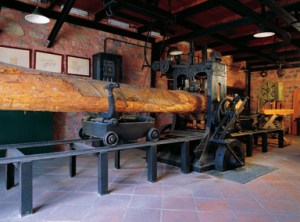
steam-driven plank saw
boat2
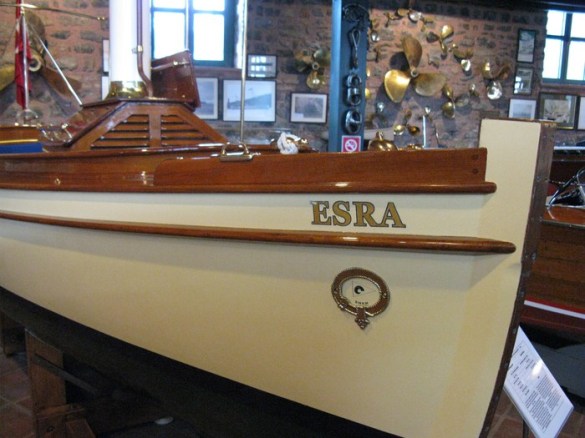
immaculate restoration of steam launch ‘Esra’
car3
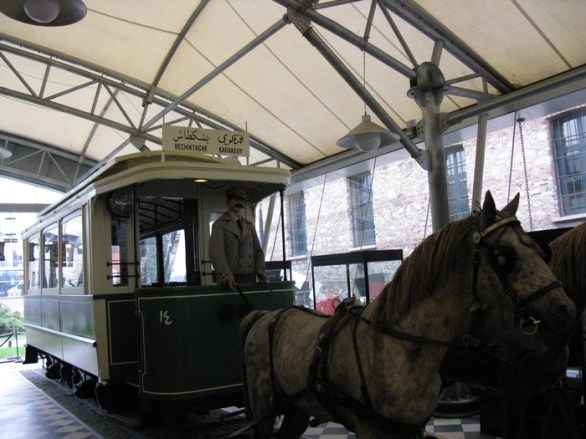
tram with stuffed horses and driver
car4
another chuffin’ puffer

There are so many more photos – from planes to submarines to motor cycles to memorabilia from Koc’s round the world sailing trip – better you go and see for yourself. My bet is that you will return time and again. Finally, here is a photo of heaven on earth for old boffers like me – when I shuffle off this mortal coil I hope they stuff me and park me at the bench, taps and dies in hand!

car5

Alan in Okçular