A Stitch In Time . .

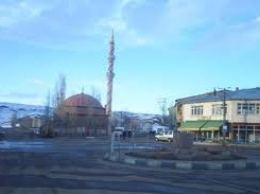
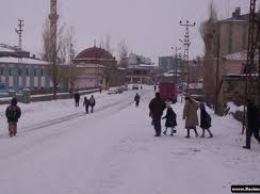
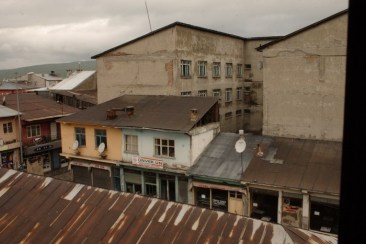
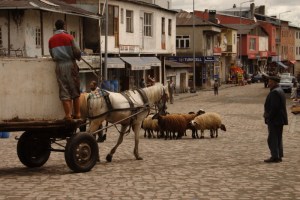
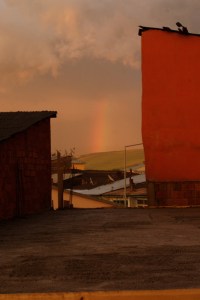
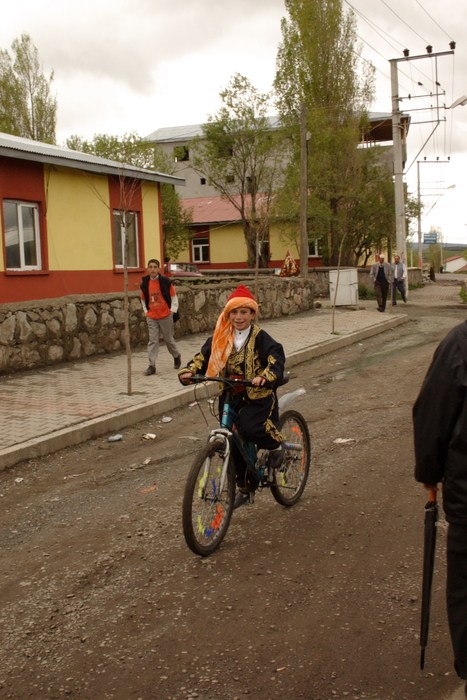
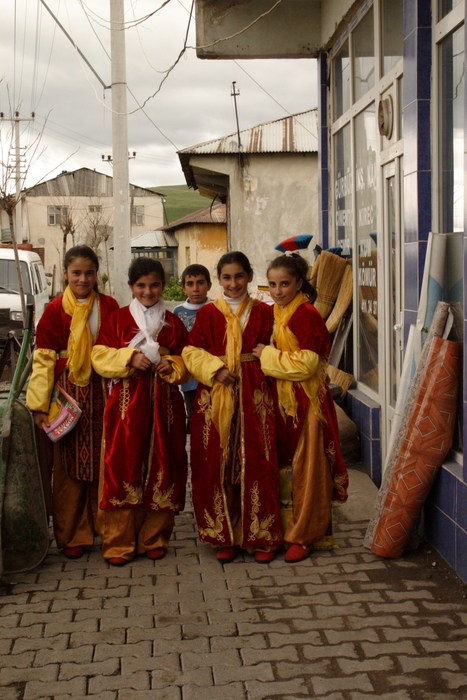
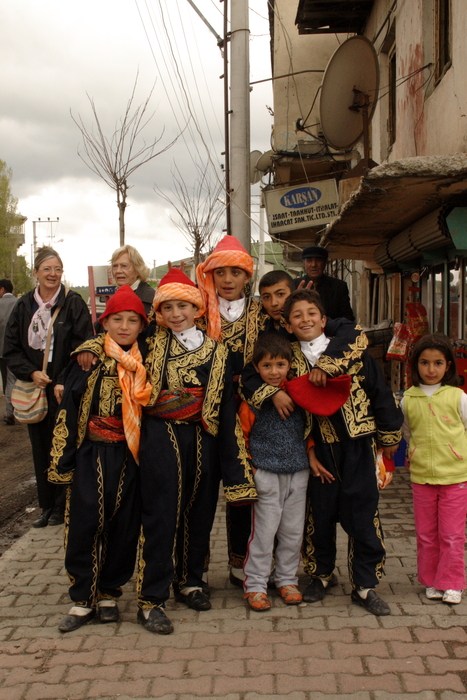
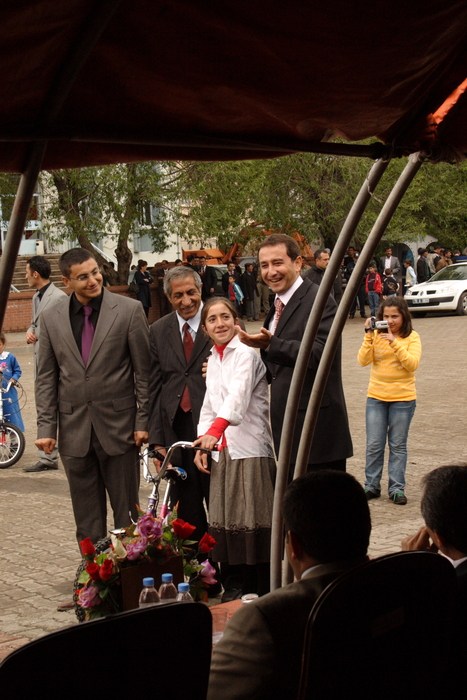
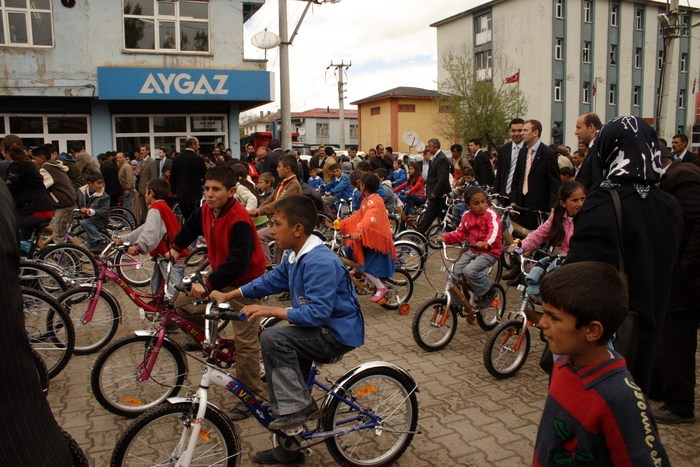
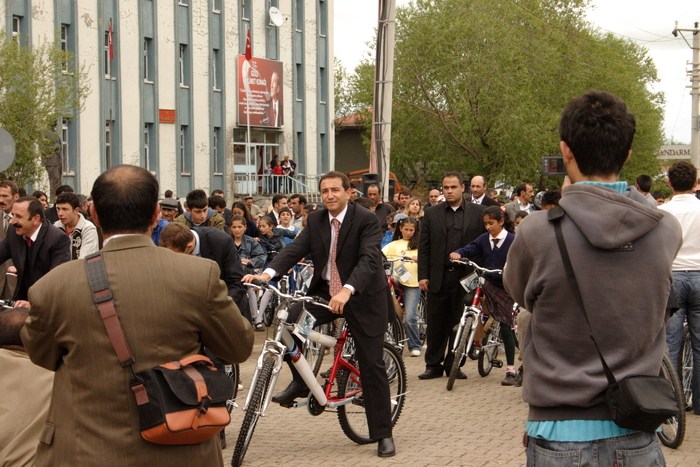
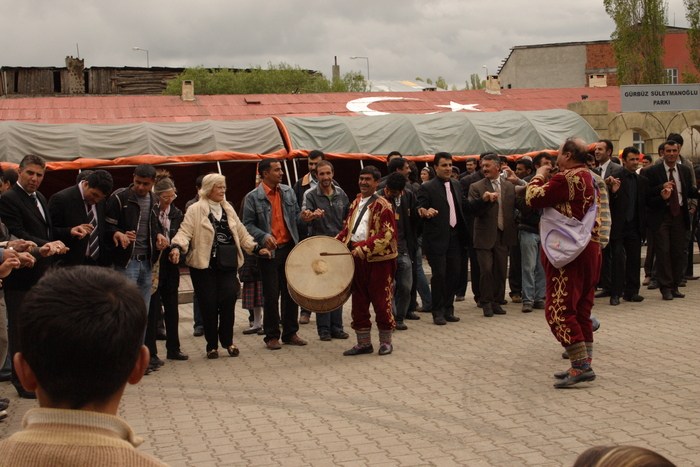
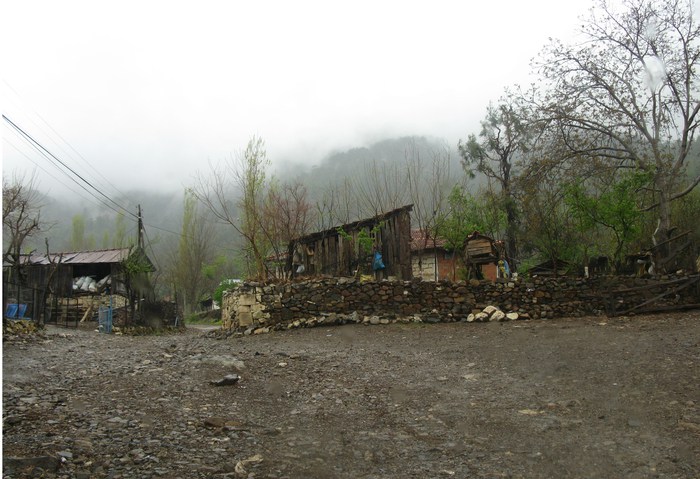
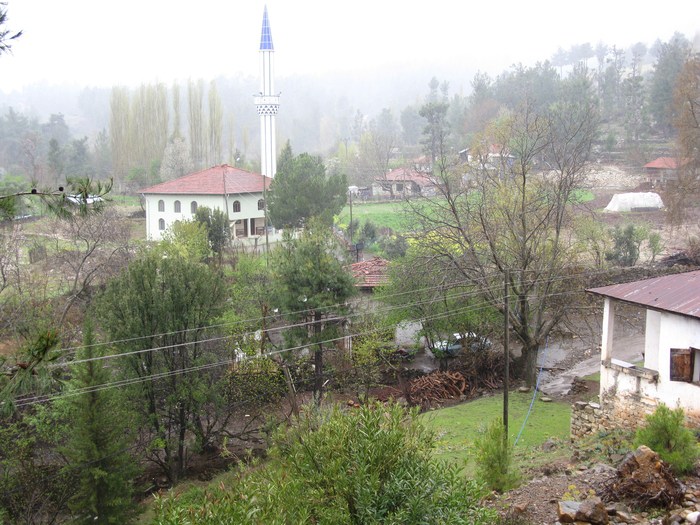
Cat1. . an appropriate title for a trip back in time to 2004. J and I were on one of our periodic wanderings around the east of the country; Erzurum in general and the ‘almost’ town of Çat in particular. ‘Almost’, because the place is only about the size of a village and had to be twinned with another village a few kilometres away to qualify as a town. The photos left give you a good idea of how ‘basic’ the place is.

Before I get back to the appropriateness of the title, Cat2here’s some background. We were there visiting our ‘son’ who was the resident kaymakam with responsibility for an area covering some 30 villages. One of the splendid bonuses on these trips is getting to ‘shadow’ him as he goes about his daily tasks and visits to outlying parts of his ‘empire’.

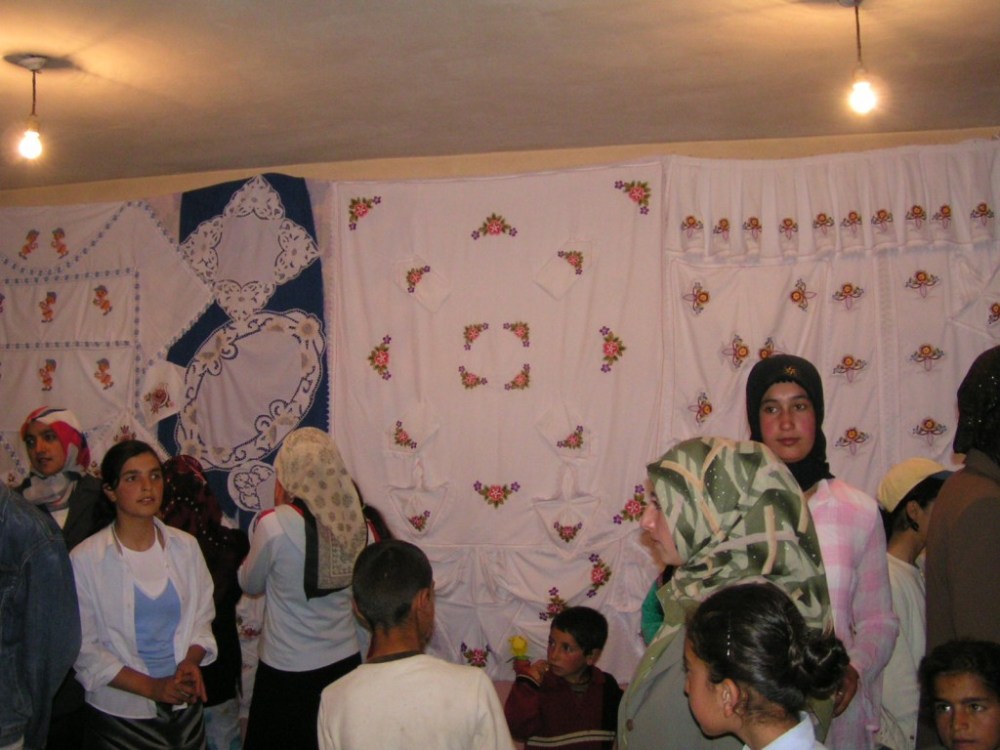
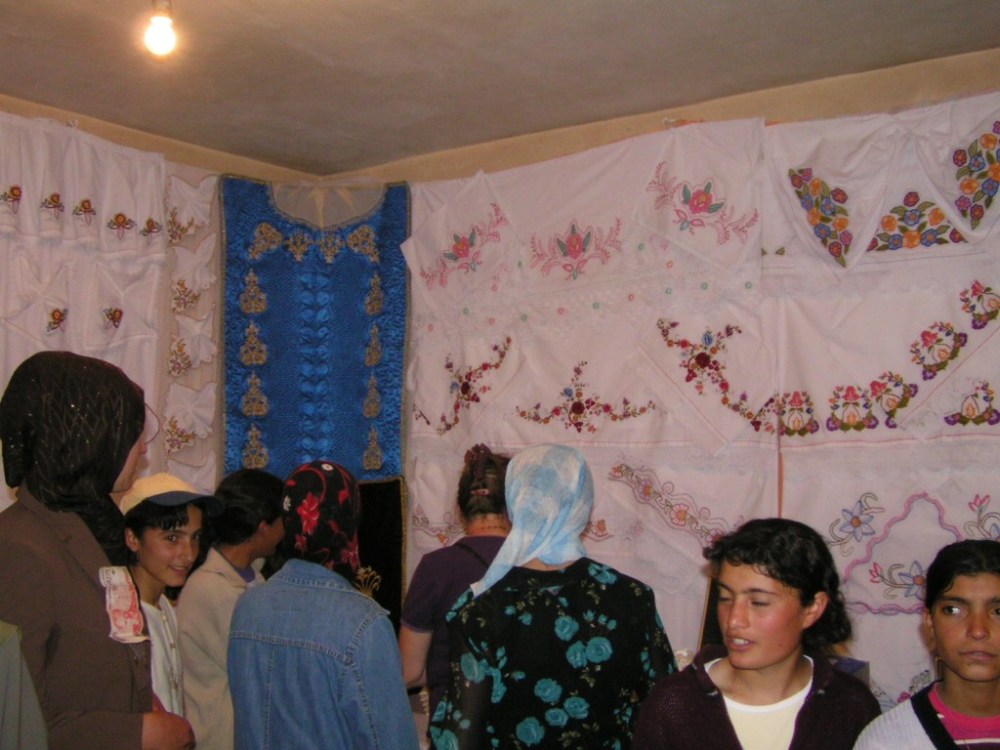
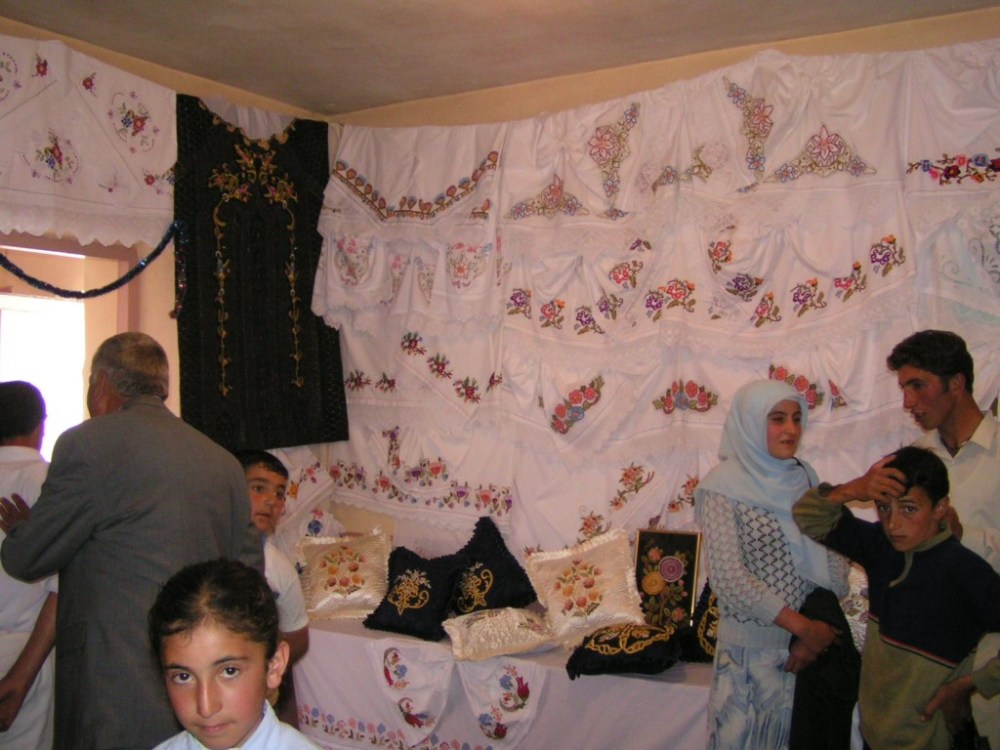
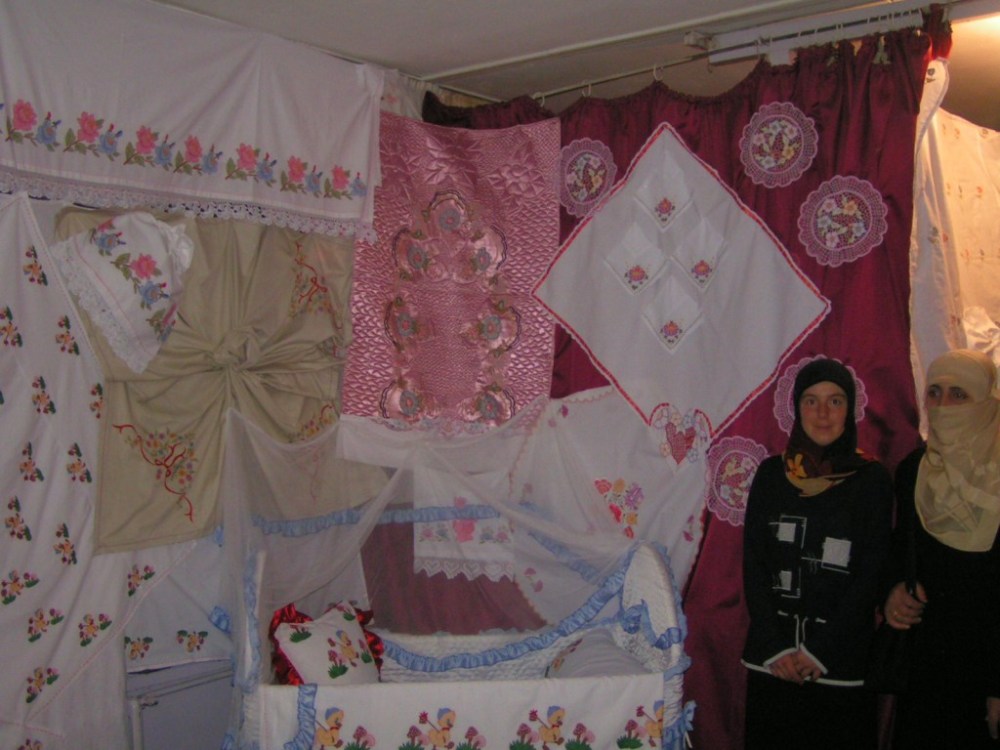
So it was that we were on our way to a village, where there was a project to raise the status and Cat3earning ability of many of the young women by teaching them skills to do with machine embroidery. There was to be an exhibition and a presentation of certificates and, of course, the inevitable speeches.

Our official car was followed by a convoy of minibuses filled with bureaucrats; most were happy to get some time away from the office, but there were a fair number who were decidedly glum-looking. Knowing the attitude of many of these pen-pushers towards those they consider a lower form of life; our man had instituted a programme that demanded all managers attend any function of this type where they were required to smile and be nice to the people/natives.

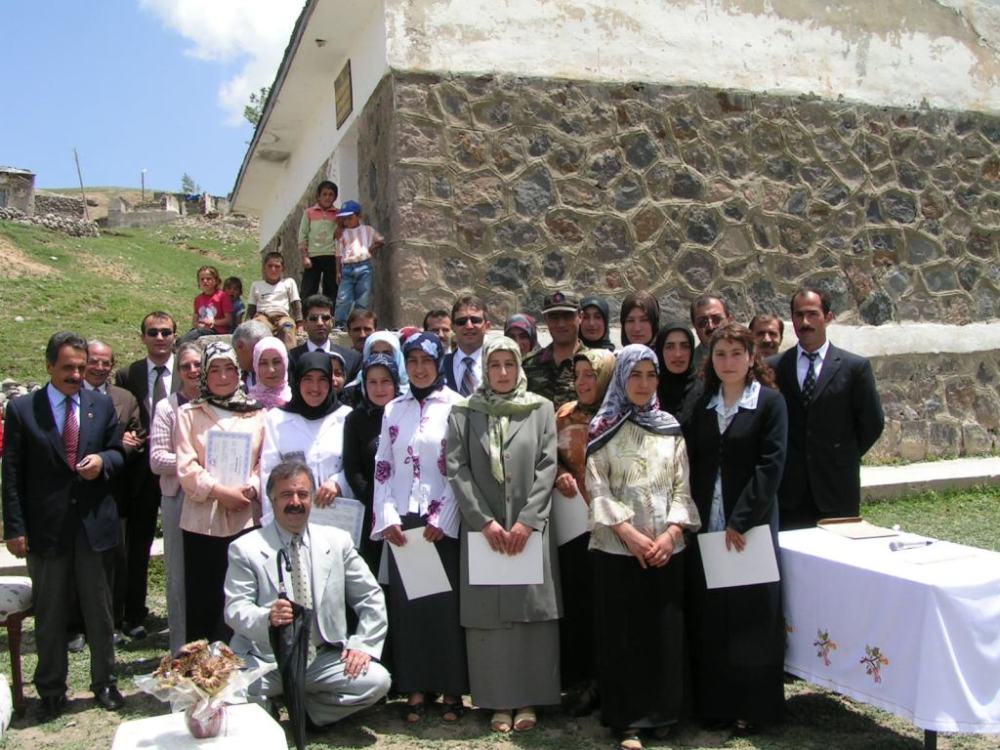
In the centre of the village we were met by the muhtar and his delegation – not a woman was to be seen apart from J who is usually deferred to as an honorary man on these occasions. We were escorted to the education building where the young ladies and their teacher, along with all their proud mums, were gathered. The young ladies were dressed in their conservatively elegant ‘Sunday best’, and looked splendid!

Our man’s speech was radical to say the least; he informed the ladies and their men-folk that women were the equal of any man, not least because the Republic said it was so. He also encouraged them to use their new skills to create some financial independence. There was much mumbling by the men and much giggling behind hands by the ladies!

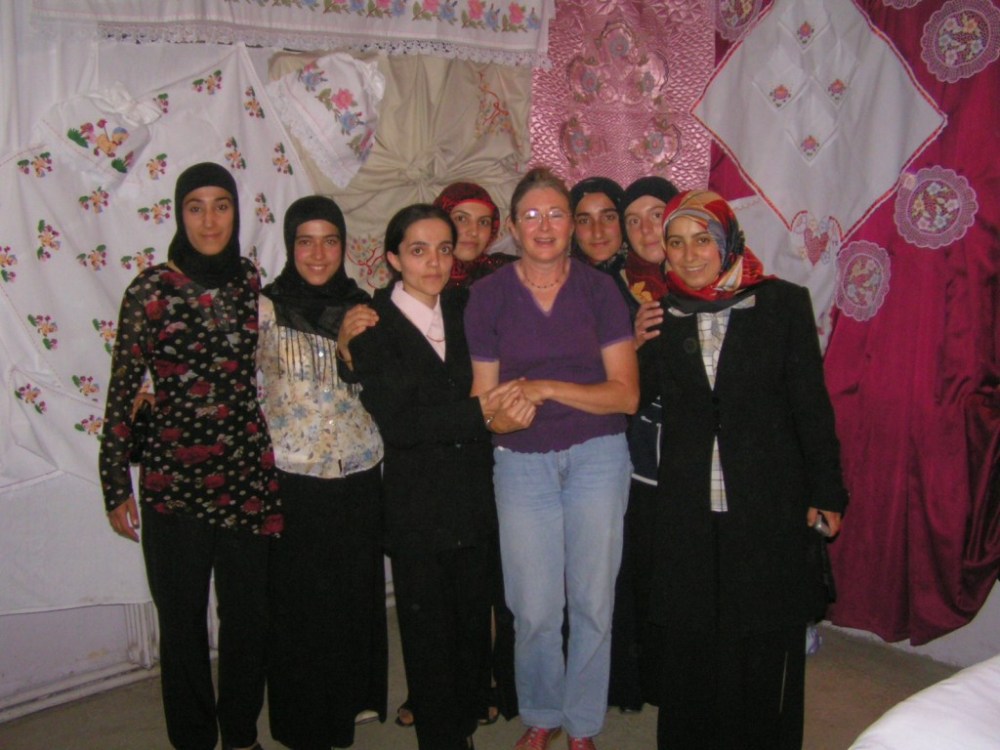
The presentations were made with all of the ‘protokol’ (including J and me) required to take our turn. You could see the reluctance of some bureaucrats to demean themselves (except the boss was watching), until that is, it was time for the group photo.

MINOLTA DIGITAL CAMERA
‘Congratulations!’ from the Jandarma commander, a lovely fellow, and he meant it
MINOLTA DIGITAL CAMERA
get thee behind us

The protokol, as is their wont, rushed to the front, smoothing their hair and adjusting their suits, in the process hiding the stars of the day completely! That was too much for J who set about organising the group and, with one persistent exception, bringing the young ladies to the front – possibly a first for Turkey!

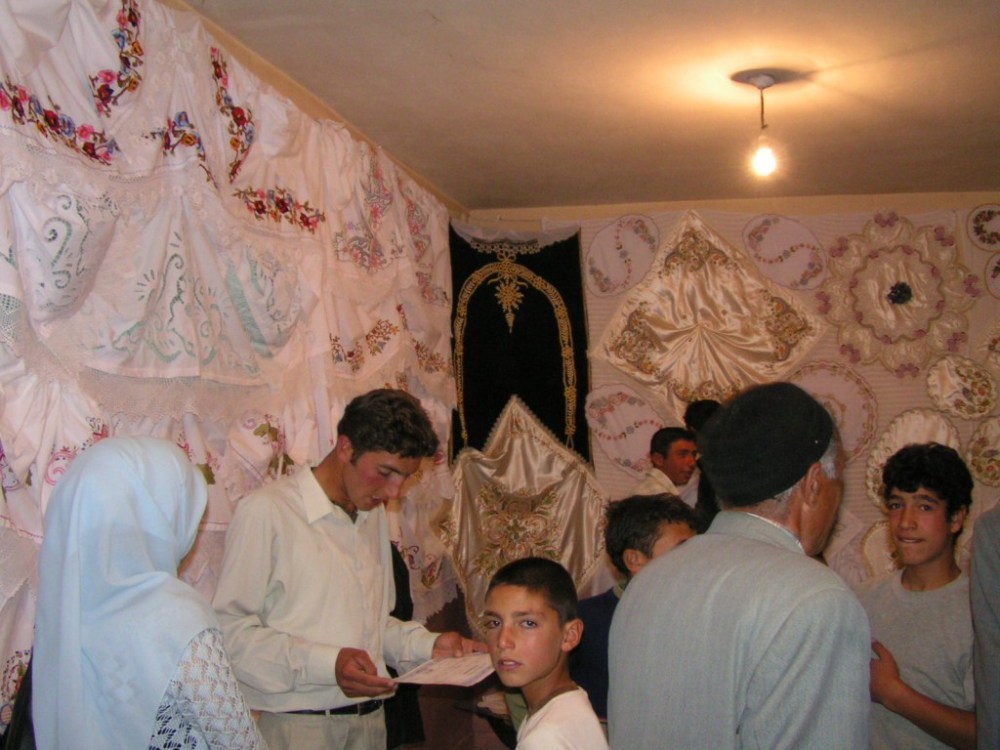
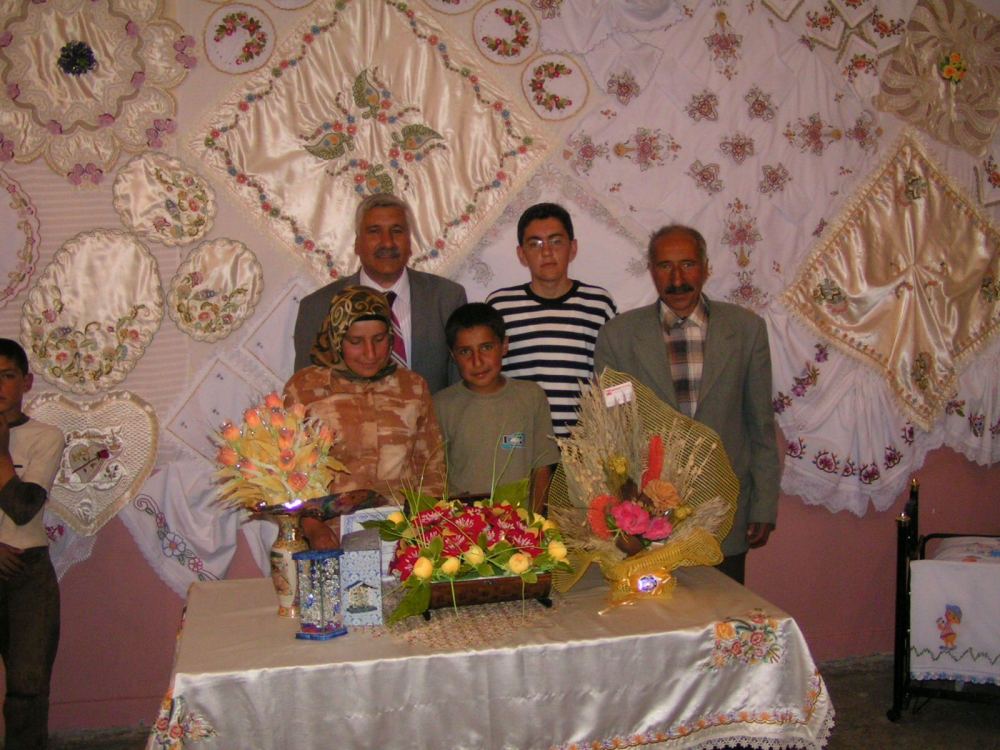
Photos done, it was time to view the exhibition of the students’ work and we trooped into the display. A picture is worth a thousand words so I’ll let some photos speak for what we saw; suffice to say that my reaction was to grin like a Cheshire Cat – it had that kind of effect!

MINOLTA DIGITAL CAMERA

MINOLTA DIGITAL CAMERA

MINOLTA DIGITAL CAMERA
the work is so beautiful – J surrounded by proud family members
MINOLTA DIGITAL CAMERA
proud student and her work
MINOLTA DIGITAL CAMERA
shy student, proud family, opportunistic bureaucrat!

MINOLTA DIGITAL CAMERA

MINOLTA DIGITAL CAMERA

MINOLTA DIGITAL CAMERA
J with a proud teacher and her students

MINOLTA DIGITAL CAMERA

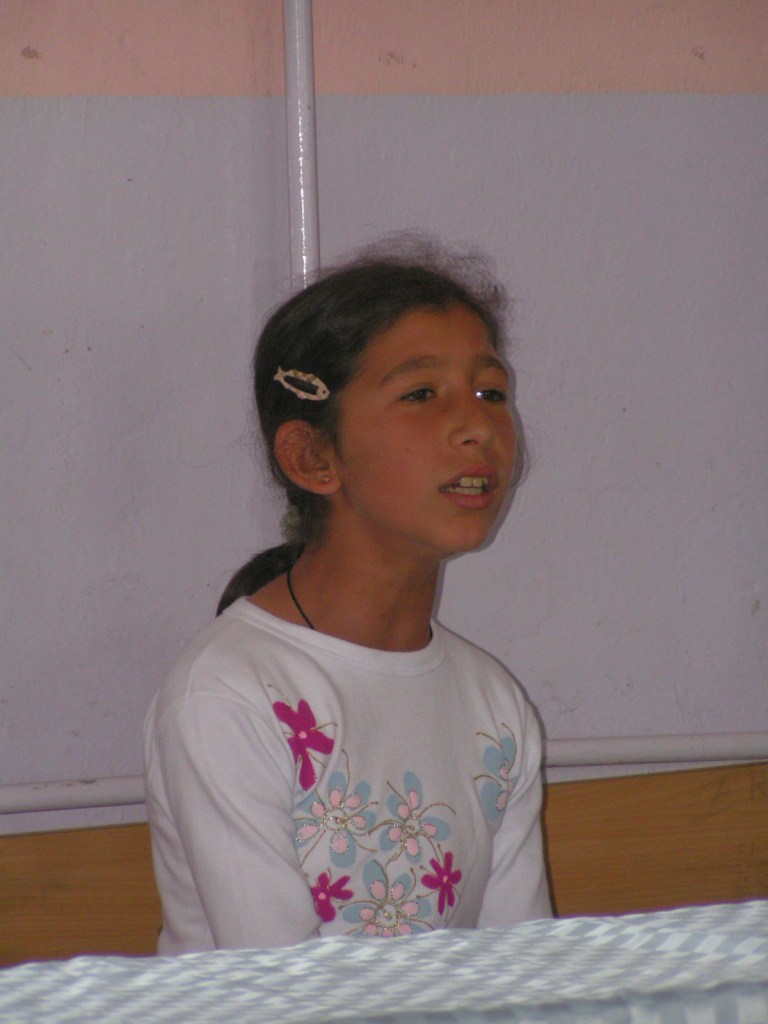
At one point this young girl brought the room to silence as she sat and sang to us; her voice, I remember, was quite something! ‘Silver Threads and Golden Needles . .’

Alan in Okçular

‘It’s Behind You!’

stonehenge1Sometimes, living as we do in a country stuffed full of biological, historical and geographical gems, a land so overflowing with wonderful, wondrous superlatives, we forget to look around our own ‘backyards’. If you live by the junction of the A303 and A360 trunk roads in Wiltshire (UK), I bet that it wouldn’t take long before you wouldn’t even notice that Stonehenge was there!!

So it was with a delightful little gem of a place in the village of Çandır just across the river from Dalyan.

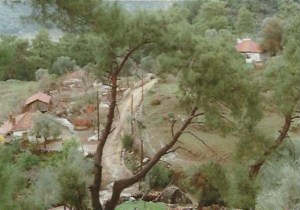
Candir-road_1Çandır was one of the first places J and I considered when we were searching for a place to call home here in Turkey. It was Christmas Day 1996 when we arrived, shaken and bruised from a grinding drive along broken tracks (it would be several years before anything remotely resembling a road broke through to the village), and we were ready for something to eat and a glass of tea. This photo is of the original road in to the village.

We found no tea house and the only ‘shop’ was a shack in some guy’s back garden opposite the village school. We piled into the shop and scanned the shelves – it was like the old Soviet Union on a bad day – they were bare! ‘Ne var?’ (What have you got?) ‘Beyaz peynir, efendim.’ (White cheese, honoured sir/madam) ‘Ekmek?’ (Bread?) ‘Hayır! Daha sonra traktör gelecek.’ (No! A little later the tractor will come) Our faces must have said it all. We were hungry and thirsty and very dishevelled and an audience of curious locals had gathered – it didn’t take long before the natural hospitality and kindness of our soon-to-be fellow country folk kicked in.

J-Xmas
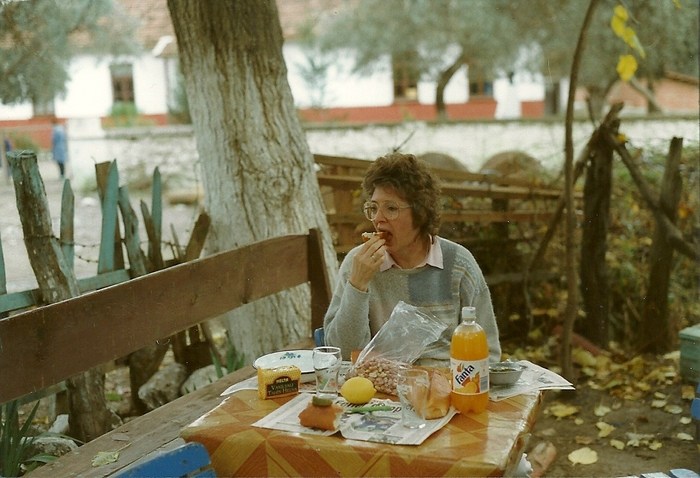
J tucking into Christmas Dinner 1996 Çandır

We were guided to a table and bench under a tree; newspaper was spread and plates began to appear with bread and a bottle of Fanta from the shopkeeper’s own kitchen, our white cheese and a bag of salted peanuts, olives from someone else and a couple of lemons from the branches above our heads. Whilst we sat chatting and eating a small procession of village ladies came by bearing plates of lokma (Turkish one-bite doughnuts), ‘Hoş geldiniz.’ (Welcome) Tea was brewed and kids from the school came by to practise their English, it was just an ordinary day for them – our exploration of an area turned into an exploration of a village culture that was to capture our hearts. It was also one of the most memorable Christmas Dinners J and I have ever experienced!

Charming as Çandır is, it lost out to Okçular as a place to put down roots due in no small part to its semi-isolation.

Over the years Çandır has changed little; the shack-shop has gone, there’s no shop at all now just a visiting van and the school has closed, a few more houses have been built and the road has changed out of all recognition, but the essential character remains. J and I enjoy walking the forest tracks and the ruins of Kaunos which are close by the village, although we haven’t paid much attention to the centre for some years, we had noted a ‘museum’ sign pointing at someone’s back yard. Recently we took some friends from the US on a ‘jolly’ that included the village and were delighted to discover that the sign really did point to a small folk museum and tea house.

candir1
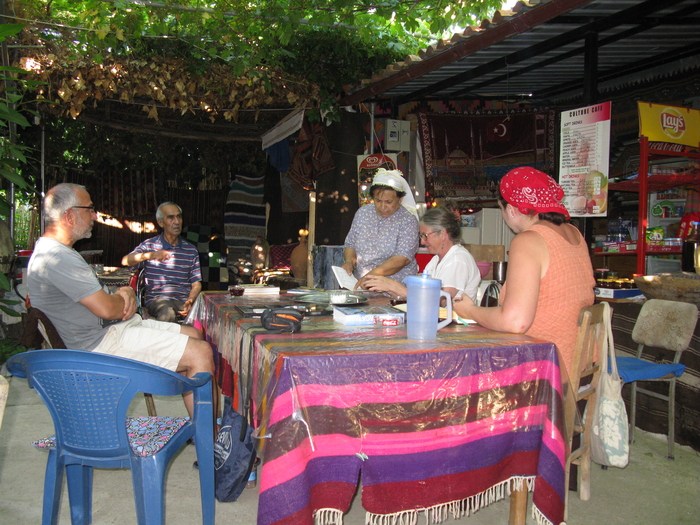
. . tea and stories
candir2
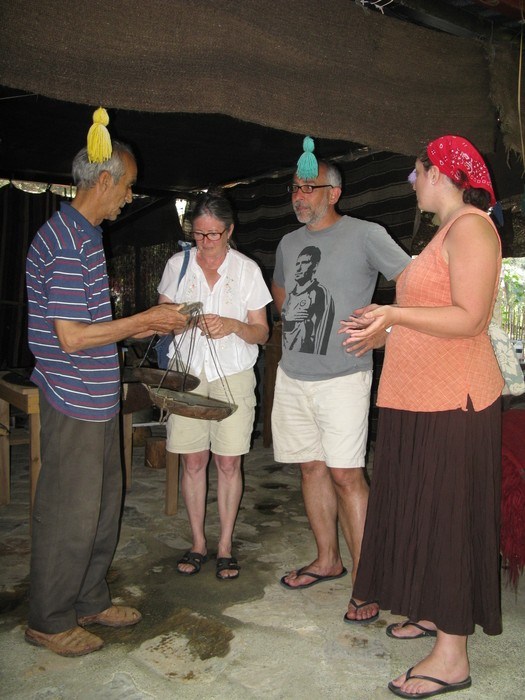
sorry about the pom-pom hats!

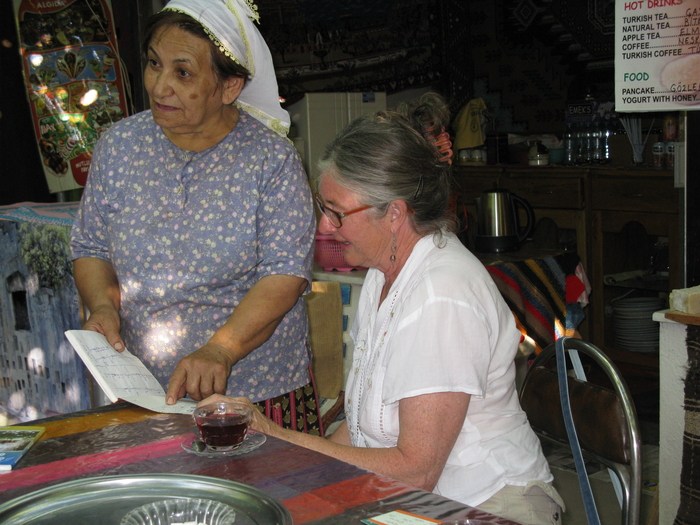
Tea was served and we were treated to tales of this and that – friends from Okçular were recalled and it soon became apparent that they had heard of J and me and knew where we lived. We gave them a copy of the Okçular Book and it was wonderful to see their delight as they realised there were stories in there from and about folks they knew.

candir3
. . more stories

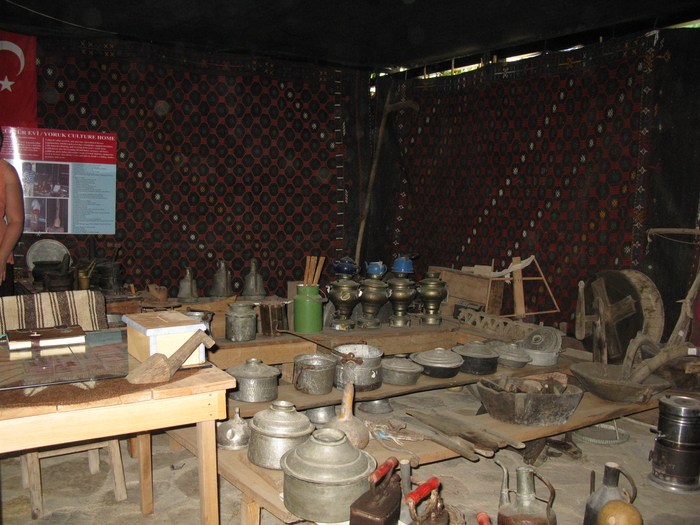
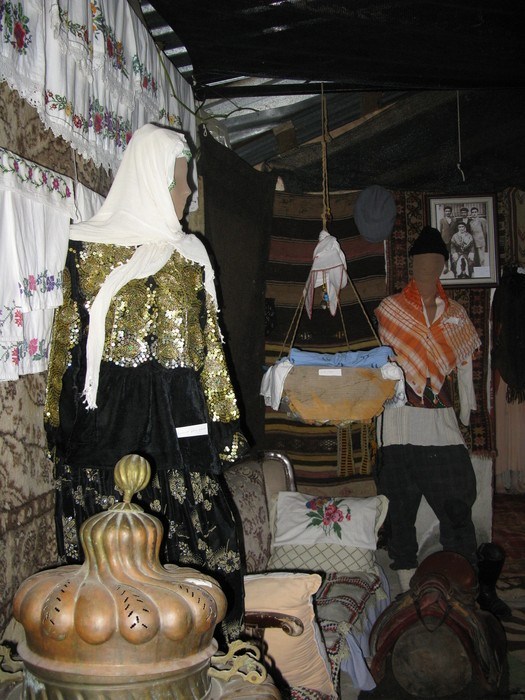
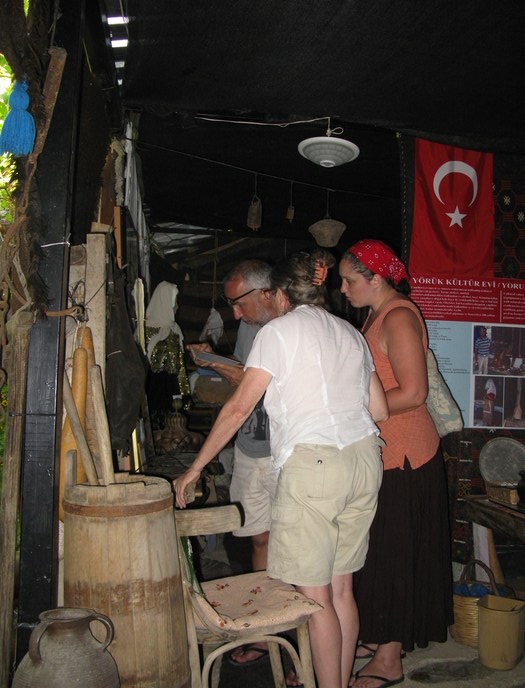
We, and our friends from the US had a wonderful time, relaxing, enjoying countless tales and glasses of tea – it proved the highlight of an already splendid day. If you are visiting or live near Dalyan, then do pop across the river to Çandır and do make a visit to the folk museum and tea house – ‘It’s Behind You’ right opposite the old village school.

candir4
Çandır Folk Museum

candir5

candir6
. . lots to interest at Çandır Folk Museum – make sure you pay a visit!

Alan in Okçular

Performing Minor Miracles – The Göle Book Project

gole1Göle is a rather grubby, nondescript little town in Turkey’s Ardahan Province. It was also the scene of a minor revolution that, with a little luck and a fair wind, will have a profound effect on the lives of hundreds of kids.

Before going on, I need to give you some background; from our very earliest days here in our village, J and I have been privileged to know a certain young man. I’ll not embarrass him by revealing his name or his present position in the bureaucracy – suffice to say that when this story was set, he was a Kaymakam, a regional governor. One of his greatest attributes is that he has never forgotten that he is a ‘village boy’!

gole2Kaymakams wield considerable power and control substantial budgets; some use their position to bring real benefits to the areas under their control, whilst a few do little more than collect their monthly pay packets! We have, on numerous occasions, watched ‘our’ man make good on his promise to us that he would always seek to work for the people. We have witnessed countless individuals benefit from acts of relief, and numerous larger projects bring benefits to the wider community. From helping the destitute to setting up an organic food/milk/cheese cooperative; from pioneering environmentally friendly road surfacing (with a South African-Turkish company) to breaking the strangle-hold of monopoly produce buyers; we have seen so much good done.

This is the story of one such project:

The idea was that all of the school children in the Göle region, regardless of age, would be encouraged to take up some serious reading; and not just reading but also discussing with their teachers what the book was about in order to ensure they were understanding and absorbing what they were reading.

As the schools had little by way of reading books, the first task was to seek aid from sponsors in order to create a decent library in every school. Our man achieved this in very short order through the generosity of individuals and companies.

With kids in place and books in place the next objective was to provide an incentive for the children to follow through. This part of the project involved going back to various sponsors and persuading them to cough up the funds for – get this – 500 brand-new bikes for the various age groups that were participating! 500 new bikes! These were to be passed on to the students who worked the hardest at reading and understanding the hundreds of new books now available to them.

It’s a few years ago now that J and I were invited by our man to attend the inaugural presentation day and celebration for the Göle Book Project. We invited ‘Kaptan’ June Haimoff, author, of İztuzu Beach and Turtle fame along for the ride.

gole3On their special day, we joined the children, the media and the many members of the inevitable ‘protokol’ for the presentation of the prizes. As happens every day in Ardahan, it rained, which had no effect whatsoever on the proceedings and on the spontaneous street party that erupted.

The following year the scheme presented a further 500 bikes, and the Minister for Education announced that he wanted the project to go nationwide – some hope of that ever happening – a project like this requires the commitment and focus that is rare amongst the population at large and absent altogether in the political classes!

When the presentations were over and the street party had dispersed, a bunch of bureaucrats and their wives, an army colonel, a TRT film crew, ‘our boy’ and his wife, June, J and I crammed into a few mini-buses and disappeared off into the wilderness for a barby that went on late into the night – a day to remember for everyone – especially the kids of Göle, a small, grubby, nondescript town in the province of Ardahan, NE Turkey.

Here are some impressions from that wonderful event:

gole4
the ‘stars’ begin to arrive
gole5
Göle girls in traditional dress
gole6
. . the boys too
gole7
. . the presentations begin
gole8
Göle Chapter, Hell’s Angels ready to rumble
gole9
Kaymakam Bey leads the troops on a triumphal ride around town
gole10
we are drawn into a bit of spontaneous Turkish line dancing
gole11
Göle, Ardahan – partying late into the night

Alan in Okçular

Beryl Cook and the Bums of Gölcuk

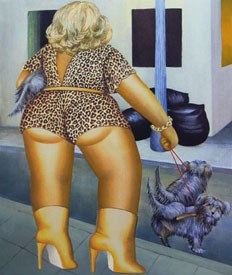
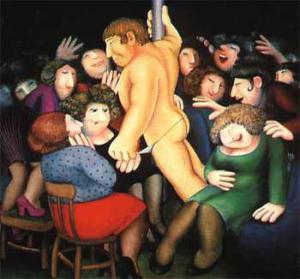
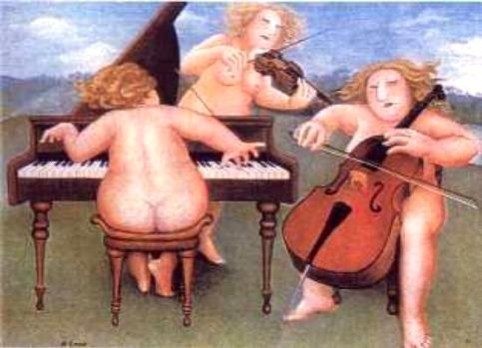
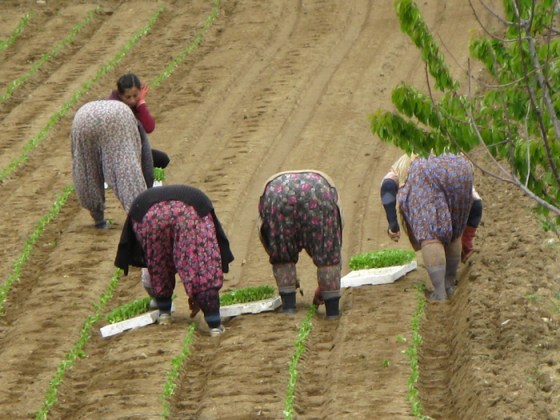
I have just read the latest post by Annie @ Back to Bodrum which includes the following; ‘Big bottoms in baggy trousers are bent over their fields planting pepper seedlings.’ By coincidence, J and I were on a walk around the lake here at Gölcuk when we were  ‘presented’ with this irresistible photo opportunity. The late Beryl Cook made a very comfortable living from depicting ample bums and boobs – if she had ever holidayed in Turkey she could  have died a multi-millionaire. Hmmmm! Perhaps she did!

beryl-cook
the lady herself – by herself

Here’s what was presented to us by the Red-Hot Chilli Pepper planters; but first a few of the incomparable Ms Cook’s wonderful observations of life.

beryl-cook2
ample sufficiency
Beryl_Cook_Ladies_Night
Ladies Night
beryl_cook_trio_6508
The Trio

. . and finally . .

IMG_2334
the glorious bums of the Red-Hot Chilli Pepper Planters of Gölcuk

Alan in Okçular

Back Roads and Tracks – to Ulu Dağ and İznik

Taking the less used pathway from A to B; getting out of the car and venturing into the unknown usually brings rewards far beyond the anxiety of arriving on time or the risk of wondering exactly where you are. There is only one road to Ulu Dağ, so it doesn’t really count as a back road; getting out of the car and wandering off along animal tracks into the forest does.

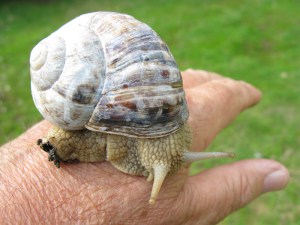
snail3_1
Some Snail!

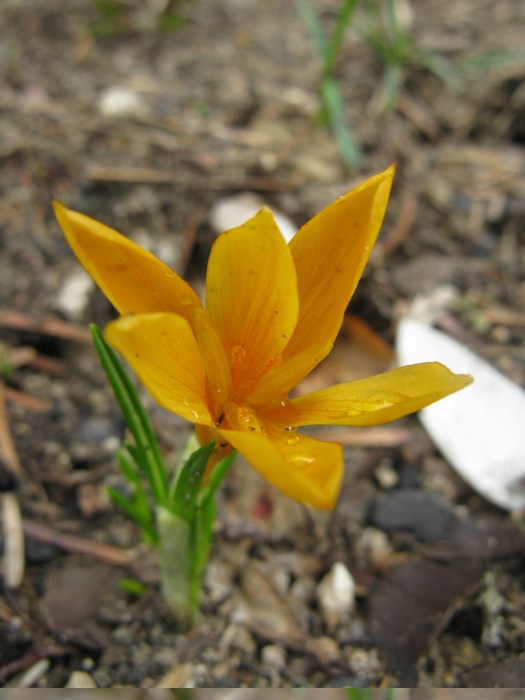
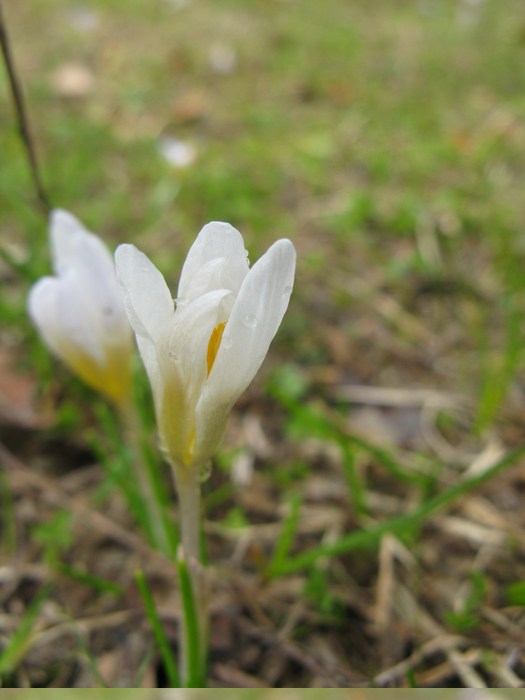
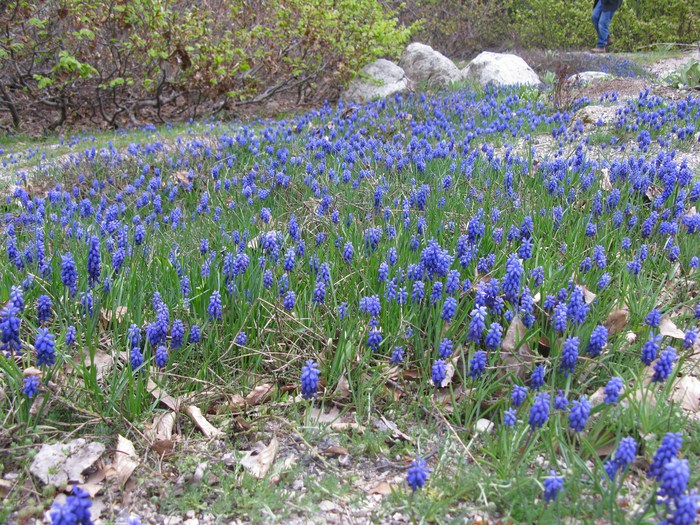
In a similar spirit, J and I went many miles out of our way to take a back road on our journey from Bursa to İznik. I don’t know if wild flowers and wild snails turn you on, but they certainly do me! The forests of Ulu Dağ are splendid, in direct contrast to the ghastly ski resort at the top. If this is Turkey’s premier ski resort it is a bloody disgrace! Getting off the road led to the discovery of thousands of Fritillaria pontica, three different crocus, scilla, great swathes of Muscari latifolium and a

old-chap1
‘you forriners is a rum old lot!’

number of, as yet, unidentified flowers along with one of the finest snails it has been my privilege to meet!

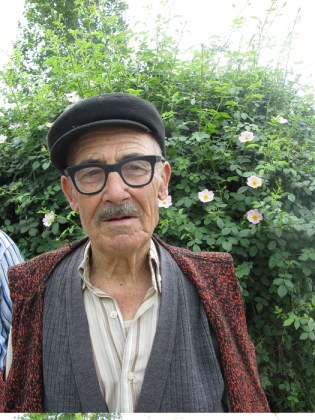
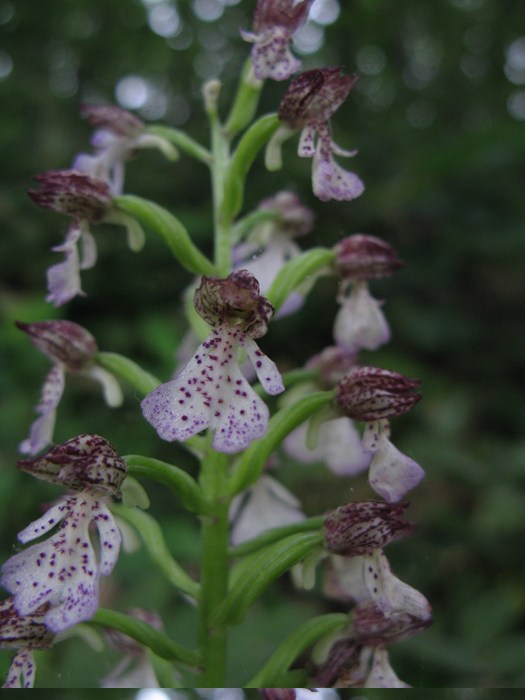
Turning off on to a back road to İznik we drove through countryside festooned with wild dog rose; met an old man, his son and grandson who farm pears and peppers. The old fellow was amazed that I wanted to photograph ‘weeds’ and told his son that foreigners were very odd (or words to that effect). Stopping to find a bush for a pee, led to the discovery of beautiful clumps of Iris germanicus and a solitary Orchis lactea.

A few photos to be going on with:


Fritillaria-pontica1_1
Fritillaria pontica
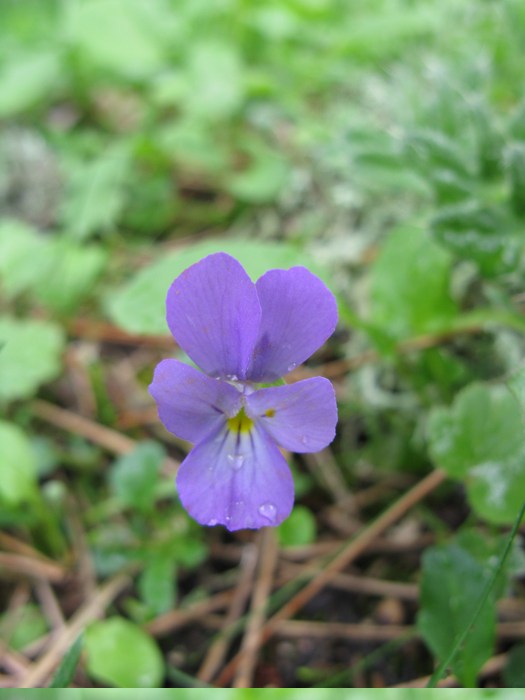
violet
violet
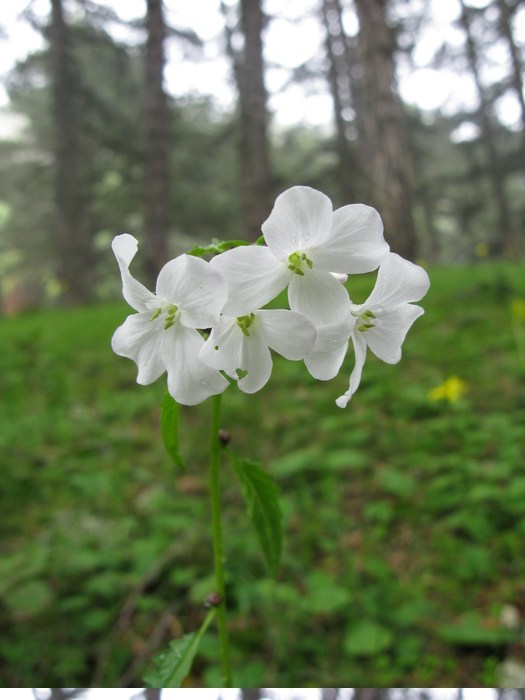
unidentified1
unidentified
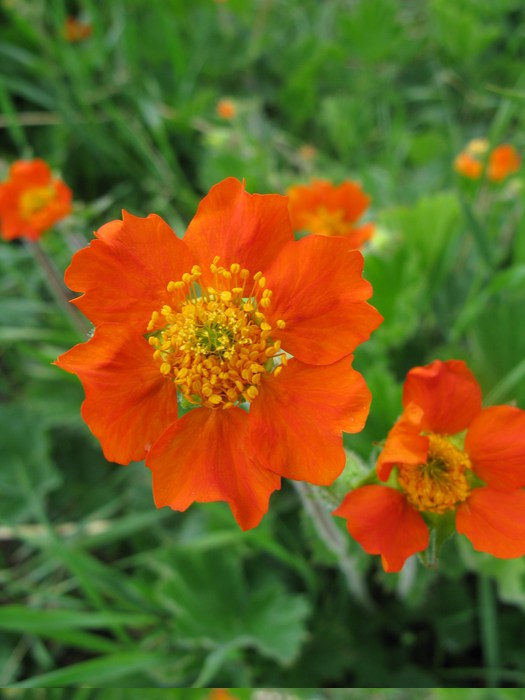
unknown
unidentified
yellow crocus
yellow crocus
white crocus
white crocus
Muscari-latifolium2_1
Muscari latifolium
Orchis-lactea5
Orchis lactea

Enough, already! Alan in İznik

Back Roads To Karaçam

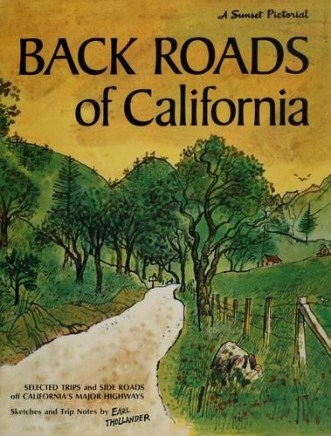
Back-Roads-of-CaliforniaThere is another book project simmering in a recess somewhere in the sponge that passes for my brain. It owes its existence to a chance comment (and later prodding) by a blogger friend from the US – she and her artist husband will collaborate to help pull this whole thing together. The inspiration is a classic book about the back roads of California – I sent for a copy and what arrived is a gem printed on hand-made paper.

Our adopted country of Turkey is changing and ‘developing’ at an astonishing rate of knots – dirt trackways get covered by layers of tar and chippings before morphing into four-lane super highways! Finding the quiet, life-enhancing back roads that still yet meander through mountains, valleys and villages, where not much has changed apart from satellite dishes and FIAT tractors, seems like a great idea.

J and I have enjoyed wandering off the beaten track as we explored our new country; we always sought out backways whenever we could. Getting ‘lost’ and discovering great views; pretty, workman-like villages and some wonderful people go hand-in-hand.

kara1
back road treats

This was how we discovered Karaçam (Black Pine) some years ago. We were following a forest track way up into the mountains behind our local town of Ortaca – it was a wild ride, zig-zagging through the forest, crossing roaring rivers, negotiating rock-falls and sliding through muddy pools. Even then progress was rearing its (often) ugly head as we waited while a bulldozer widened a section of track – asphalt was coming!

With J on a family visit to the US, I decided to revisit Karaçam and then push on northwards through the mountains with the hope of linking up with the main trunk road at the town of Acıpayam. I’d be plotting the route, taking photos and jotting notes for the book project. The weather was not looking promising!

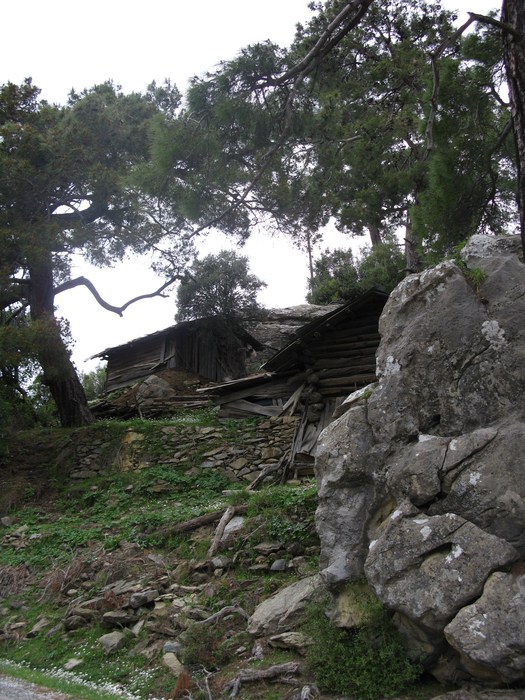
The dirt track used to be pretty good for driving on; since the original trip the road has been ‘improved’ with asphalt and the results are bloody awful with the surface broken and pot-holed. The drive however is as wonderful as ever with fantastic views around every bend. Not long after hitting the mountains the clouds closed in and the rain fell; not so good for photographs but I find something magical about gazing down into cloud shrouded valleys, catching ghost-like glimpses of distant villages.

kara2
Old Houses – Karaçam

Finding Karaçam was like stumbling across ‘Brigadoon‘ (of the musical fame); the clouds lifted and there it was – unchanged for 50 years – well, since last I was here! A small stream runs near the mosque and there is a wonderful old Çinar (plane tree) with a ramshackle bench. Nearby are village houses that look as if they have been there for ever.

The asphalt ended at the village so it was back to dirt track and mud – bucket loads of mud! Someone had made a couple of signposts – Köyceğiz (where I had come from) 65 kms and Acıpayam 80 kms. Hmm! As good as halfway – Acıpayam here I come! But it was not to be – the track was in a bad state; slippery and dangerous – discretion dictated turning back and trying again another day when conditions are more favorable. Shame really, because my electronic maps say that another 10 kms would get me to villages on the Denizli side of the mountain.

So, will this route make it into ‘The Back Roads of SW Turkey’? Not yet – but maybe it will be fit for purpose by the time we get to the first re-print!

kara3
Karaçam
kara4
Barn – Karaçam
kara5
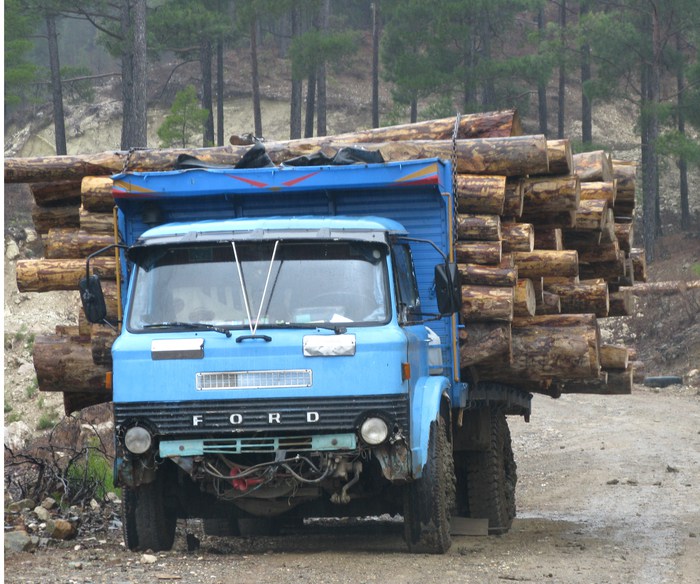
Outback driving – be prepared – for anything coming round the bend
kara6
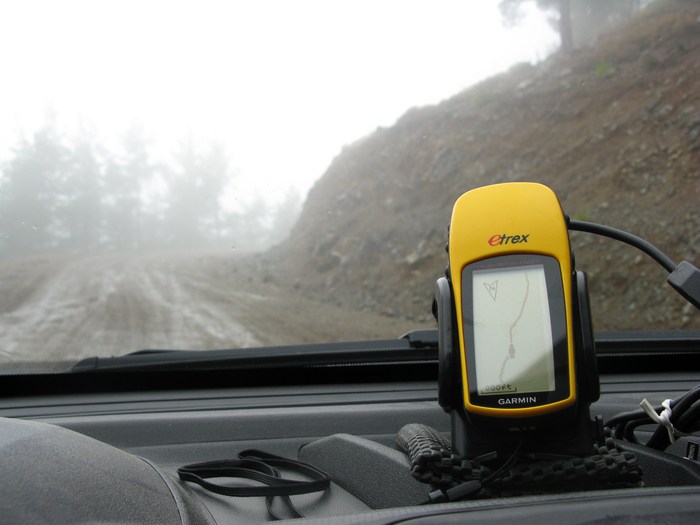
GPS – praise be
kara7
Hidden places – Alan Mah. Sazak Village
kara8
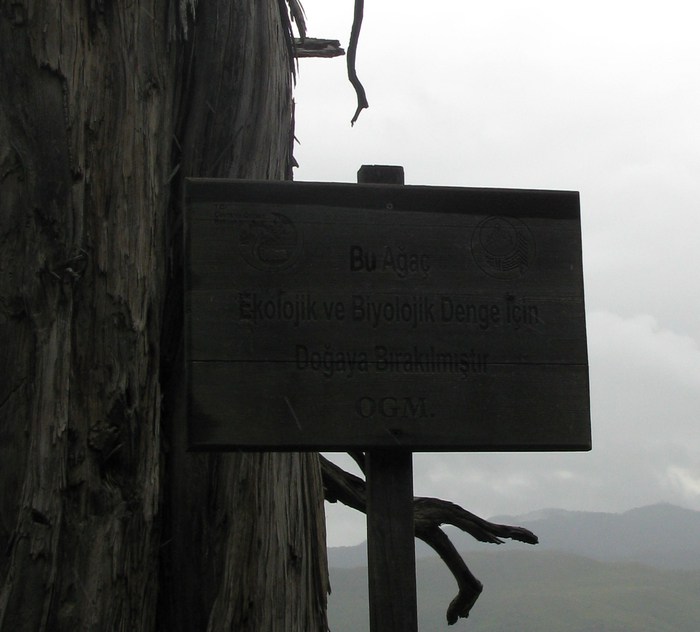
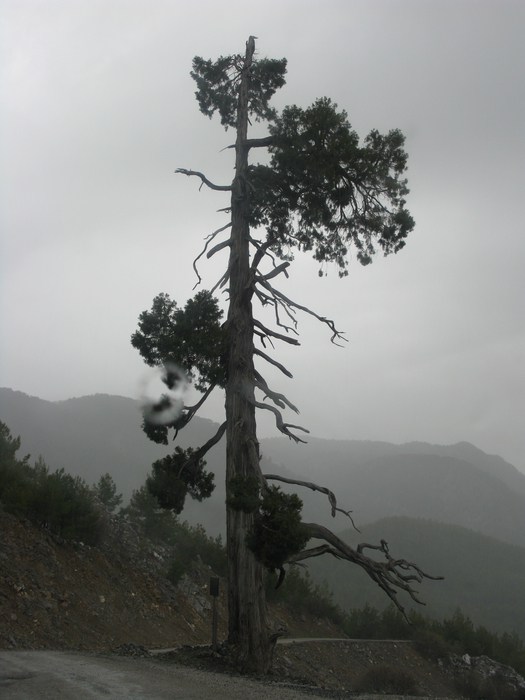
this ancient tree is protected
kara9
at least some things get protection
kara11
Old Çinar – Karaçam (lousy pic but it was piddling down)

Alan in Okçular

ps as a footnote since this was posted on Archers way back in April 2012 so many back roads have been ‘upgraded’ that I shelved the project. Great pity as it would  have been fun to do and fun for others to use for ‘adventures’.

The Sexual Life Of The Camel

‘The sexual life of the camel, Is stranger than anyone thinks.

One night in a moment of passion, He tried to deflower the Sphinx!

Now, the Sphinx’s posterior anatomy Is covered with sand from the Nile.

Which accounts for the ‘ump on the camel, And the Sphinx’s inscrutable smile!’

Anon

(a photo extravaganza first posted on Archers of Okçular 26.3.2012)

camel1
a magnificent bull in rut

J and I have had much to ‘get the ‘ump’ about of late. Those who follow these rambling wanderings through time, space and reality will know of the quarry that has been opened next door to our home. Anyway, to escape the noise, dust and mud that kicks off our days at 6.30 every single morning, we decided to have a few days away at a spa and take in some Camel Wrestling as well.

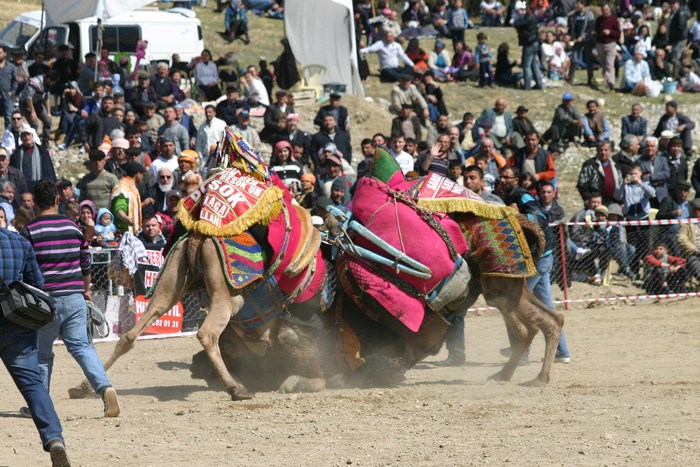
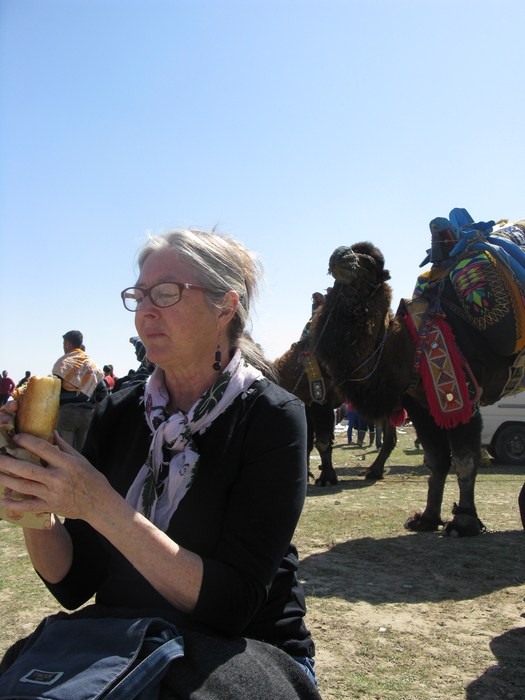
For those of you worried about blood sport or cruelty, let me reassure you that I’ve attended many a bout in my years in Turkey and I’ve never seen a camel hurt or in any way disturbed by the presence of the noisy audience. The animals are focussed on just one thing – being top-dog in the hierarchical world of bull camels at a time of year when the ladies are feeling receptive.

camel2
a bit of argy-bargy

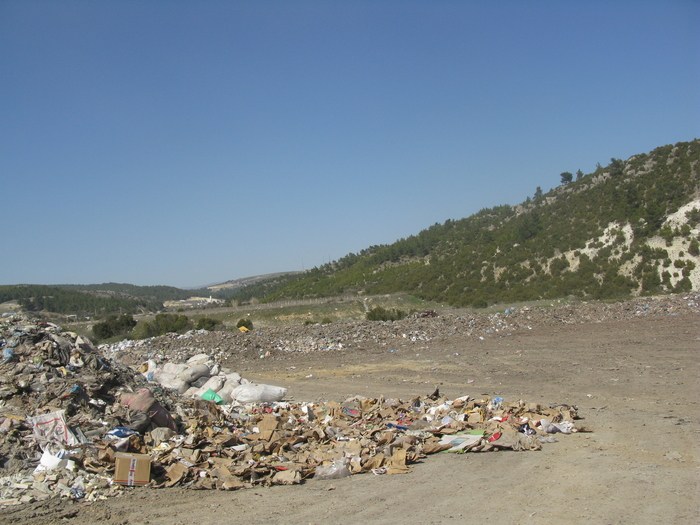
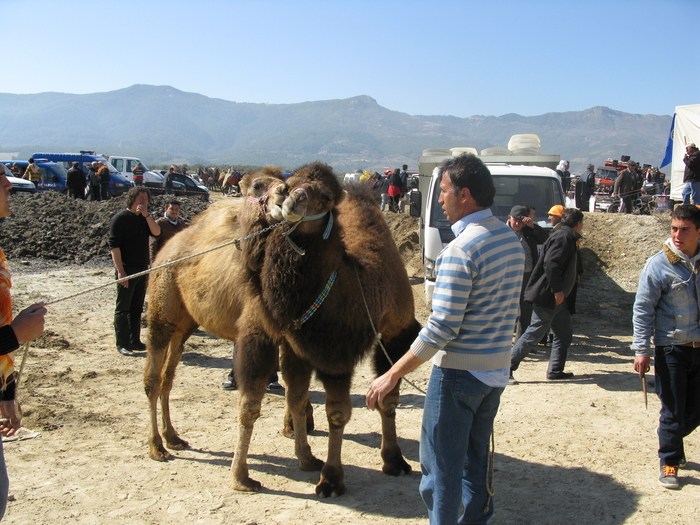
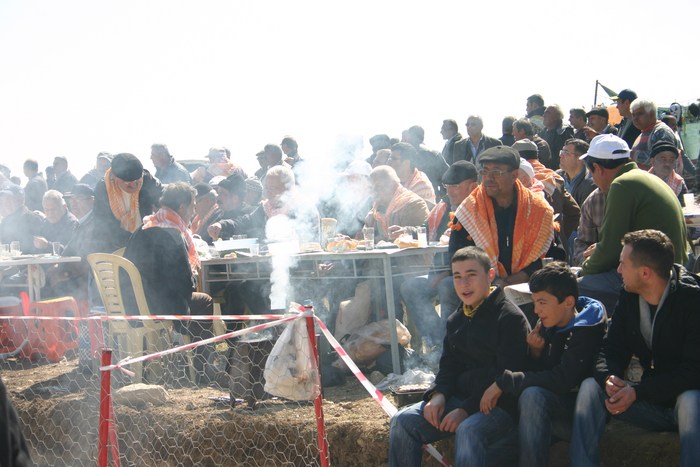
To set the scene, you need to know that camel wrestling is not a touristy thing; it takes place over the winter months when the females are in season. With the steady expansion of winter tourism and with many more foreign residents around these days, venues near these centres now see a lot more ‘yabancı’ (foreigners) than used to be the case. For this reason, J and I prefer to frequent those places that are less ‘polished’ and less concerned about the image they are projecting. Rejecting the concrete safety fences of Selçuk for the chicken wire of Yatağan or Nazilli or Buldan suits us fine. Some of these venues are just a cleared area of forestry land, or an open space in the middle of a derelict works area, or, as was the case at Buldan where this post is set, a space in the middle of a quarry that was accessed through the town rubbish tip!

camel3
Welcome to Buldan’s Camel Wrestling Arena

As we drove through the mounds of rubbish and dust we did wonder if the sign pointing us this way might not have been turned around as a prank. Our doubts soon evaporated as we joined the back of a queue to get our tickets from the Zabita (municipal police) – it was mayhem as drivers behind tried to pass on both sides on a track wide enough for one. We handed over 15 lira and got our ticket to admit one car and as many people as could jam themselves inside; pretty good value for a family day out. We drove forward just a couple of metres where we were again stopped by the Zabita who demanded our ticket, tore it into bits, chucked it with the rest of the rubbish and waved us through! Burası Türkiye! This isTurkey!

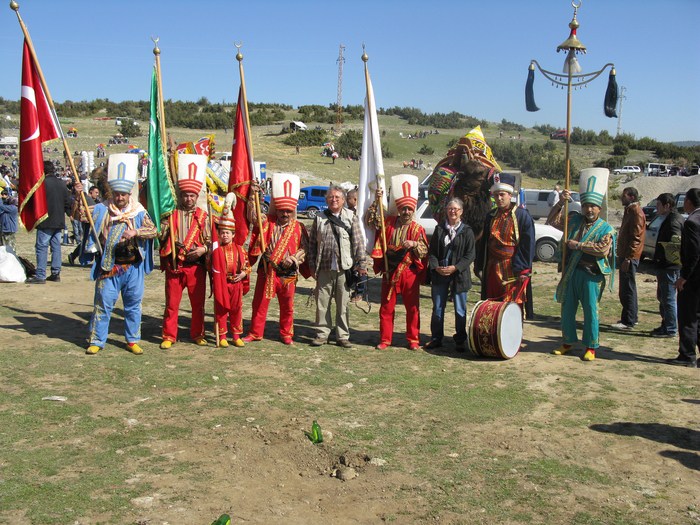
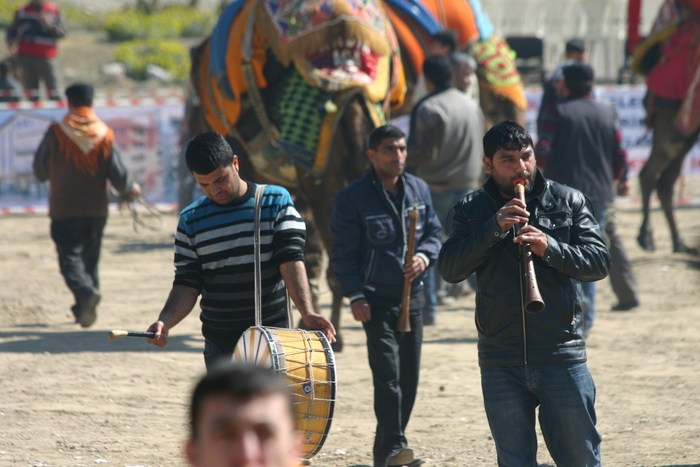
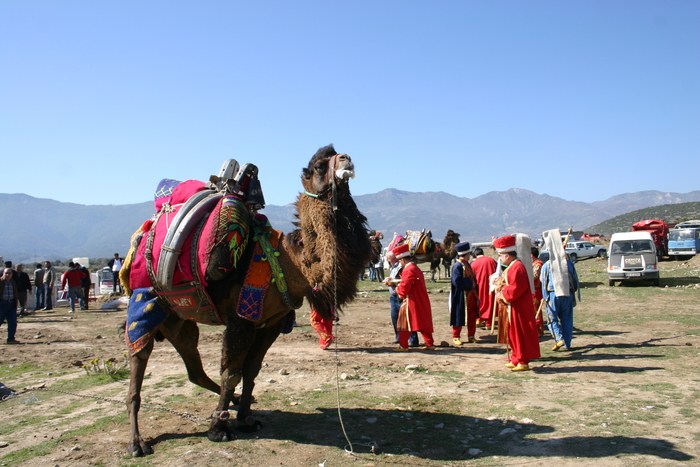
Being obvious foreigners, we drew a lot of polite interest and we were soon adopted by the members of an Ottoman Marching Band; photos were taken, cards exchanged and we now find that we are to be their honoured guests whenever we are in Denizli.

camel4
honorary members of the Denizli Fatih Mehteri – Ottoman Marching Band

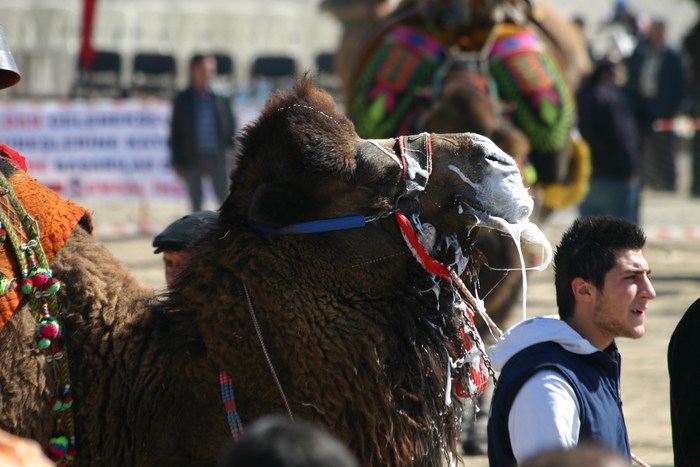
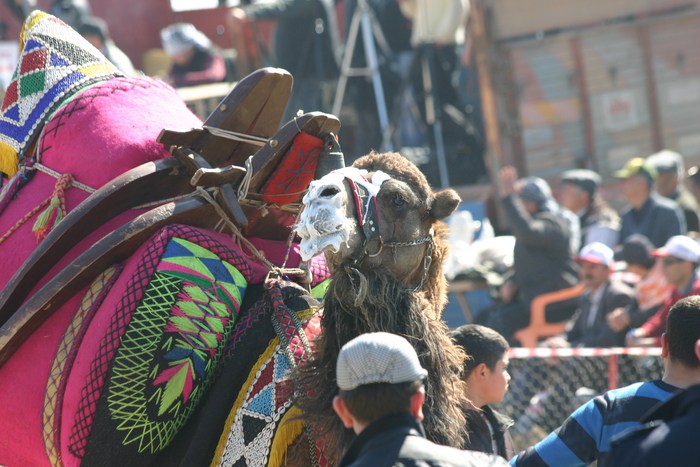
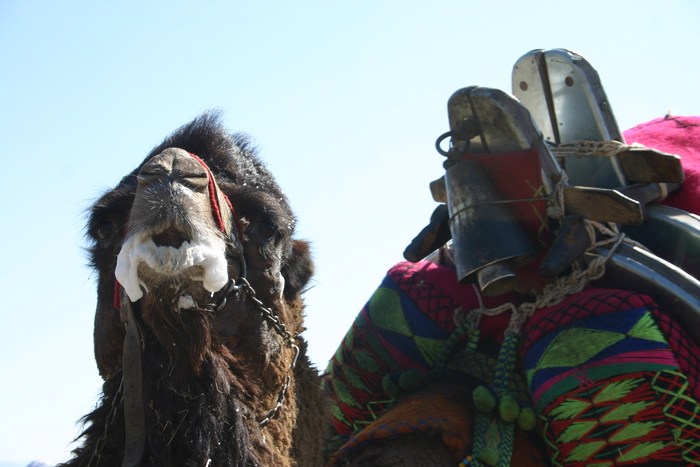
For those who have never experienced an event like this, it can best be described as a total assault on the senses. There are the sounds and sights and smells that emanate from thousands of people talking, drinking and cooking; there are tea vendors, candy-floss and balloon sellers; sausage makers, video sellers and those cooking meatballs and sausages on huge ‘barbies’; there are wandering bands of traditional folk musicians and the over-loud public address system. In the case of Buldan, there were the colourful uniforms of the Denizli Fatih Mehteri (Ottoman Marching Band), and then, of course, there are the stars of the show, the bull camels, decked out in all their finery; foaming and slobbering at the mouth and pumping out bucket loads of testosterone induced pheromones! The overall effect on the sensibilities of the new visitor is incredible – J and I have been attending these things for a while now and we still get a huge buzz. If you love spectacle and you love people-watching, you won’t find a better combination anywhere.

camel5
when leading your rutting bull a hoodie is not a good idea

It is worth remembering that the bulls are behaving as they would ‘in the wild’ where the instinct to gather as many females together as they can by seeing-off any likely competitor is so powerful that everything else pales into insignificance. To avoid any possible injury to these valuable beasts as they compete, they have a cord tied around their jaws to prevent biting.

camel6
camel wrestling – the take-down ‘Come on ref!’

The contests between bulls amounts to a great deal of pushing and shoving with attempts to topple the opponent by wrapping a head and neck around his front legs. Some bouts are over quickly, others are called out of time by the judges – sometimes one of the beasts will take off for the hills and, chicken wire fences being no impediment, they end up scattering chairs, picnics and people! For me, some of the funniest moments come when two bulls, locked together and oblivious to anything around, end up by the fences – off come the spectators’ hats, up come the plastic chairs and there follows a totally ineffectual pantomime performance as the crowd tries to shoo the animals away. The wise would simply leave their place by the fence, but then they’d be giving up a prime spot and you know what Turks are like in a queue!

camel7
deve sucuk – camel sausage ‘sarny’

In the end there will usually be a winner with one animal being ‘pinned down’; a judge blows a whistle and two teams of ten to a dozen men move in, get a rope around each bull and then proceed to pull them apart – no easy task. In the end the beasts are separated and immediately begin to act like perfectly behaved gentlemen, showing no interest in any more brawling.

camel8
folk musicians wander and play to the crowds

Buldan proved to be one of the very best venues we’ve been to – once through the rubbish tip, the atmosphere was brilliant – from here on the photos can do the talking. Back at our spa hotel we were able to have a nice long soak in the hot mineral waters and replace the smell of meatballs and rutting camels with the whiff of sulphur from the bowels of the earth – Sheer Bliss!

camel9
to the victor the spoils
camel10
two young ladies wondering what all the fuss is about
camel11
I say, that’s my cousin you’re eating!
camel12
making a day of it – Turkish style
camel13
a most superior beast
camel14
standing proud
camel15
. . getting out was harder than getting in!

Alan in Okçular

In The Grand Scheme Of Things . .

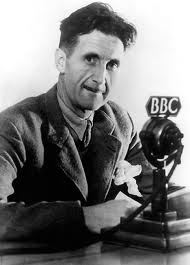
orwell
George Orwell

Great men and disproportionately fewer great women are defined and refined for us by those whom we deem to be worthy of lording it over us every four or five years. They stand upon manifestos that promise much but deliver little. What they do deliver, but never talk about beforehand, is war or conflict, reduced public services, cronyism, personal enrichment, self aggrandisement and the ability to write or rewrite history. “He who controls the present controls the past. He who controls the past controls the future!”as Orwell memorably wrote.

So, the history books of our nation states are filled with tales of daring-do by champions of our establishment class; pages are given over to the wisdom and fortitude during times of conflict of our political leaders. Conflict usually brought about by the arrogance, greed, lust for more power or ineptitude of these self-same leaders. Pages are dedicated to politicians and generals who, by and large, seldom or never come within range of an armed enemy. In contrast, “the poor, bloody infantry” get a line or two when mention of casualties is glossed over. Churchill stayed in London during the blitz, a political decision, to boost morale in the civil population but was in a hole so deep under the Admiralty as to warrant honorary membership of the National Union of Miners, a group he had once turned armed troops upon for daring to defy the Establishment. Yet he, along with others like him, are perceived by many to be great.
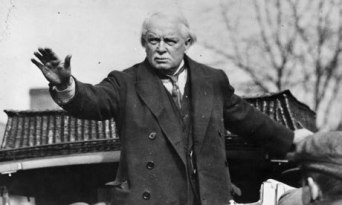
David-Lloyd-George-006
David Lloyd George the ‘Welsh Wizard’

David Lloyd George – the “Welsh Wizard”, so named for his fine oratory and political acumen, but despised by political friend and foe alike for his deceit and cunning. He became Prime Minister in 1916 having schemed the downfall of his then Liberal Party leader and Prime Minister Lord Asquith.

At the conclusion of The Great War, in opposition to former allies the US, France and Italy, he set about the punishment of what he referred to as the “deplorable Turks” by the dismemberment of Turkey and what remained of the former Ottoman Empire whilst at the same time serving Britain’s imperial aims in the region. Part of his strategy was to encourage then Greek Prime Minister Venizelos, whom Lloyd George considered “the greatest statesman Greece had thrown up since Pericles”, to attack mainland Turkey and establish a Greater Hellene Empire. In the event his strategy failed; thousands died needlessly on both sides of the conflict, animosity simmers between Greece and Turkey to this day and with the exchange of populations in 1926 formerly mixed and peaceful communities were torn apart, friends were made into strangers and enemies.
Within days of the signing of the articles of agreement between Turkey and the British, French and Italians for full withdrawal of troops (the French and Italians were long-gone and the Greeks were defeated), Lloyd George resigned, forced out by colleagues who “[could] not afford to keep him anymore. He is too expensive.” The legacy of David Lloyd George is one of death and destruction, of double-dealing and strategic failure. And yet the casual reader of history would see him writ large as a statesman and master politician. There is page after page in the “official” history books and biographies and even a parody of a repetitious song.
(I am indebted to long-term resident of Kaya, John Laughland for much of the following information contained in his moving tribute-cum-obituary).
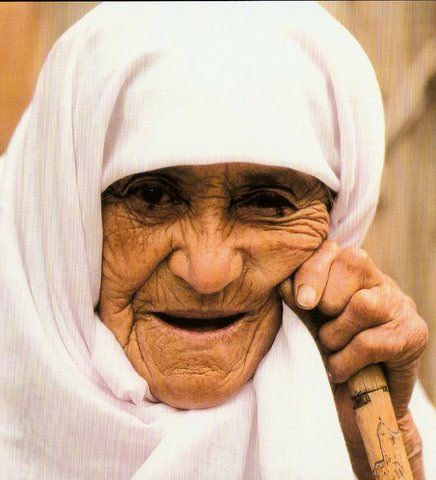
aysenine
Ayşenine – Granny Ayşe of Kaya
Compare this with the story of Ayse (pron. Aysher) of Kaya village near Fethiye in SW Turkey. She died on 20th March 2009, in Izmir, aged around 104, although records and registrations in those days were not punctiliously kept. As she grew older she became known as Aysenine “Granny Ayse”and she was greatly loved by those who knew her. All of her life was spent in the Kaya valley until about five years ago when infirmity dictated that she move from her tumbledown house to the care of her family in Izmir. When she married she moved from one area of this small valley to another and knew little of the world outside. Hers was the life of a village smallholder, working to provide for her family and herself. Some would say she led an unremarkable life of little note or consequence and yet her face has featured in a book that records “Fethiye Faces and Places” by Turkish photographer Faruk Akbas, poems have been inspired by her words and two renowned authors, Jeremy Seal (in Santa; A Life) and Louis de Bernieres (in Birds Without Wings) have written about her and her life and you might ask why. (de Bernieres is presently working on a screenplay for “Birds Without Wings”)
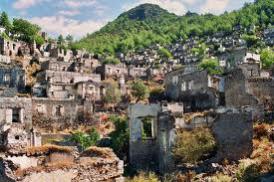
kayakoyu
Kaya Village as it is today

Ayse lived through and dealt with the consequences of David Lloyd George’s arrogance and perfidy; she was about seventeen years old when the exchange of populations took place. When asked of her memory of those awful times, when friends and neighbours were torn apart, she responded “The cats were crying.” There were some 500 houses in what is now known as Kaya village, formerly Levissi, which remain empty to this day, and it’s probable that hundreds of cats in need of food were left behind. Ayse kept in trust the wedding chest of her Greek childhood friend Maria in the belief that one day they would be reunited and it could be returned. Her integrity, honesty and trust, her faith in her fellow human beings are in direct contrast to the murderous contempt for the lives of others that is the legacy of Lloyd George.

Those who knew Granny Ayse remember her golden personality and sparkling wit that made her a pleasure to be around. Popular history through photos, poems, books and films will record her real greatness as a starring member of the human race; someone who contributed to the well of human kindness and left the world a better place for having lived. David Lloyd George on the other hand is remembered as a cunning bombast with the blood of thousands on his hands, a failure who contributed nothing of value. He may feature in the “official” histories bathing in perceived greatness but Ayse lives on in the hearts and memories of so many because she contributed so much and represented the true nature of humanity.
Seldom do “histories” reflect reality; in the US there lives a species known as Political Historian whose job it is to address the problems that actual recorded facts cause to the established ruling elite. No doubt they thrive in most other nation states in one guise or another drip-feeding us and our kids via schools and the media with their perceived version of reality. NEWSPEAK is alive and well all over the world. As memories of recent events fade the Political Historians will wave their wands and Bush, Blair and now Obama et al will transmogrify into great leaders who saved civilisation yet again from the barbarians. Records go missing, new facts are created and repeated over and over in the spirit of Dr Goebels and the Ministry of Truth. History, as we know it is a lie, digging out and speaking the truth is the foundation for the future.
(this article was first published a number of years ago in the Socialist Standard and posted on Archers of Okcular 18.3.2012)
Alan in Okçular Köyü

Amasya – Beautiful, Historic, Captivating

Amasya1Another tale from the log book of the ‘Tardis’; for those who don’t know this amazing machine its name stands for TimeAndRelativeDimensionInSpace. Tardis is a time and dimension machine that appears (literally) for all intents and purpose to be a British Police Call Box circa 1950 – appearances, however, can be very deceptive – but that’s another story.

It is June 2004 as we materialise . . and so to Amasya, where the Sultans of old would send their eldest sons to learn the ropes of state-craft.

amasya2J had got some info on a pansion that was a restored Armenian merchant’s house, and this is where we are. It is beautiful! My dream home. The bathroom is through one of the wonderfully carved cupboard doors. Honestly! And it is totally modern and functional. We will be exploring the sites tomorrow; meanwhile we both felt a desperate need for a cold beer. That took some finding, I can tell you. Nowhere but nowhere to sit down with a frosted glass of the amber nectar could we find. Began to think the population was made up of Seventh Day Adventists or Wesleyans! Then we discovered a discreet little place where the owner slipped us a pack of five under the counter wrapped in two black plastic bags. Whew! Saved.
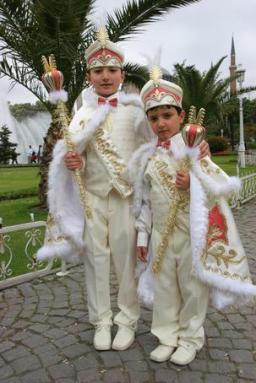
amasya3As we were making our way back to the pansion, we were stopped by what sounded like the Keystone Cops’ sirens. Loads of them! Along came the motorcycle police escorting a convoy led by one of those Disney type trains you see at Margate or Southend. It was full to the brim with little Turks off to become big Turks following some genital mutilation courtesy of Blue Gillette! There must have been at least a hundred or more. All dressed up as little soldiers in blue or white uniforms trimmed with white fur. I expect the fur was to wrap around their . . . Don’t go there, Alan! They were followed by busses crammed full of the proud family members . . . proud family members? Sorry, no pun intended. I bet the young girls were glad they were girls, even if they will have to work all day whilst their old fellows, (Oh dear!) . . are down the coffee house playing cards.

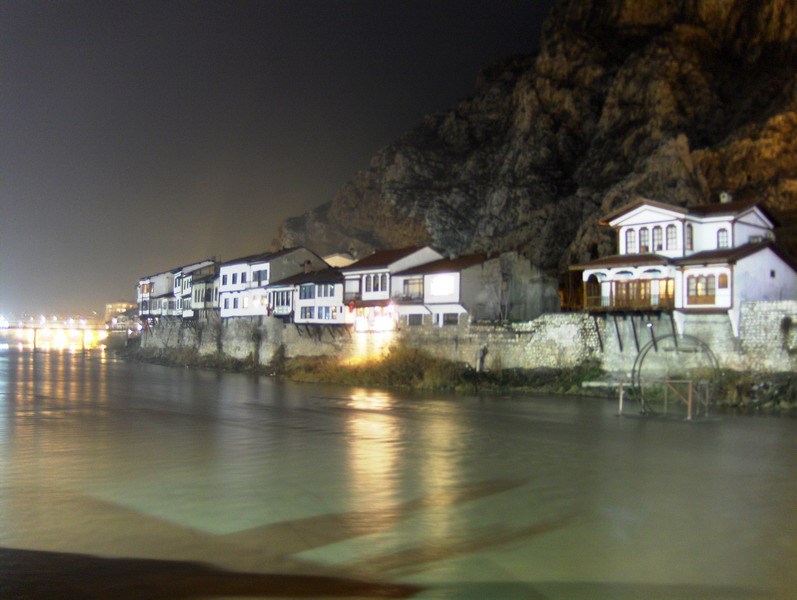
Amasya is a very nice place. The setting is quite something. Originally, the whole town would have fitted into the gorge on either side of the river. Now, of course, it’s spreading itself out over what would have been farmland at either end. It still has a cozy feel to it, especially here in the original bit that contains the old houses, mosques, hamams, etc.

amasya4We didn’t wake up until eight this morning after our first night in this lovely house. It felt like emerging into a different world – a sort of time warp thing. The room was just catching the sun, which was filtered through the muslin curtains (original copies). It was cool in the room; as is the whole house, no doubt due to the high ceilings and non-concrete construction. That’s something I love about these old houses, the proportions are so . . civilised.

Breakfast in the courtyard, surrounded by the bric-a-brac from years of collecting by the owner. The house is full of old stuff too; it really is a joy to be here.

J and I began our exploration of the town with a wander through the old Ottoman houses on the North side of the river. Some restored; some badly decayed and derelict and a dreamer’s delight. What I could do with one of those, I mean, look at the setting, look at the size of the gardens, look at the potential, look at the cost! Where’s the lottery ticket seller? Some have been beautifully restored, and one is open as a museum house. It is mouth-wateringly gorgeous (in my opinion). They all sit under the cliff face where the tombs of the Pontic kings are carved out of the rock. A bit like Dalyan, just a thousand or so years older. Then on to the town museum, described in our really ancient Lonely Planet guide as a gem amongst provincial museums; and so it proved.
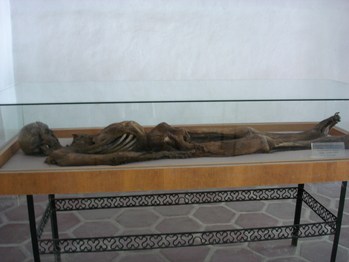
amasya5We’d almost finished when the cashier came rushing up, pointing at her watch and saying ‘Time, time!’ In Turkish, you understand. We felt inclined to hang it out, but then if I was a poorly paid civil servant, wanting to go to lunch, I’d want the bloody punters to go too! You can still go into the museum gardens, we were told, and as these contain a mausoleum with five desiccated mummies of Mongol big-wigs, we thought we were doing good – getting real value out of our 70p admission fee! We hadn’t reckoned with the other member of the museum staff who wanted his lunch too. Selfish bastard!

We did get to see the mummies though; and J got to comment on the enormous scrotum of the Mongol governor of Amasya circa 1274 AD!! So I went to have a look at his concubine’s . . . Nothing to write home about, bit dried up after eight hundred years!

amasya6We had a tasty lunch at a locanta in an old Han which has fallen into disrepair. The Han is now occupied by dozens of metal-bashers turning out all sorts of stuff, from scythes to samovars. Then a stroll to an old medrese or religious seminary with a splendid entrance way that is now used as a conservatoire for the town and province. We were invited to sit and rest and enjoy an impromptu music performance. There was also a marbling artist (ebru) working and displaying her stuff. As we were leaving we were grabbed and taken to a locked room to see their collection of old musical instruments. Being obvious foreigners has its advantages!

Next was the tortuous drive up to the castle that overlooks the town. Once we’d left the car, I was glad to find my heart was still in good nick as we made the final scramble over rocks and scree to the top. What a view!

Must just go back in time to when we’d just left the museum. We were walking along the street when this smiling young man came up to us, and in very broken English, seemed to indicate that he knew us. We were a bit nonplussed. We tried to find out where we’d met, without success. Then he said ‘English, English?’, we agreed that was what we were. ’I love you!’ he said, clasping me to his bosom. ‘I hope not’ said I, ‘this sort of thing is not done in public!’ His eyes opened wide and he hurried away. Was it something I said?

Our evening meal was at the Town Club overlooking the river, where we were a bit of an attraction. At one point all of the staff were hovering around our table as we set about ordering our meal of river catfish (delicious) and the only bottle of wine in the house (TL28,000,000 – 2004, remember). Total bill . . TL51,000,000 which means the meal was a damn sight less than the bottle – mind you, it was really not a bad drop of stuff!
amasya7

This has been an enjoyable couple of days out of our journey to Erzurum. We’ve hit the town at a good time as it’s their festival week, which commemorates a speech that Ataturk made here that proclaimed the campaign for the foundation of the Republic. There’s music and mass circumcisions to be enjoyed, and after our meal we were drawn by the wonderful wail of the zourna to the main square. It was great; wild Turkish folk music and the local men strutting their stuff, and do they know how to strut! A fitting close to our first visit to this lovely town of Amasya.

It’s been a delight re-reading and re-posting this ramble 2.2.2012

Alan in Okçular Köyü

Hattuşuş – Capital of the Hittite Empire

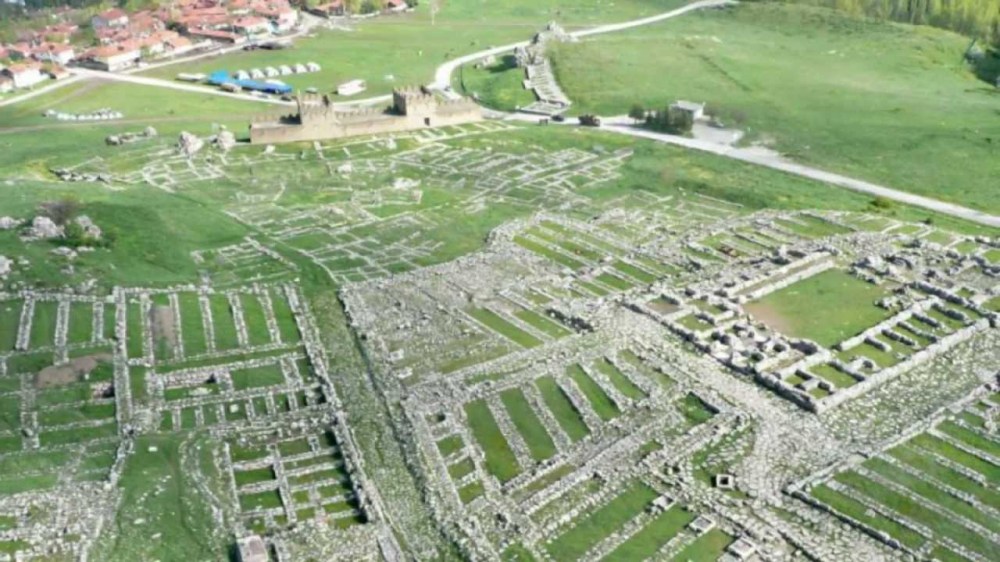
Here we are, embarking on another journey through time, aboard the ‘Tardis’. On this adventure we head back to 2004 and a trip J and I made to Erzurum Province. One of the places we dipped into on route was at Boğazkale, site of the ancient Hittite capital of Hattuşuş. Join us as we wander around this amazing place . .

hattusus1

We arrived at the site pretty early in the morning – so early, in fact, that the guardian was nowhere to be seen. As the gates were open we drove in and followed the road as it curved around and climbed the hill that dominates the remains of the city. The view from the top puts the size of the place into perspective – it is vast! It also meant that we had the pleasure of watching the poor guardian, who had seen us enter whilst still eating his breakfast, racing along the roads to try and find us and ensure we paid the entrance fee.

hattusus2

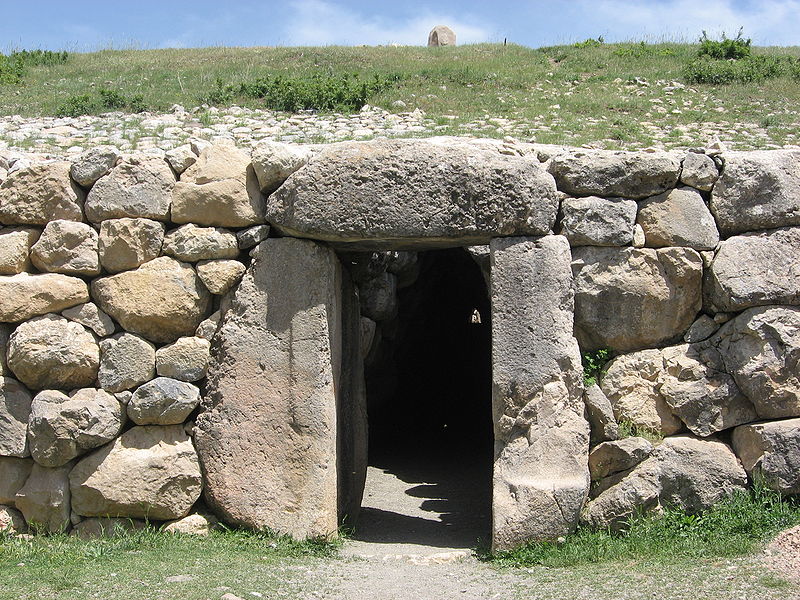
The Hittite Empire once challenged both the Assyrian and Egyptian empires, controlling huge areas of Anatolia and northern Syria; and the scale of their capital city is awe inspiring. Huge earthworks, faced with millions of cut stone blocks, stretch for about 5 miles and literally changed the landscape! (A bit like Kent after the Channel Tunnel went through!) Originally eight tunnels or posterns, ranging from 70-120 mts in length, led through this massive fortification. These days only one is accessible and walking through the narrow, triangular, dry-stone construction left us very aware of all the tons of ramparts above us.

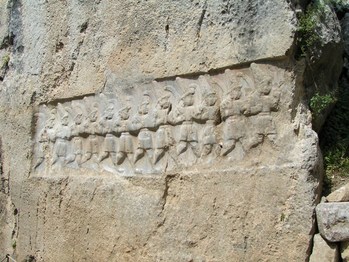
At the top is the much-photographed Lion Gate; what you see today is a reproduction, the original being in Ankara. The site really is ‘monumental’ with amazing reliefs of gods and kings and fantasmagorical beasts. The place was known as the City of a Thousand Gods for a good reason!

hattusus3

An additional bonus for me was that our visit was in Spring for Central Anatolia and the whole site, not to mention all the roadside verges, in fact everywhere is a botanist’s wet dream come true. I could have spent days just taking pics of flowers, so many and so beautiful! Another time.

hattusus4A quick drive along the processional way from Hattuşuş and we were at the sacred site of Yazilikaya where two small ravines contain the pantheon or temple site that has relief carvings of all (it is claimed) of the Hittite gods and goddesses. Here we were accosted by the inevitable ‘student of history who just happens to be staying with his brother who carves stone replicas, but didn’t want any money’ chap. He seemed pretty disappointed when his job description was proved correct!

hattusus5Then we were off to the place described as the most important Hittite site – Alacahöyük. Amazing finds were made here back in the 1930s when a bunch of royal burial chambers were excavated.You’d have to go to Ankara to see real things, but we were told that the site museum contained loads of other stuff as well as very convincing replicas of the original finds. The site is a bit of a detour to get to along pretty duff roads, so you can imagine our delight to find that the place had been closed since 2001 for ‘restoration’. Restoration my arse! I was pretty miffed to be charged TL4 million (2004, remember those days?) to view some supposed Winged Lions etc that turned out to be made of crumbling concrete!! The highlight of the site was a rusty old miner’s tilting trolly on six feet of rusting track! Burası Türkiye! This is Turkey!

Alan in Okçular Köyü