The Sexual Life Of The Camel

‘The sexual life of the camel, Is stranger than anyone thinks.

One night in a moment of passion, He tried to deflower the Sphinx!

Now, the Sphinx’s posterior anatomy Is covered with sand from the Nile.

Which accounts for the ‘ump on the camel, And the Sphinx’s inscrutable smile!’

Anon

(a photo extravaganza first posted on Archers of Okçular 26.3.2012)

camel1
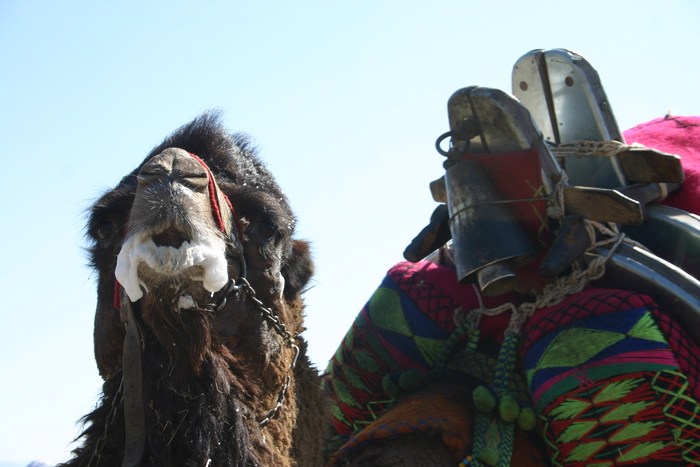
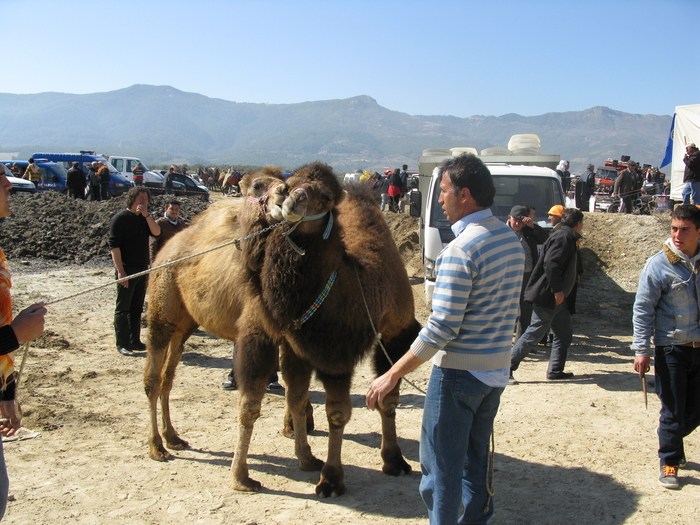
a magnificent bull in rut

J and I have had much to ‘get the ‘ump’ about of late. Those who follow these rambling wanderings through time, space and reality will know of the quarry that has been opened next door to our home. Anyway, to escape the noise, dust and mud that kicks off our days at 6.30 every single morning, we decided to have a few days away at a spa and take in some Camel Wrestling as well.

For those of you worried about blood sport or cruelty, let me reassure you that I’ve attended many a bout in my years in Turkey and I’ve never seen a camel hurt or in any way disturbed by the presence of the noisy audience. The animals are focussed on just one thing – being top-dog in the hierarchical world of bull camels at a time of year when the ladies are feeling receptive.

camel2
a bit of argy-bargy

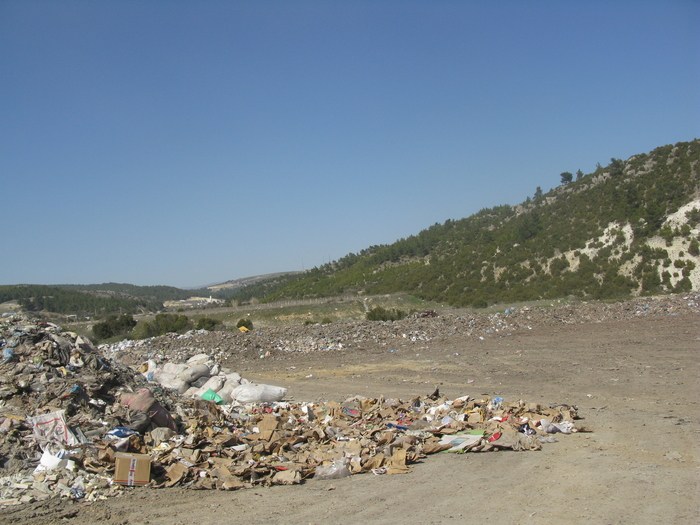
To set the scene, you need to know that camel wrestling is not a touristy thing; it takes place over the winter months when the females are in season. With the steady expansion of winter tourism and with many more foreign residents around these days, venues near these centres now see a lot more ‘yabancı’ (foreigners) than used to be the case. For this reason, J and I prefer to frequent those places that are less ‘polished’ and less concerned about the image they are projecting. Rejecting the concrete safety fences of Selçuk for the chicken wire of Yatağan or Nazilli or Buldan suits us fine. Some of these venues are just a cleared area of forestry land, or an open space in the middle of a derelict works area, or, as was the case at Buldan where this post is set, a space in the middle of a quarry that was accessed through the town rubbish tip!
camel3
Welcome to Buldan’s Camel Wrestling Arena

As we drove through the mounds of rubbish and dust we did wonder if the sign pointing us this way might not have been turned around as a prank. Our doubts soon evaporated as we joined the back of a queue to get our tickets from the Zabita (municipal police) – it was mayhem as drivers behind tried to pass on both sides on a track wide enough for one. We handed over 15 lira and got our ticket to admit one car and as many people as could jam themselves inside; pretty good value for a family day out. We drove forward just a couple of metres where we were again stopped by the Zabita who demanded our ticket, tore it into bits, chucked it with the rest of the rubbish and waved us through! Burası Türkiye! This isTurkey!

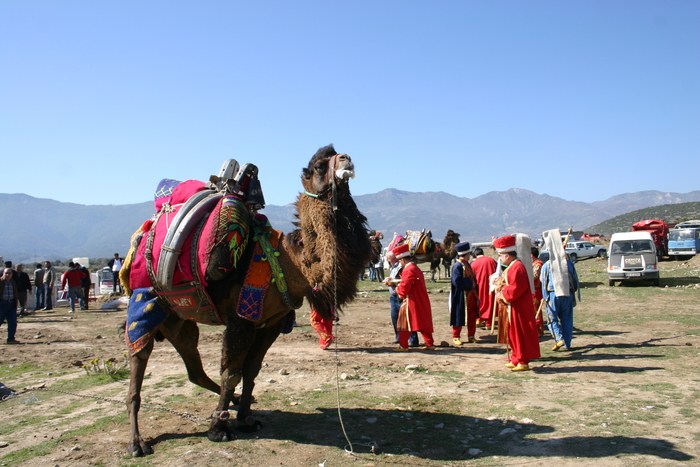
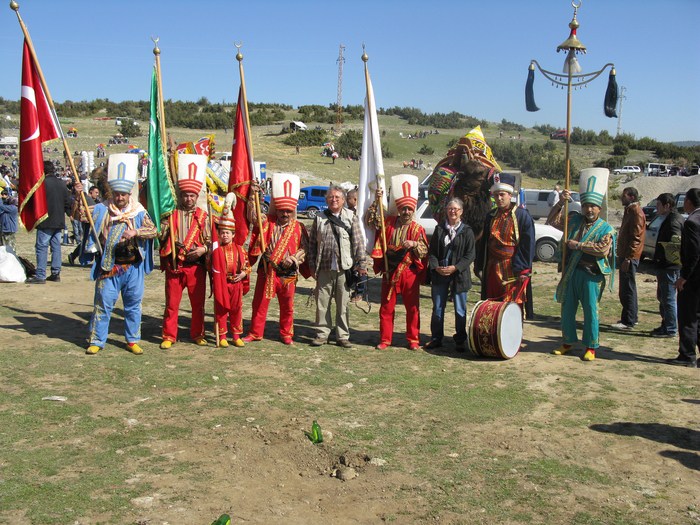
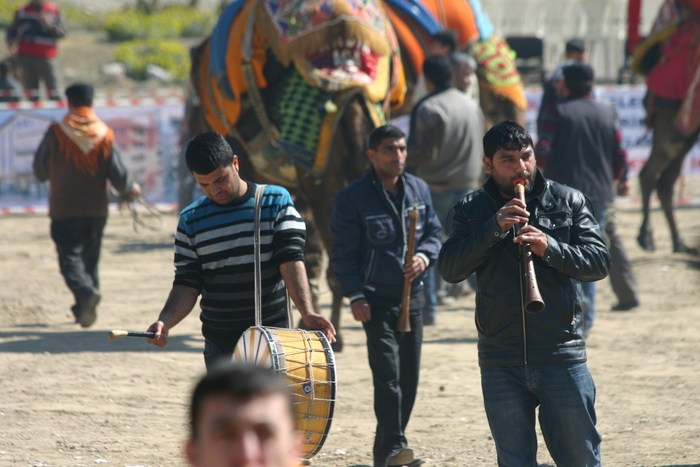
Being obvious foreigners, we drew a lot of polite interest and we were soon adopted by the members of an Ottoman Marching Band; photos were taken, cards exchanged and we now find that we are to be their honoured guests whenever we are in Denizli.
camel4
honorary members of the Denizli Fatih Mehteri – Ottoman Marching Band

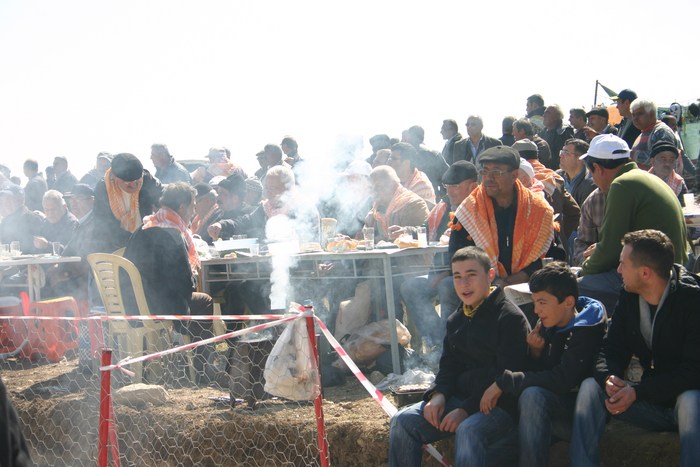
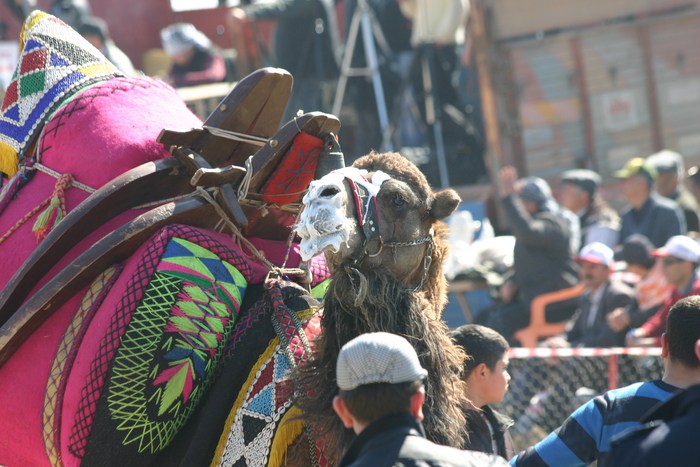
For those who have never experienced an event like this, it can best be described as a total assault on the senses. There are the sounds and sights and smells that emanate from thousands of people talking, drinking and cooking; there are tea vendors, candy-floss and balloon sellers; sausage makers, video sellers and those cooking meatballs and sausages on huge ‘barbies’; there are wandering bands of traditional folk musicians and the over-loud public address system. In the case of Buldan, there were the colourful uniforms of the Denizli Fatih Mehteri (Ottoman Marching Band), and then, of course, there are the stars of the show, the bull camels, decked out in all their finery; foaming and slobbering at the mouth and pumping out bucket loads of testosterone induced pheromones! The overall effect on the sensibilities of the new visitor is incredible – J and I have been attending these things for a while now and we still get a huge buzz. If you love spectacle and you love people-watching, you won’t find a better combination anywhere.
camel5
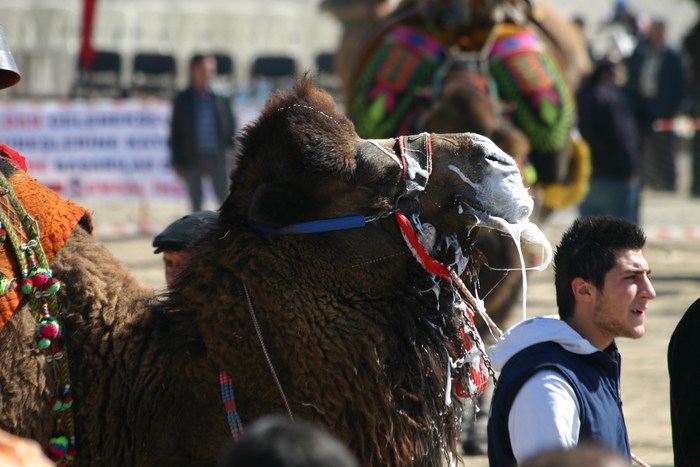
when leading your rutting bull a hoodie is not a good idea

It is worth remembering that the bulls are behaving as they would ‘in the wild’ where the instinct to gather as many females together as they can by seeing-off any likely competitor is so powerful that everything else pales into insignificance. To avoid any possible injury to these valuable beasts as they compete, they have a cord tied around their jaws to prevent biting.
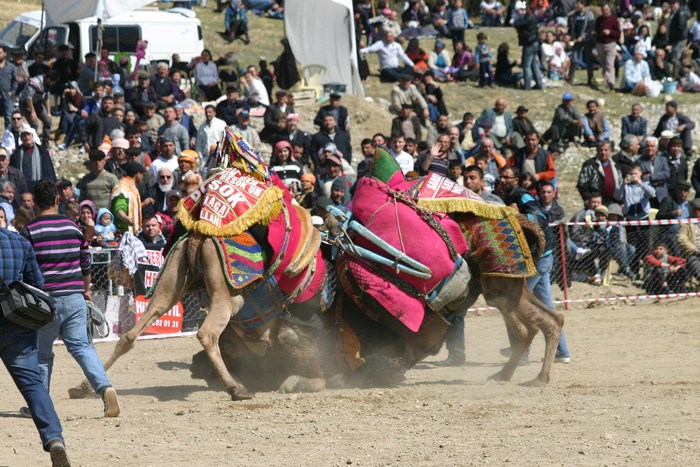
camel6
camel wrestling – the take-down ‘Come on ref!’

The contests between bulls amounts to a great deal of pushing and shoving with attempts to topple the opponent by wrapping a head and neck around his front legs. Some bouts are over quickly, others are called out of time by the judges – sometimes one of the beasts will take off for the hills and, chicken wire fences being no impediment, they end up scattering chairs, picnics and people! For me, some of the funniest moments come when two bulls, locked together and oblivious to anything around, end up by the fences – off come the spectators’ hats, up come the plastic chairs and there follows a totally ineffectual pantomime performance as the crowd tries to shoo the animals away. The wise would simply leave their place by the fence, but then they’d be giving up a prime spot and you know what Turks are like in a queue!

camel7
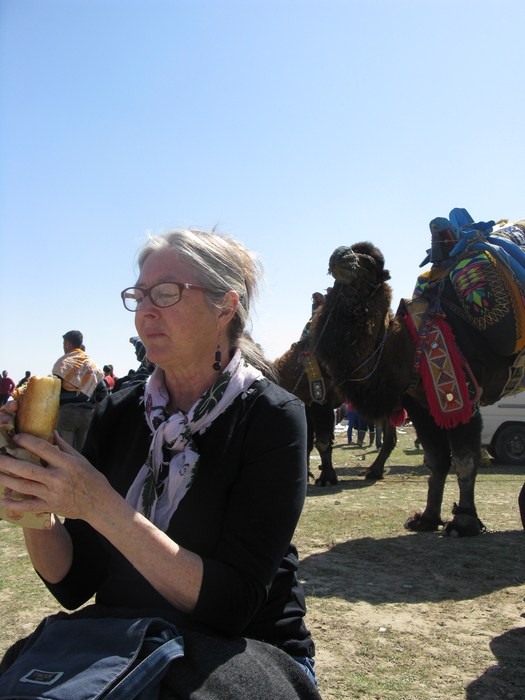
deve sucuk – camel sausage ‘sarny’

In the end there will usually be a winner with one animal being ‘pinned down’; a judge blows a whistle and two teams of ten to a dozen men move in, get a rope around each bull and then proceed to pull them apart – no easy task. In the end the beasts are separated and immediately begin to act like perfectly behaved gentlemen, showing no interest in any more brawling.
camel8
folk musicians wander and play to the crowds

Buldan proved to be one of the very best venues we’ve been to – once through the rubbish tip, the atmosphere was brilliant – from here on the photos can do the talking. Back at our spa hotel we were able to have a nice long soak in the hot mineral waters and replace the smell of meatballs and rutting camels with the whiff of sulphur from the bowels of the earth – Sheer Bliss!
camel9
to the victor the spoils
camel10
two young ladies wondering what all the fuss is about
camel11
I say, that’s my cousin you’re eating!
camel12
making a day of it – Turkish style
camel13
a most superior beast
camel14
standing proud
camel15
. . getting out was harder than getting in!

Alan in Okçular

In The Grand Scheme Of Things . .

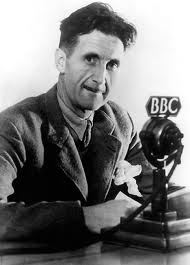
orwell
George Orwell

Great men and disproportionately fewer great women are defined and refined for us by those whom we deem to be worthy of lording it over us every four or five years. They stand upon manifestos that promise much but deliver little. What they do deliver, but never talk about beforehand, is war or conflict, reduced public services, cronyism, personal enrichment, self aggrandisement and the ability to write or rewrite history. “He who controls the present controls the past. He who controls the past controls the future!”as Orwell memorably wrote.

So, the history books of our nation states are filled with tales of daring-do by champions of our establishment class; pages are given over to the wisdom and fortitude during times of conflict of our political leaders. Conflict usually brought about by the arrogance, greed, lust for more power or ineptitude of these self-same leaders. Pages are dedicated to politicians and generals who, by and large, seldom or never come within range of an armed enemy. In contrast, “the poor, bloody infantry” get a line or two when mention of casualties is glossed over. Churchill stayed in London during the blitz, a political decision, to boost morale in the civil population but was in a hole so deep under the Admiralty as to warrant honorary membership of the National Union of Miners, a group he had once turned armed troops upon for daring to defy the Establishment. Yet he, along with others like him, are perceived by many to be great.
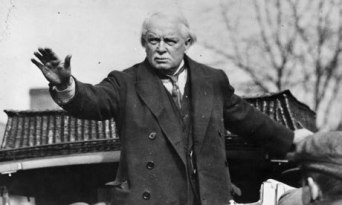
David-Lloyd-George-006
David Lloyd George the ‘Welsh Wizard’

David Lloyd George – the “Welsh Wizard”, so named for his fine oratory and political acumen, but despised by political friend and foe alike for his deceit and cunning. He became Prime Minister in 1916 having schemed the downfall of his then Liberal Party leader and Prime Minister Lord Asquith.

At the conclusion of The Great War, in opposition to former allies the US, France and Italy, he set about the punishment of what he referred to as the “deplorable Turks” by the dismemberment of Turkey and what remained of the former Ottoman Empire whilst at the same time serving Britain’s imperial aims in the region. Part of his strategy was to encourage then Greek Prime Minister Venizelos, whom Lloyd George considered “the greatest statesman Greece had thrown up since Pericles”, to attack mainland Turkey and establish a Greater Hellene Empire. In the event his strategy failed; thousands died needlessly on both sides of the conflict, animosity simmers between Greece and Turkey to this day and with the exchange of populations in 1926 formerly mixed and peaceful communities were torn apart, friends were made into strangers and enemies.
Within days of the signing of the articles of agreement between Turkey and the British, French and Italians for full withdrawal of troops (the French and Italians were long-gone and the Greeks were defeated), Lloyd George resigned, forced out by colleagues who “[could] not afford to keep him anymore. He is too expensive.” The legacy of David Lloyd George is one of death and destruction, of double-dealing and strategic failure. And yet the casual reader of history would see him writ large as a statesman and master politician. There is page after page in the “official” history books and biographies and even a parody of a repetitious song.
(I am indebted to long-term resident of Kaya, John Laughland for much of the following information contained in his moving tribute-cum-obituary).
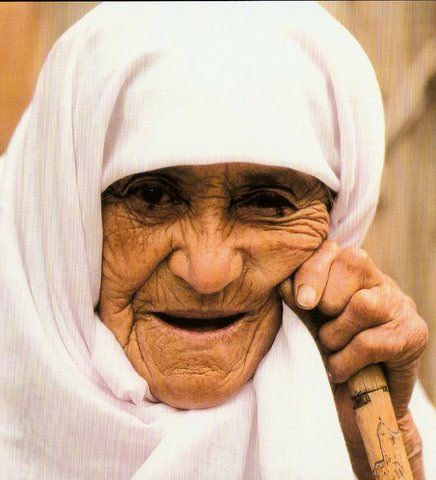
aysenine
Ayşenine – Granny Ayşe of Kaya
Compare this with the story of Ayse (pron. Aysher) of Kaya village near Fethiye in SW Turkey. She died on 20th March 2009, in Izmir, aged around 104, although records and registrations in those days were not punctiliously kept. As she grew older she became known as Aysenine “Granny Ayse”and she was greatly loved by those who knew her. All of her life was spent in the Kaya valley until about five years ago when infirmity dictated that she move from her tumbledown house to the care of her family in Izmir. When she married she moved from one area of this small valley to another and knew little of the world outside. Hers was the life of a village smallholder, working to provide for her family and herself. Some would say she led an unremarkable life of little note or consequence and yet her face has featured in a book that records “Fethiye Faces and Places” by Turkish photographer Faruk Akbas, poems have been inspired by her words and two renowned authors, Jeremy Seal (in Santa; A Life) and Louis de Bernieres (in Birds Without Wings) have written about her and her life and you might ask why. (de Bernieres is presently working on a screenplay for “Birds Without Wings”)
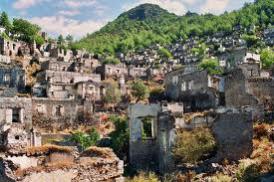
kayakoyu
Kaya Village as it is today

Ayse lived through and dealt with the consequences of David Lloyd George’s arrogance and perfidy; she was about seventeen years old when the exchange of populations took place. When asked of her memory of those awful times, when friends and neighbours were torn apart, she responded “The cats were crying.” There were some 500 houses in what is now known as Kaya village, formerly Levissi, which remain empty to this day, and it’s probable that hundreds of cats in need of food were left behind. Ayse kept in trust the wedding chest of her Greek childhood friend Maria in the belief that one day they would be reunited and it could be returned. Her integrity, honesty and trust, her faith in her fellow human beings are in direct contrast to the murderous contempt for the lives of others that is the legacy of Lloyd George.

Those who knew Granny Ayse remember her golden personality and sparkling wit that made her a pleasure to be around. Popular history through photos, poems, books and films will record her real greatness as a starring member of the human race; someone who contributed to the well of human kindness and left the world a better place for having lived. David Lloyd George on the other hand is remembered as a cunning bombast with the blood of thousands on his hands, a failure who contributed nothing of value. He may feature in the “official” histories bathing in perceived greatness but Ayse lives on in the hearts and memories of so many because she contributed so much and represented the true nature of humanity.
Seldom do “histories” reflect reality; in the US there lives a species known as Political Historian whose job it is to address the problems that actual recorded facts cause to the established ruling elite. No doubt they thrive in most other nation states in one guise or another drip-feeding us and our kids via schools and the media with their perceived version of reality. NEWSPEAK is alive and well all over the world. As memories of recent events fade the Political Historians will wave their wands and Bush, Blair and now Obama et al will transmogrify into great leaders who saved civilisation yet again from the barbarians. Records go missing, new facts are created and repeated over and over in the spirit of Dr Goebels and the Ministry of Truth. History, as we know it is a lie, digging out and speaking the truth is the foundation for the future.
(this article was first published a number of years ago in the Socialist Standard and posted on Archers of Okcular 18.3.2012)
Alan in Okçular Köyü

Maşallah! & Allah Korusun!

Allah-Korusun1
‘Maşallah’ and ‘Allah Korusun’

Way back in the mists of time and memory, when J and I used to visit Turkey for work as well as pleasure, I was drawn to the number of buses and trucks (and even the occasional car) that sported either ‘Maşallah’ or ‘Allah Korusun’. Wherever we travelled in this vast country there they’d be – plastered across the cabs or tailboards of trucks; above the back windows of coaches and dolmuş (shared mini-bus). It might have said ‘Kamıl Koç’ or ‘Pamukkale’ or ‘Maersk Shipping’ along the sides of these vehicles, but there was obviously a common denominator binding them into a couple of huge, national conglomerates. And why not? After all, back then, with much of the economy nationalised and centralised, there wasn’t the variety of big companies you see today. Tekel supplied booze and tobacco and Petrol Ofisi supplied fuel – that was it!

Allah-Korusun2
Allah Korusun in Kastamonu
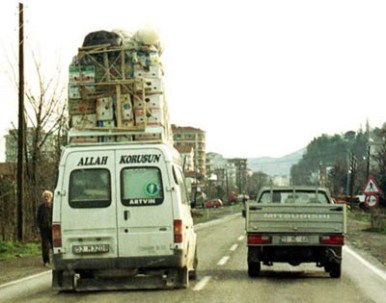
allahkorusun1
Allah Korusun in Artvin (minibus is doing the overtaking)

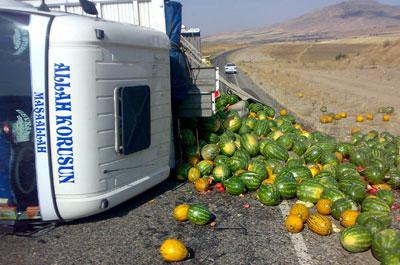
It was years before I realised that ‘Maşallah’ and ‘Allah Korusun’ were not a couple of huge, nationalised logistics companies but rather a philosophical observation on the insanity of venturing out onto Turkey’s murderous roads in the company of penilely challenged, existentially oblivious male drivers.

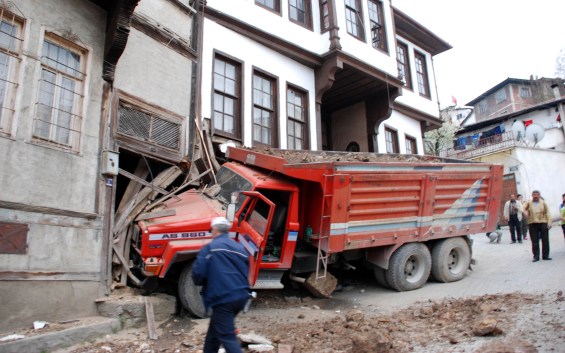
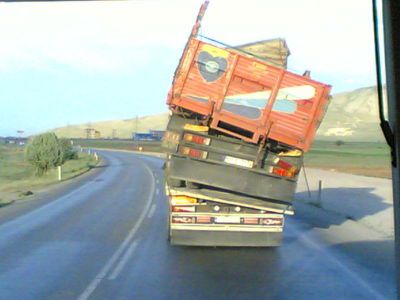
Here are a few examples where the gods did not ‘korusun’; and some fine examples where ‘Maşallah!’ is the only appropriate response.

‘Maşallah’ (variously interpreted as ‘My God!’, ‘Wonderful!’, or ‘I can’t believe what I’m seeing/hearing!’ etc) and ‘Allah Korusun’ (God Protects – or not).

Allah-Korusun91

petrolofisi
Petrol Ofisi Allah korusun
Kars-Allah-Korusun2
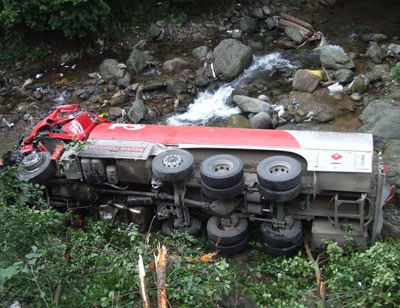
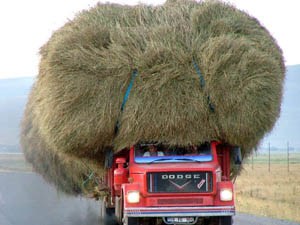
Allah Korusun in Kars – why make 3 trips .
bus-full-Masallah2
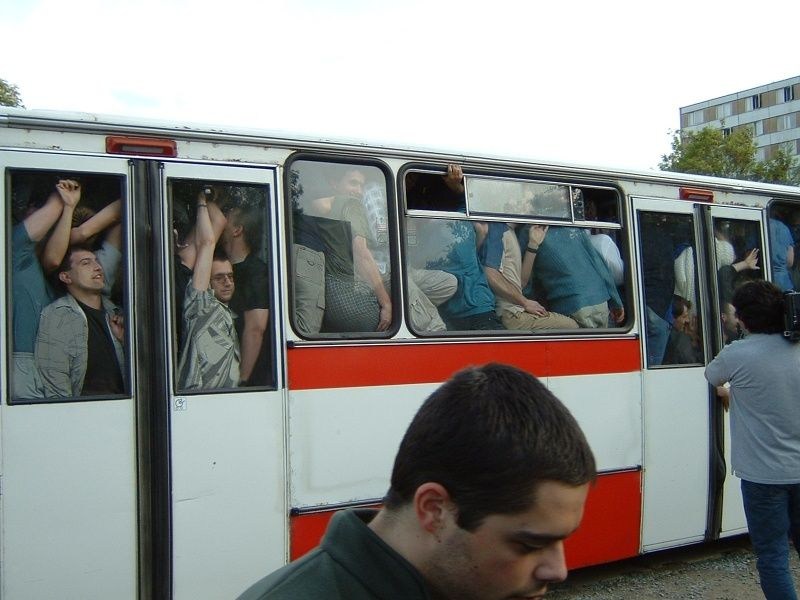
Dolmuş – stuffed bus Maşallah!

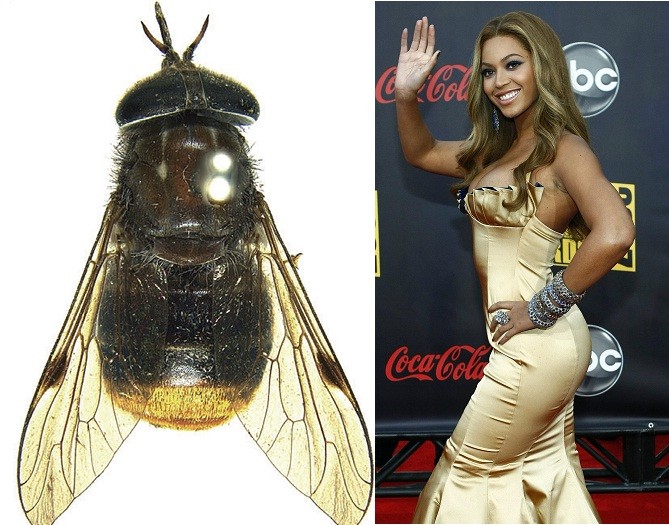
. . and finally, because when I used this picture in a post about the newly named ‘Bayonce Fly’ from Australia, it generated a staggering number of ‘Maşallah, Maşallahs!’ from Turkish fans who did not appear to share my interest in entomology (I have no records for English or Strine speakers).

beyonce fly
Scaptia beyonceae is a species of horse fly with a golden butt-end found in the Atherton Tablelands in north-east Queensland, Australia and Bayonce a species of singer with a golden . .

Alan in Okçular

Intriguing!

J and I ramble about quite a lot – we ramble up and down mountains – we ramble up and down backways and trackways – sometimes we ramble in circles whilst rambling up and down. Rambling is fun! It is also intriguing!

(first posted on Archers of Okçular 12.2.2012)

Let me explain; in 15 years of wandering around this beautiful country of Turkey we have come across countless examples of that which intrigues us. We have found what intrigues us near habitation and we have found examples to intrigue us miles from any habitation. We’ve found them near rivers and ruins; near pathways and fields; we’ve even found them on the tops of snowy mountains! In fact, hand on heart, I can’t think of a single ramble where we have not found at least one of them and we really are intrigued by this phenomenon.

Now, behind the impatient tutting I’m hearing from you, and the ‘Oh! For gawd’s sake will you get to the point!’ mutterings under your breath – you have to admit that you’re intrigued, too. So I’ll reveal this intriguing mystery in the hopes that someone out there can give me the answer or reason ‘why?’

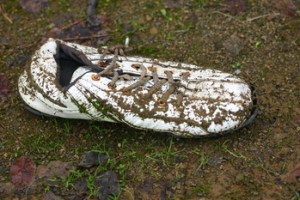
Shoes!

shoes1Not shoes as in pairs of shoes – there are never pairs of shoes – just shoes! Wherever we go we find single shoes lying abandoned; often in the most unlikely places. Has anyone else seen this strange manifestation? I mean, it can’t be just us, can it?
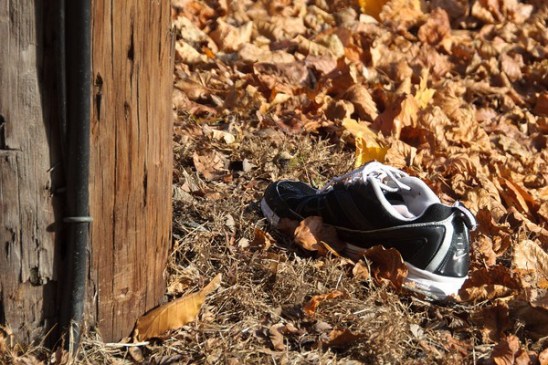
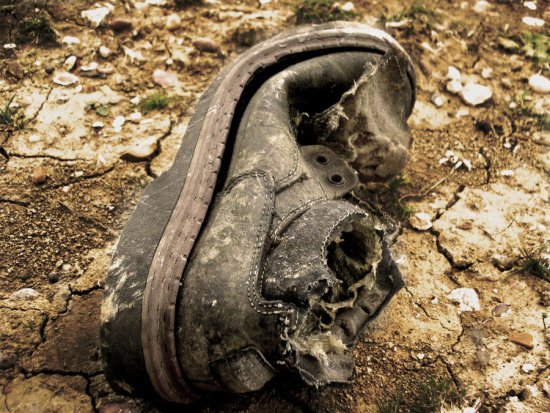
Actually, there is a double intrigue here; first the abandoned shoes all over the place; and then there’s the question that I keep asking myself, I even wake up at night asking myself this question – ‘Didn’t they notice?’ I mean, there they are, half way up or down a rocky, thorny mountainside and the fact that a shoe has gone missing from their foot has completely passed them by! If a horse loses a shoe it pretty soon lets you know; if I lose a shoe I’m hopping about on one foot right away! Yet there are thousands of Turks out there who get back home from doing whatever it is they were doing, go to kick off their shoes and . . . ‘Allah hallah! İnanılmaz!’ (‘My God!’ they say, ‘Unbelievable!’) And I’m intrigued!

shoes2
some of them are in quite decent condition

shoe3

Alan in Okçular

Down In The Jungle . .

‘Down in the jungle living in a tent, Better than a pre-fab – NO RENT!’

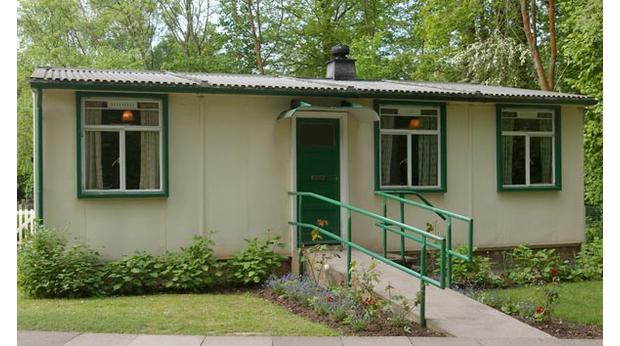
prefab21So went the ditty when I was a kid growing up in the late 40s, early 50s. Bombs had wreaked havoc on the property market in the UK and ‘prefabs’ abounded – designed as a temporary solution to the housing crisis, they were still around in a few places when I last visited my childhood haunts a couple of years ago. You may well ask why and the answer is simple – people loved them – and still do!

I only ever experienced them as a visitor, so I have no first-hand anecdotes to pass on. My earliest recollection of home was a converted blockhouse with a flat, concrete roof three feet thick! Windows had been knocked through but the door was still a huge steel affair that clanged like something from a ‘Hammer House of Horror’ movie. Because my parents were near the top of the re-housing list we soon moved into one of the first ‘council houses’ to be built. These days such places are called ‘social housing’ and have a decided stigma attached. Back then they were modern, clean, available for a modest rent, and people were grateful for a decent roof over their heads.

prefab2‘Prefabs’ were council owned as well, until Maggie Thatcher sold off social housing in a very successful ploy to convince the working class that they were now ‘home-owners’ and should therefore vote Tory! This is the only reason these little gems survived – those who loved them, now owned them and could not easily be pushed aside for some flash, new shopping mall. Twenty one in original condition on the Excaliber Estate, Catford,South London have been granted Grade 2 Listed Building status. If ‘prefabs’ were people they’d have a huge following on Twitter and Facebook.

Anyway, enough of all that. Time to get to the point.

These days, our local town of Ortaca is a thrusting, bustling and decidedly prosperous looking place; posh, modern apartments and villas abound. So, the story of Mehmet Orhan and his ‘prefab’ needs to be told before ‘the council’ moves in and ‘condemns’ him.


prefab3As global warming kicks in and average temperatures rise, the prosperous citizens of Ortaca have set about adding their carbon footprint to the whole by purchasing the odd klima (air conditioning) or three. Out in Karaburun Mahallesi Mehmet Bey has ever been one to move with the times. He already has satellite tv and a fine güneş enerji sistem (solar energy hot water), so adding to his creature comforts with a klima was not given a second thought; ‘Every house should have a klima’ he said.
His latest life-style choice has certainly raised his profile in the community with locals and tourists stopping by to photograph the installation. Mehmet Bey obviously loves his home which offers many fiscal advantages over more conventional accommodation. And that brings this story very nicely full circle . .

‘Down in the jungle living in a tent, Better than a pre-fab, NO RENT!

I thought this was a hoot when I first posted it 8.2.2012 – I still do!

Alan in Okçular

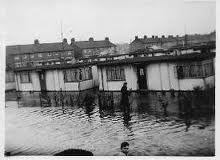
ps This was the situation on the Scrapsgate Road, between Halfway and Minster on the Isle of Sheppey just half a mile from where I lived after the East Coast Floods of 1953.

53 floods

Amasya – Beautiful, Historic, Captivating

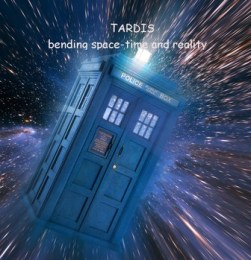
Amasya1Another tale from the log book of the ‘Tardis’; for those who don’t know this amazing machine its name stands for TimeAndRelativeDimensionInSpace. Tardis is a time and dimension machine that appears (literally) for all intents and purpose to be a British Police Call Box circa 1950 – appearances, however, can be very deceptive – but that’s another story.

It is June 2004 as we materialise . . and so to Amasya, where the Sultans of old would send their eldest sons to learn the ropes of state-craft.

amasya2J had got some info on a pansion that was a restored Armenian merchant’s house, and this is where we are. It is beautiful! My dream home. The bathroom is through one of the wonderfully carved cupboard doors. Honestly! And it is totally modern and functional. We will be exploring the sites tomorrow; meanwhile we both felt a desperate need for a cold beer. That took some finding, I can tell you. Nowhere but nowhere to sit down with a frosted glass of the amber nectar could we find. Began to think the population was made up of Seventh Day Adventists or Wesleyans! Then we discovered a discreet little place where the owner slipped us a pack of five under the counter wrapped in two black plastic bags. Whew! Saved.
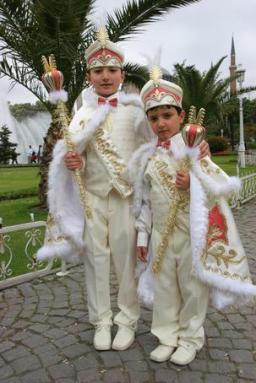
amasya3As we were making our way back to the pansion, we were stopped by what sounded like the Keystone Cops’ sirens. Loads of them! Along came the motorcycle police escorting a convoy led by one of those Disney type trains you see at Margate or Southend. It was full to the brim with little Turks off to become big Turks following some genital mutilation courtesy of Blue Gillette! There must have been at least a hundred or more. All dressed up as little soldiers in blue or white uniforms trimmed with white fur. I expect the fur was to wrap around their . . . Don’t go there, Alan! They were followed by busses crammed full of the proud family members . . . proud family members? Sorry, no pun intended. I bet the young girls were glad they were girls, even if they will have to work all day whilst their old fellows, (Oh dear!) . . are down the coffee house playing cards.

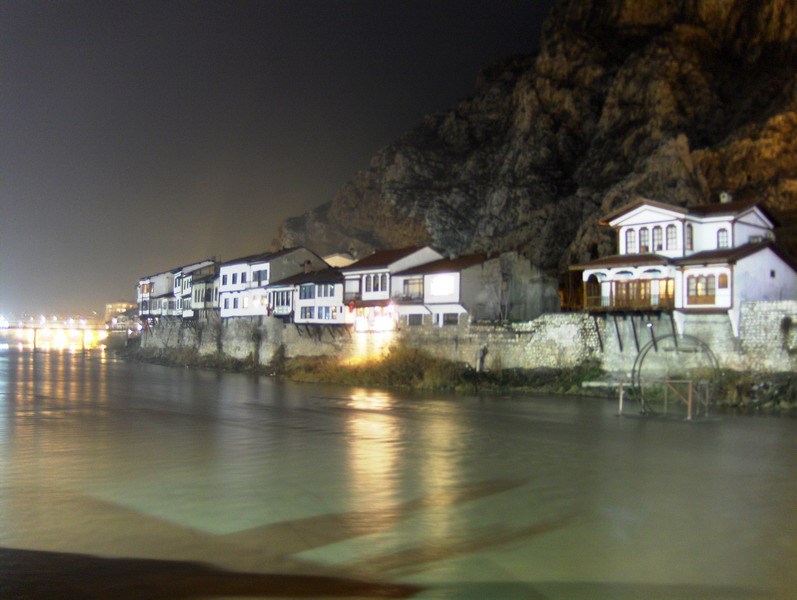
Amasya is a very nice place. The setting is quite something. Originally, the whole town would have fitted into the gorge on either side of the river. Now, of course, it’s spreading itself out over what would have been farmland at either end. It still has a cozy feel to it, especially here in the original bit that contains the old houses, mosques, hamams, etc.

amasya4We didn’t wake up until eight this morning after our first night in this lovely house. It felt like emerging into a different world – a sort of time warp thing. The room was just catching the sun, which was filtered through the muslin curtains (original copies). It was cool in the room; as is the whole house, no doubt due to the high ceilings and non-concrete construction. That’s something I love about these old houses, the proportions are so . . civilised.
Breakfast in the courtyard, surrounded by the bric-a-brac from years of collecting by the owner. The house is full of old stuff too; it really is a joy to be here.

J and I began our exploration of the town with a wander through the old Ottoman houses on the North side of the river. Some restored; some badly decayed and derelict and a dreamer’s delight. What I could do with one of those, I mean, look at the setting, look at the size of the gardens, look at the potential, look at the cost! Where’s the lottery ticket seller? Some have been beautifully restored, and one is open as a museum house. It is mouth-wateringly gorgeous (in my opinion). They all sit under the cliff face where the tombs of the Pontic kings are carved out of the rock. A bit like Dalyan, just a thousand or so years older. Then on to the town museum, described in our really ancient Lonely Planet guide as a gem amongst provincial museums; and so it proved.

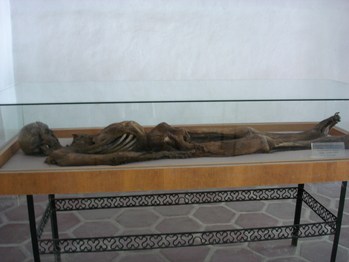
amasya5We’d almost finished when the cashier came rushing up, pointing at her watch and saying ‘Time, time!’ In Turkish, you understand. We felt inclined to hang it out, but then if I was a poorly paid civil servant, wanting to go to lunch, I’d want the bloody punters to go too! You can still go into the museum gardens, we were told, and as these contain a mausoleum with five desiccated mummies of Mongol big-wigs, we thought we were doing good – getting real value out of our 70p admission fee! We hadn’t reckoned with the other member of the museum staff who wanted his lunch too. Selfish bastard!

We did get to see the mummies though; and J got to comment on the enormous scrotum of the Mongol governor of Amasya circa 1274 AD!! So I went to have a look at his concubine’s . . . Nothing to write home about, bit dried up after eight hundred years!

amasya6We had a tasty lunch at a locanta in an old Han which has fallen into disrepair. The Han is now occupied by dozens of metal-bashers turning out all sorts of stuff, from scythes to samovars. Then a stroll to an old medrese or religious seminary with a splendid entrance way that is now used as a conservatoire for the town and province. We were invited to sit and rest and enjoy an impromptu music performance. There was also a marbling artist (ebru) working and displaying her stuff. As we were leaving we were grabbed and taken to a locked room to see their collection of old musical instruments. Being obvious foreigners has its advantages!
Next was the tortuous drive up to the castle that overlooks the town. Once we’d left the car, I was glad to find my heart was still in good nick as we made the final scramble over rocks and scree to the top. What a view!

Must just go back in time to when we’d just left the museum. We were walking along the street when this smiling young man came up to us, and in very broken English, seemed to indicate that he knew us. We were a bit nonplussed. We tried to find out where we’d met, without success. Then he said ‘English, English?’, we agreed that was what we were. ’I love you!’ he said, clasping me to his bosom. ‘I hope not’ said I, ‘this sort of thing is not done in public!’ His eyes opened wide and he hurried away. Was it something I said?

Our evening meal was at the Town Club overlooking the river, where we were a bit of an attraction. At one point all of the staff were hovering around our table as we set about ordering our meal of river catfish (delicious) and the only bottle of wine in the house (TL28,000,000 – 2004, remember). Total bill . . TL51,000,000 which means the meal was a damn sight less than the bottle – mind you, it was really not a bad drop of stuff!

amasya7

This has been an enjoyable couple of days out of our journey to Erzurum. We’ve hit the town at a good time as it’s their festival week, which commemorates a speech that Ataturk made here that proclaimed the campaign for the foundation of the Republic. There’s music and mass circumcisions to be enjoyed, and after our meal we were drawn by the wonderful wail of the zourna to the main square. It was great; wild Turkish folk music and the local men strutting their stuff, and do they know how to strut! A fitting close to our first visit to this lovely town of Amasya.

It’s been a delight re-reading and re-posting this ramble 2.2.2012

Alan in Okçular Köyü

Hattuşuş – Capital of the Hittite Empire

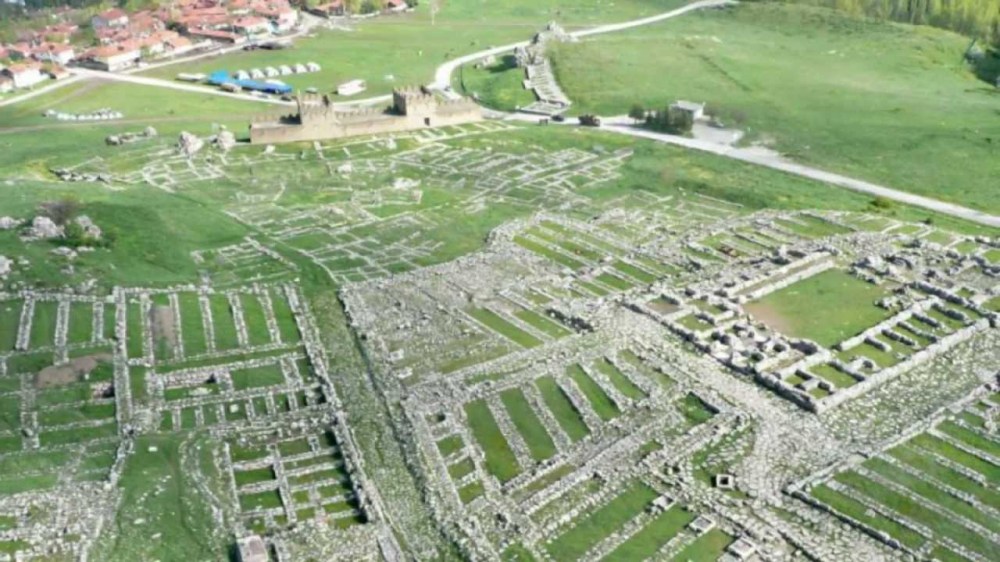
Here we are, embarking on another journey through time, aboard the ‘Tardis’. On this adventure we head back to 2004 and a trip J and I made to Erzurum Province. One of the places we dipped into on route was at Boğazkale, site of the ancient Hittite capital of Hattuşuş. Join us as we wander around this amazing place . .

hattusus1

We arrived at the site pretty early in the morning – so early, in fact, that the guardian was nowhere to be seen. As the gates were open we drove in and followed the road as it curved around and climbed the hill that dominates the remains of the city. The view from the top puts the size of the place into perspective – it is vast! It also meant that we had the pleasure of watching the poor guardian, who had seen us enter whilst still eating his breakfast, racing along the roads to try and find us and ensure we paid the entrance fee.

hattusus2

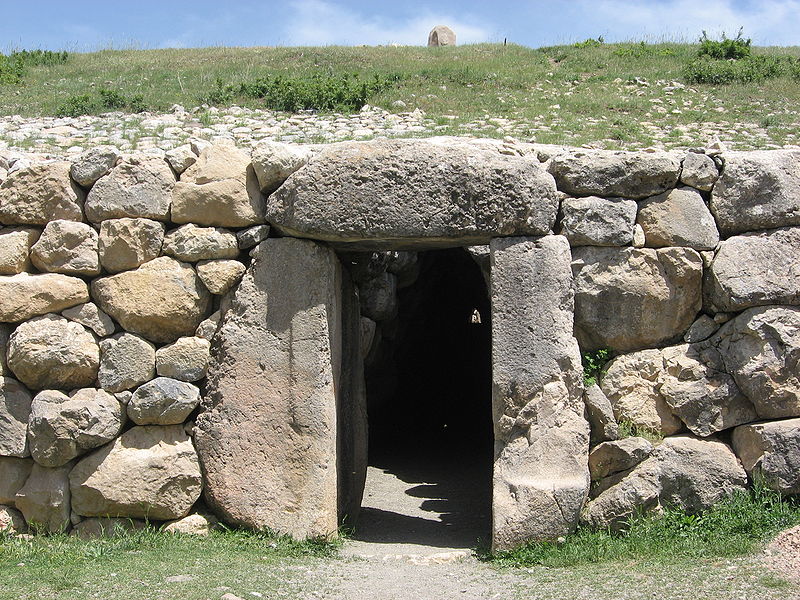
The Hittite Empire once challenged both the Assyrian and Egyptian empires, controlling huge areas of Anatolia and northern Syria; and the scale of their capital city is awe inspiring. Huge earthworks, faced with millions of cut stone blocks, stretch for about 5 miles and literally changed the landscape! (A bit like Kent after the Channel Tunnel went through!) Originally eight tunnels or posterns, ranging from 70-120 mts in length, led through this massive fortification. These days only one is accessible and walking through the narrow, triangular, dry-stone construction left us very aware of all the tons of ramparts above us.

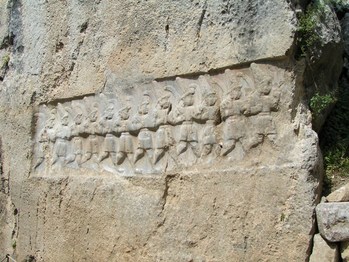
At the top is the much-photographed Lion Gate; what you see today is a reproduction, the original being in Ankara. The site really is ‘monumental’ with amazing reliefs of gods and kings and fantasmagorical beasts. The place was known as the City of a Thousand Gods for a good reason!

hattusus3

An additional bonus for me was that our visit was in Spring for Central Anatolia and the whole site, not to mention all the roadside verges, in fact everywhere is a botanist’s wet dream come true. I could have spent days just taking pics of flowers, so many and so beautiful! Another time.

hattusus4A quick drive along the processional way from Hattuşuş and we were at the sacred site of Yazilikaya where two small ravines contain the pantheon or temple site that has relief carvings of all (it is claimed) of the Hittite gods and goddesses. Here we were accosted by the inevitable ‘student of history who just happens to be staying with his brother who carves stone replicas, but didn’t want any money’ chap. He seemed pretty disappointed when his job description was proved correct!

hattusus5Then we were off to the place described as the most important Hittite site – Alacahöyük. Amazing finds were made here back in the 1930s when a bunch of royal burial chambers were excavated.You’d have to go to Ankara to see real things, but we were told that the site museum contained loads of other stuff as well as very convincing replicas of the original finds. The site is a bit of a detour to get to along pretty duff roads, so you can imagine our delight to find that the place had been closed since 2001 for ‘restoration’. Restoration my arse! I was pretty miffed to be charged TL4 million (2004, remember those days?) to view some supposed Winged Lions etc that turned out to be made of crumbling concrete!! The highlight of the site was a rusty old miner’s tilting trolly on six feet of rusting track! Burası Türkiye! This is Turkey!
Alan in Okçular Köyü

Mister Bird

Little-Owl
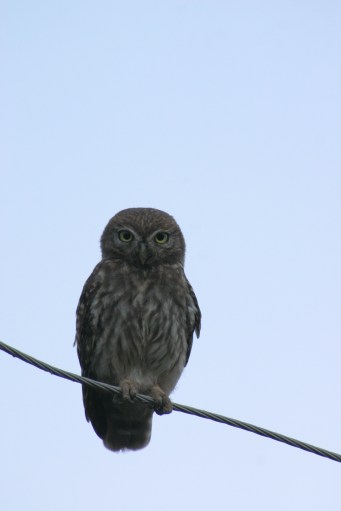
Little Owl checking out the goings-on in the spare bedroom

My fellow villagers are a funny old lot – farmers almost to a man (or woman) and mostly country born and bred. Even so, when I ask them what that is – indicating a dragonfly or cricket – ‘Böcek!’ (insect) they exclaim. And that? (a beetle) ‘Böcek!’

It’s the same with birds – what do you call that? (jay) ‘Kuş!’  (bird) And that? (robin) ‘Kuş!’ There are few exceptions and this continues to astound me, even after 20 years.

When I was a kid growing up in the countryside we bumpkins knew the names of every reptile, insect and bird species whose eggs we plundered for our collections (do be forgiving, nobody had heard of environmentalism back then; this was how it was!). Many of the creatures were known by their local name – it was years before I realised that a ‘Throssle’ was a Song Thrush. Here in Okçular there doesn’t seem to be the same interest, a böcek is a böcek and a kuş is a kuş – what else do you need to know?

Mind you, there is one particular exception, ‘Baykuş’ or Mister Bird. Mister Bird is an owl, which is a dignified and appropriate term of address for a most dignified and intelligent looking creature.

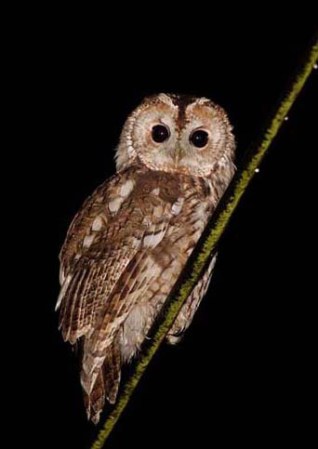
Owls are not let off the ‘böcek’ or ‘kuş’ hook entirely. There are Little Owls, Scops Owls, Tawny Owls and other owls – but they are, to a bird, all labelled with the same monika – ‘Baykuş’ – Mister Birds to a man (or woman).

tawny-owl
Tawny Owl

Turks are also a bit superstitious about owls, seeing them as bringers of bad luck – harbingers of doom and such. All of which causes our neighbours some consternation because for a number of years we’ve had a beautiful Tawny Owl living in one of our chimney pots. Not only consternation but incredulity that we are happy about it! In fact, we give off so many happy vibes that, a few winters ago a second Tawny moved into an adjacent condo – two down, two to go! We also get visits from Little Owls and Scops Owls.

Living where we do at the edge of the forest, without street lights (another source of neighbourly worry and consternation) and other distractions, we can sit outside or lie abed and listen to these beautiful creatures calling and answering each other. When the stars are out or the moon is high they add extra enchantment to an already spellbinding experience.

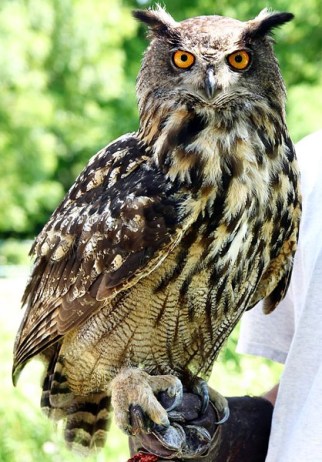
Eurasian-Eagle-Owl
Eurasian Eagle Owl

Soon after we moved here, J was driving home quite late one evening and had stopped the car just outside our gate. I went out to see what the problem was and was treated to the most fantastic sight – standing in the beam of the headlights was an enormous bird – an Eagle Owl! J’s nose was glued to the windscreen watching this magnificent creature from just a few metres away. The owl sat there for a while before gathering itself and lifting off silently and disappearing into the night like something returning to another dimension. This is the only Eagle Owl I’ve been fortunate enough to see here – the experience is burned into my memory banks.

I don’t have any photos of that night, so we must make do with these stock images.

eagle-owl-threat


Eagle Owl threatening dire consequences for hacking it off!

Alan Fenn, Okçular Köyü

Aezani – The Temple of Zeus and a ‘Lost World’

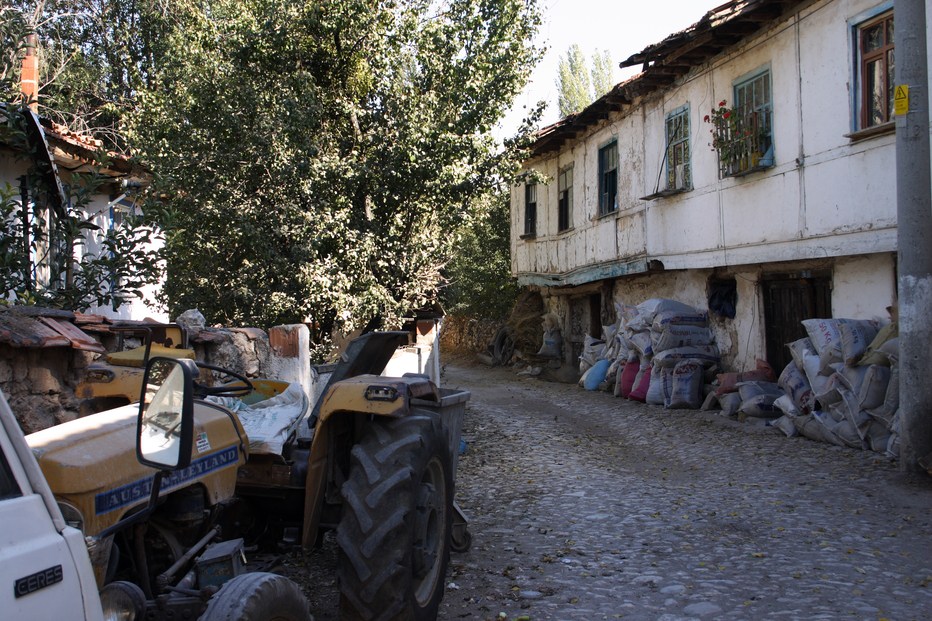
I suspect that most people drive through Çavdarhisar and barely notice; it is, after all, a pretty nondescript dot on the map on the road to or from Kütahya about 60km southwest of that town. If you take the time, turn off the main road, and follow the signs for about 1 km you’ll arrive at the site of the Roman city of Aezani.

Cavda1

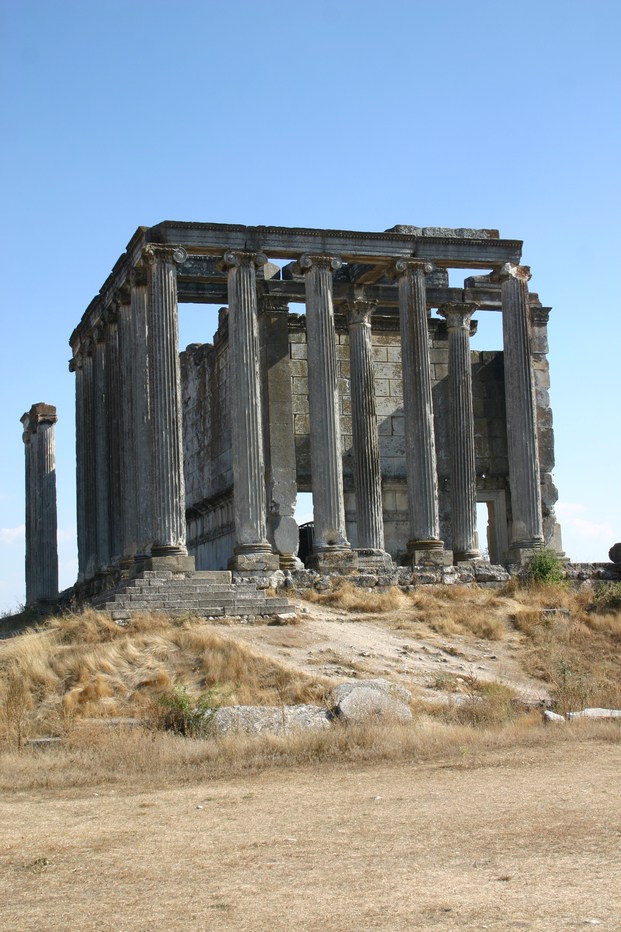
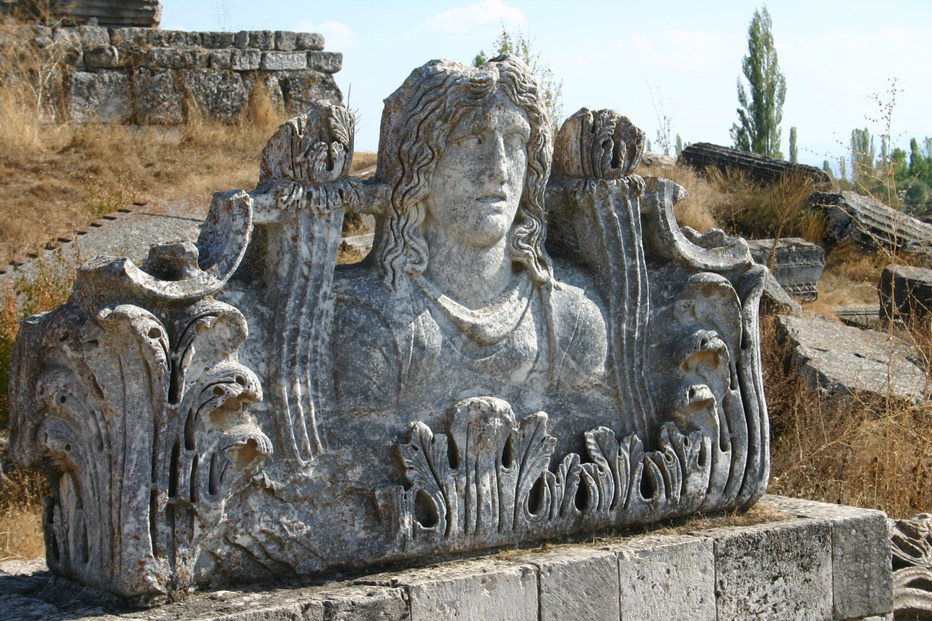
Aezani is spread out over a vast area each side of the road, but it is the Temple of Zeus built by Hadrian in 125 AD that dominates the site. Said to be the finest surviving example this temple to the ‘God of Gods’ is truly impressive with an immense underground vault or sanctuary dedicated to Cybele whose well preserved bust stands at the foot of the temple mound.

Cavda2

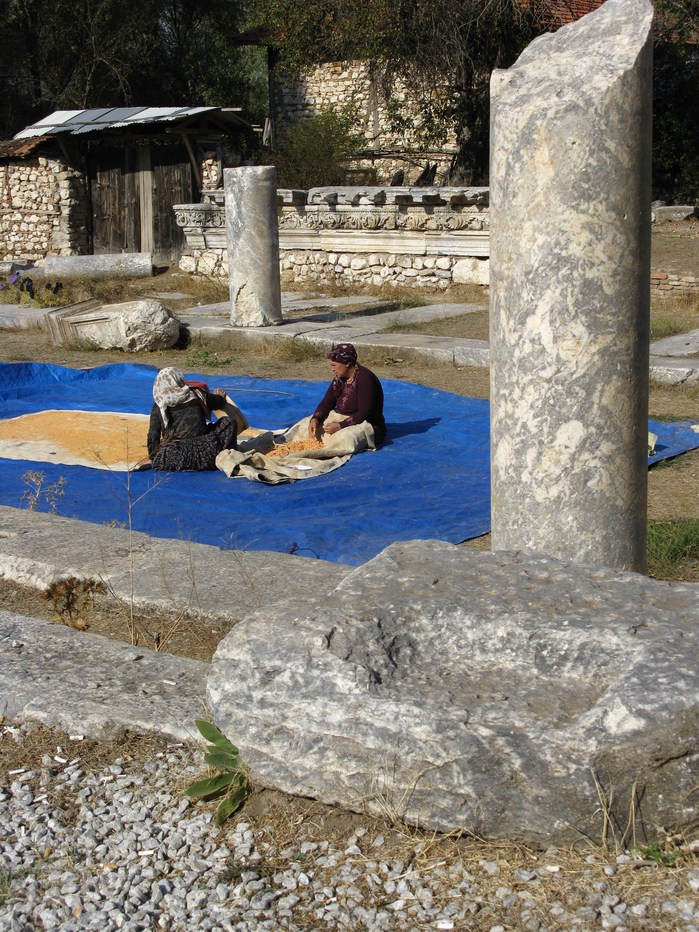
Imposing as Aezani is, it is not what fascinates me and draws me back from time to time. My interest lies in the ‘village’ of Çavdarhisar that lies between the main road and the historic site. As you arrive at the site, roads either side of the river lead to a ‘lost world’ of village life and scenes where folks live a very different life-style from what you see around touristic areas – rather than try and describe this world to you I’ll let my inadequate views through my battered old SLR lead you into this world. Perhaps, like me, you will be drawn back again and again . .

Cavda3

Cavda4

Cavda5

Cavda6

Cavda7

cavda8
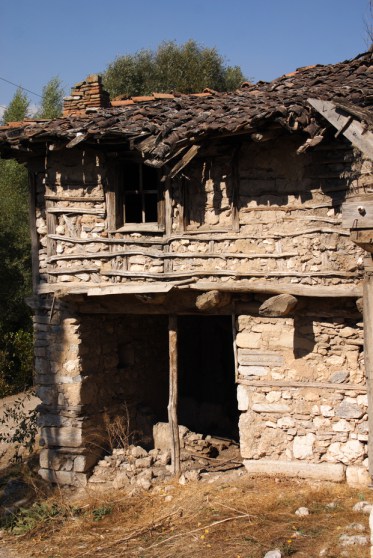
their life in ruins
cavda9
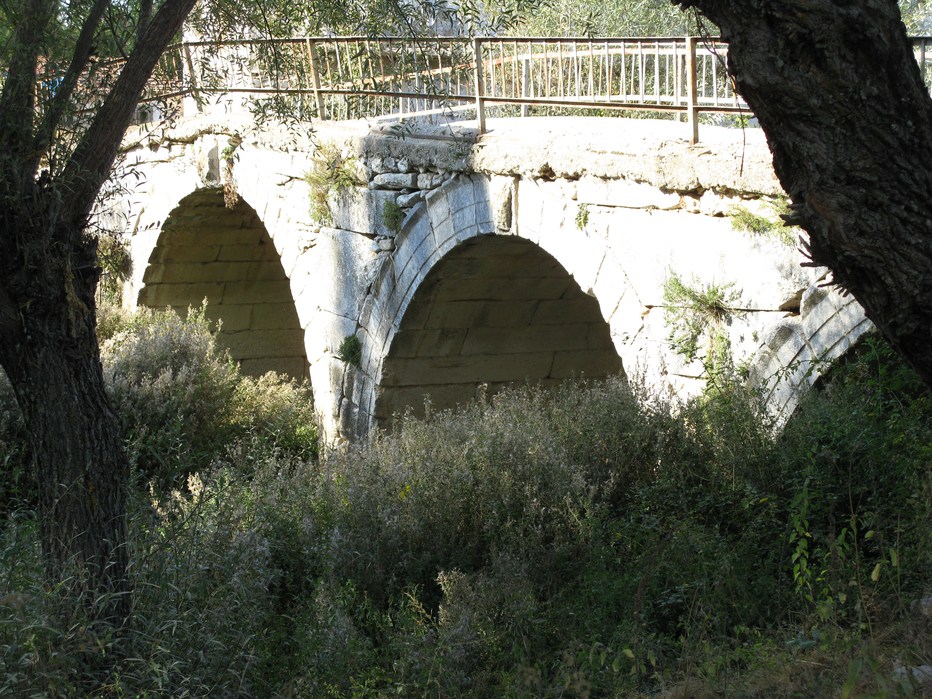
old Roman bridge still in daily use
Cavda10
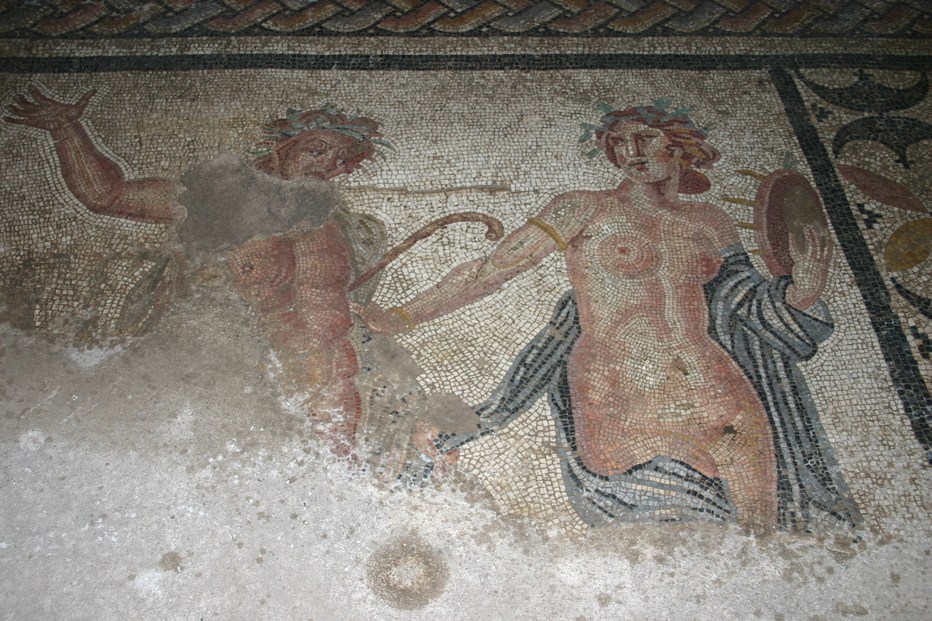
mozaic found in a barn in the centre of the village
Cavda11
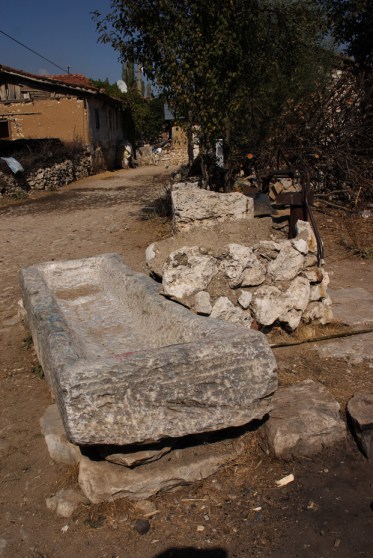
sarcophagus water trough

Cavda12

Alan Fenn, Okçular Köyü


İznik; Tiles and Tranquility

The tourism Mecca of Dalyan lies just 10 minutes down the road from Okçular. Dalyan is steeped in history and is set on a canvas of outstanding natural beauty with a beautiful lake on its doorstep.

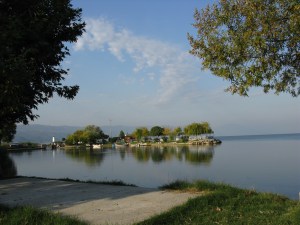
İznik lies just south of İstanbul, about 2 days drive from Okçular (we always take the scenic route over the mountains). İznik too is steeped in history and sits at the edge of a large and beautiful lake.

iznik1

There the similarities end; Dalyan town itself is bereft of charm; there is little to appeal to the eye with concrete villas set in their 500 cubic metre plots. The tea garden trees are dying, everywhere is paved with blocks that radiate the sun’s heat and graceful, old eucalyptus trees, which may not have been native but gave welcome dappled shade and ‘texture’ to the town centre were cut down and ghastly, out of place palm were planted.

In contrast, İznik feels and looks like a Turkish town; İznik has retained its trees and İznik has not fallen into the trap of paving everything in sight. The promenade area is grassed with little man-made promontaries and islands reaching into the lake. The whole feel of the town is of quiet gentility.

J and I have just returned from a trip to the province of Karabük in the north of the country. On the way home we diverted to spend a little time in İznik and we were both taken with the place – it is a really nice town.

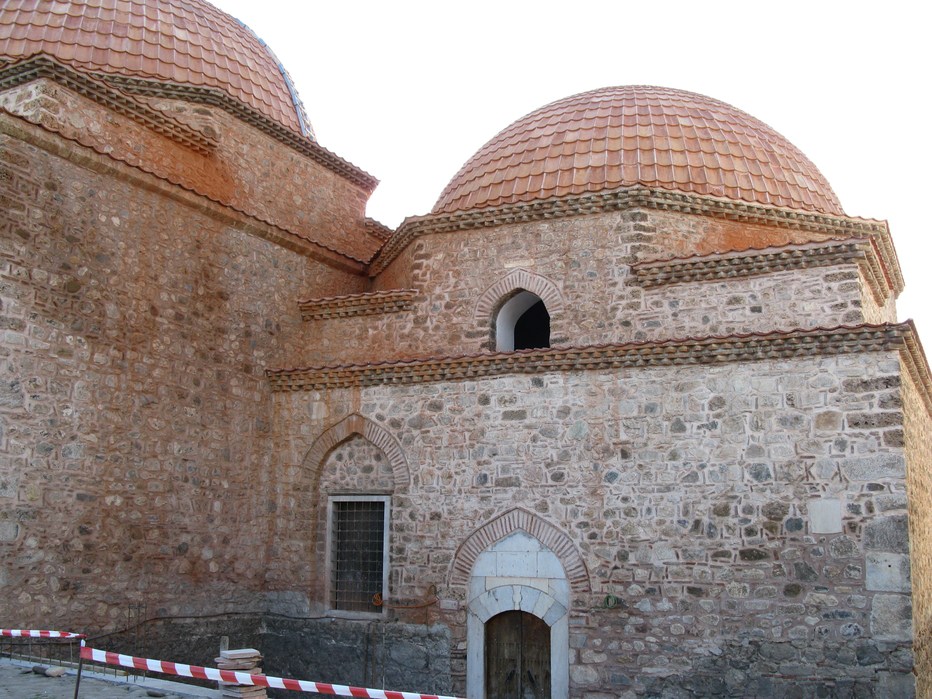
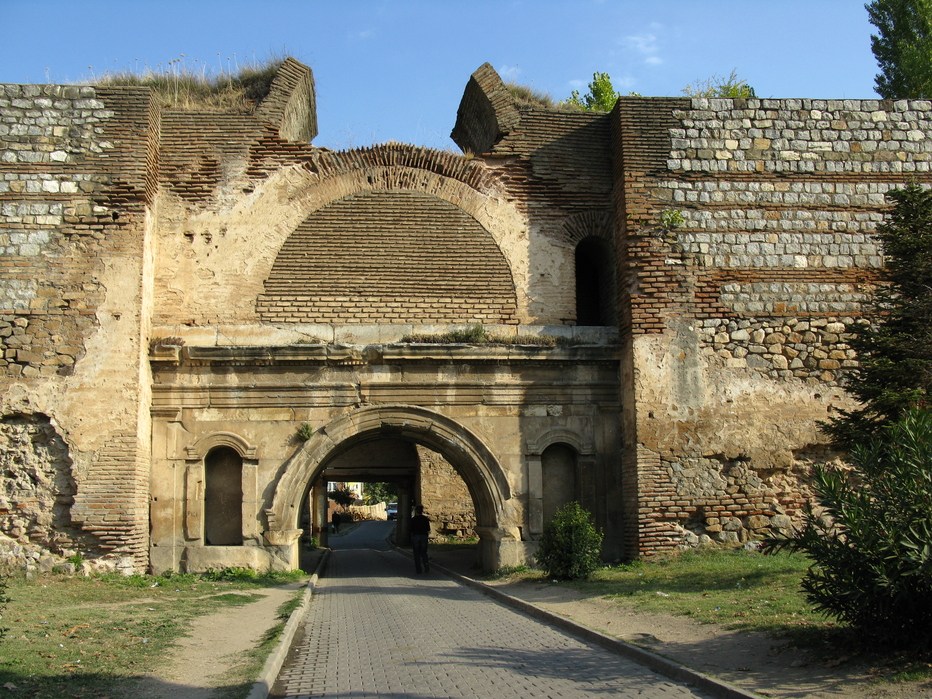
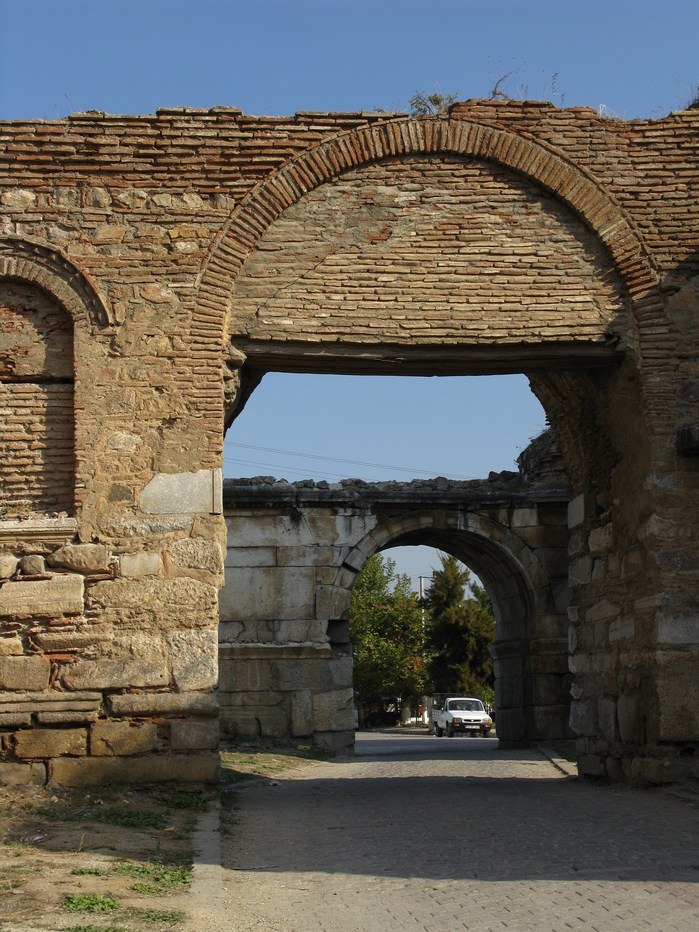
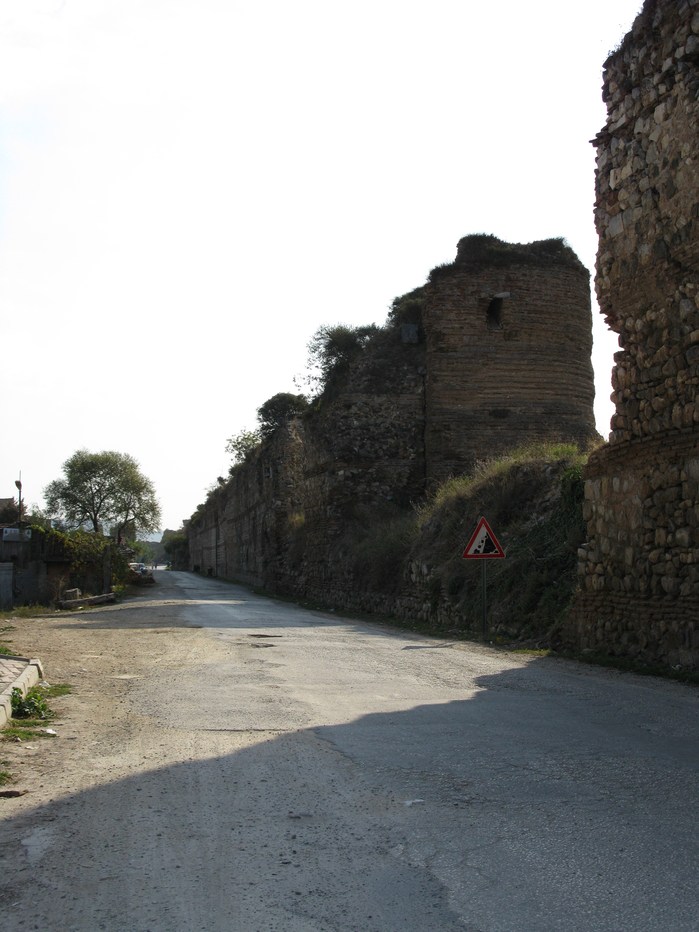
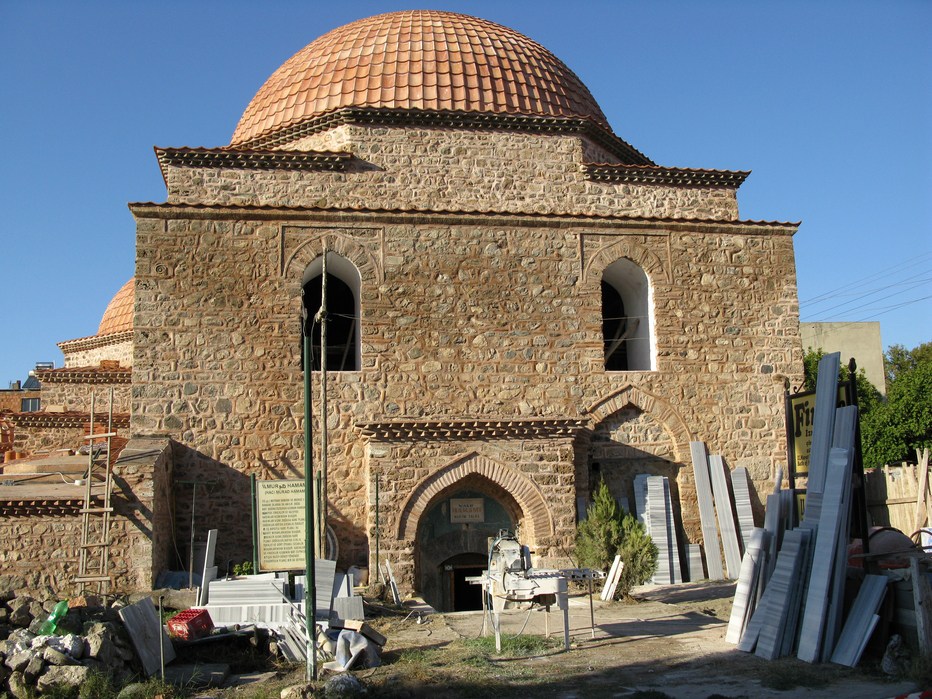
Originally named Nicaea by the Greeks, it served as the interim capital city of the Byzantine Empire between 1204 and 1261, following the 4th Crusade in 1204, until the recapture of Constantinople by the Byzantines in 1261. Much of the original defensive walls still stand along with 2 imposing gates. The city and national authorities are carrying out restorations of old mosques, churches and hamams to the highest aesthetic standards using real craftsmen to do the jobs.

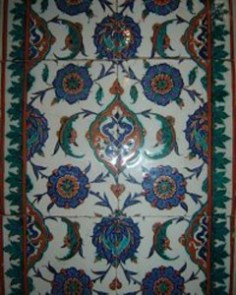
iznik2With the fall of Constantinople in 1453, the town lost a great degree of its importance, but later became a major centre with the creation of a local faïence pottery-making industry in the 17th century (known as the İznik ÇiniÇin meaning China in Turkish – Chinese porcelain stood in great favour with the Sultans.) İznik tiles were used to decorate many of the mosques in İstanbul designed by Mimar Sinan. Attempts to recreate the perfection and colours of the early pottery glazes have proved elusive. As an aside, one of my prized possessions is an original İznik bowl; although slightly chipped the (hazardous) cobalt blue of the glaze can be found in no pieces other than these originals.
I like İznik; it makes a great staging post for exploring the area or as a stop-over to or from İstanbul. Its true value is as a gentle, relaxing place to spend time replenishing the inner self, wandering back streets, searching out the surprises (see below) and enjoying the finest catfish kebap to be found anywhere in Turkey.

A few impressions to be going on with:

iznik3
old hamam restoration
iznik4
the quality of restoration is outstanding
iznik5
the mighty northern Istanbul gate
iznik6
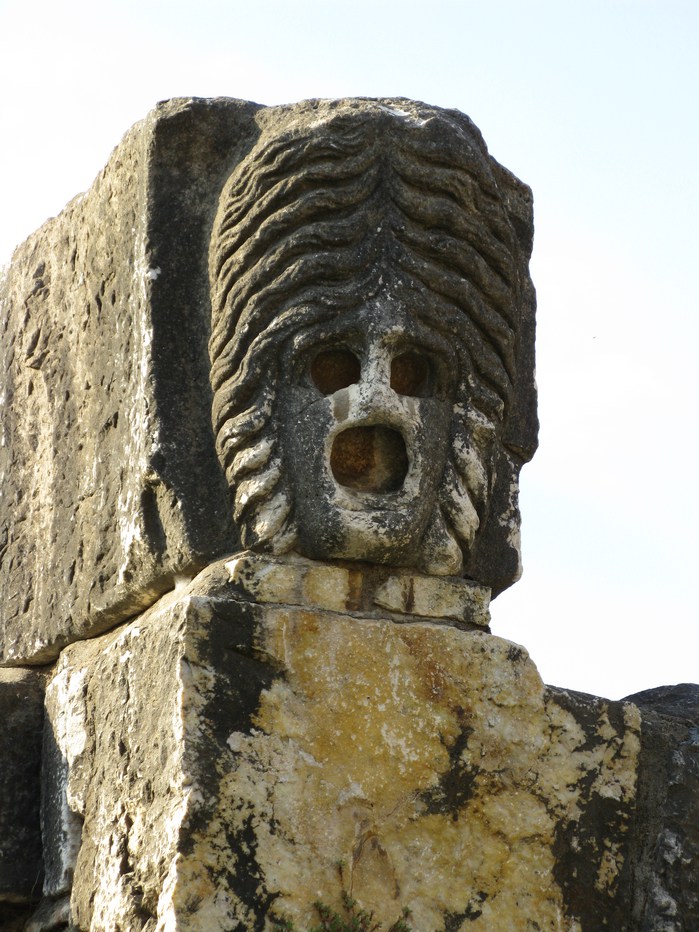
the scary sight that awaits those entering the Istanbul gate
iznik7
would you want to mix it with these jokers?
iznik8
the southern gate
iznik9
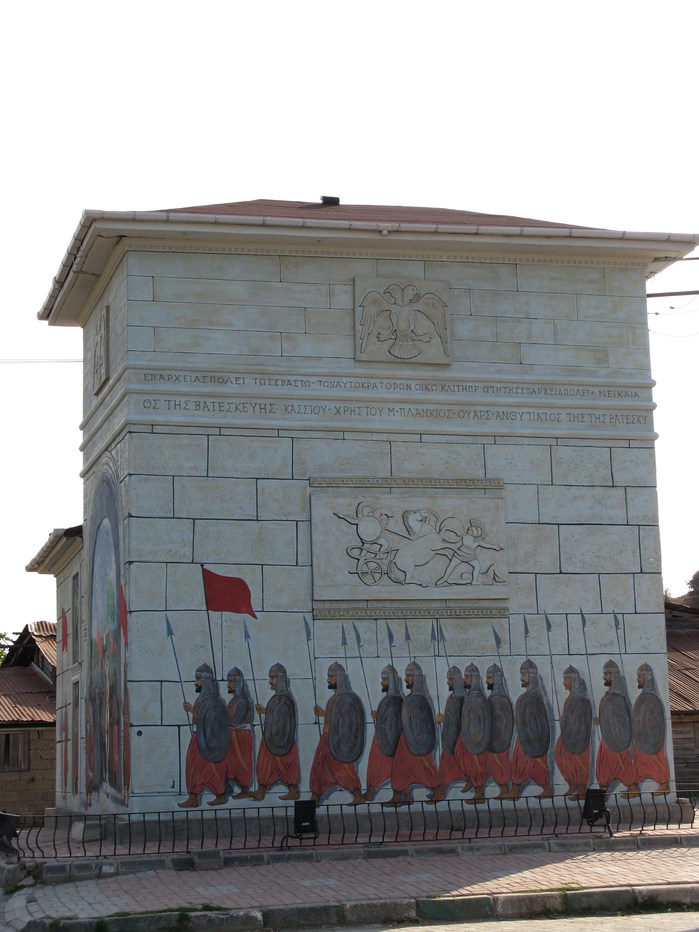
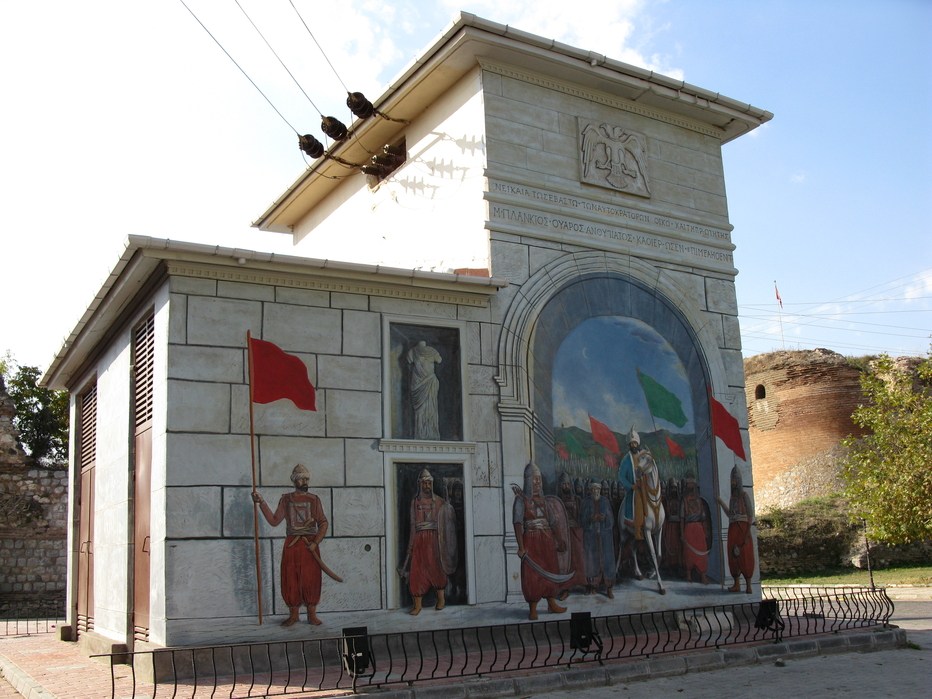
. . can you work out what this is?
iznik10
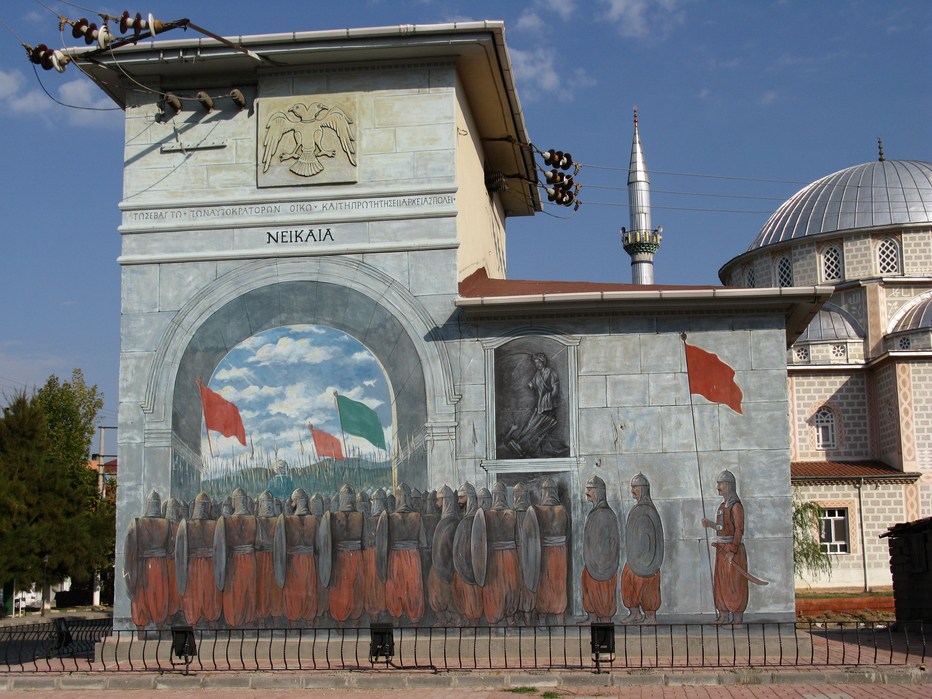
admit it, you’re amazed to see it’s an electricity sub-station
iznik11
the back view of the triumphal march
iznik12
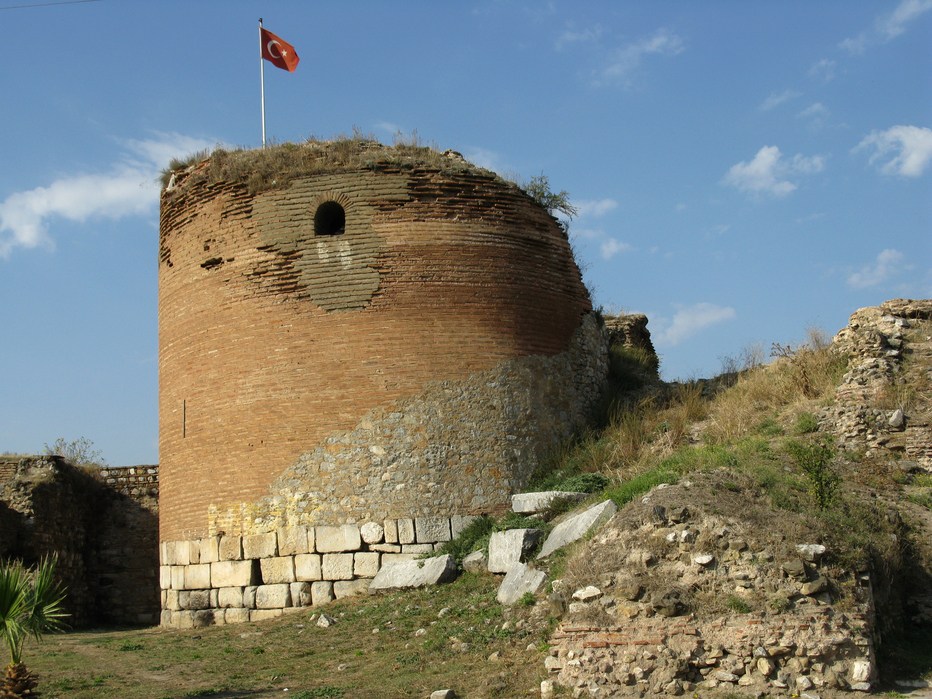
part of the extensive defenses
iznik13
. . . and yet more

Alan Fenn, Okçular Köyü